Fool's Gold vs Pyrite: Why Pyrite Earned the Name & How to Tell It From Real Gold
Fool's gold is the popular nickname for pyrite (iron pyrite, FeS2) — a brassy, metallic mineral of 46.7% iron and 53.3% sulfur that miners once mistook for real gold. A fool's gold bracelet and a pyrite bracelet are the same thing. Pyrite differs from gold in hardness, weight and crystal shape: it is brittle, lighter and forms sharp cubes, while gold is soft, far heavier and never cubic.
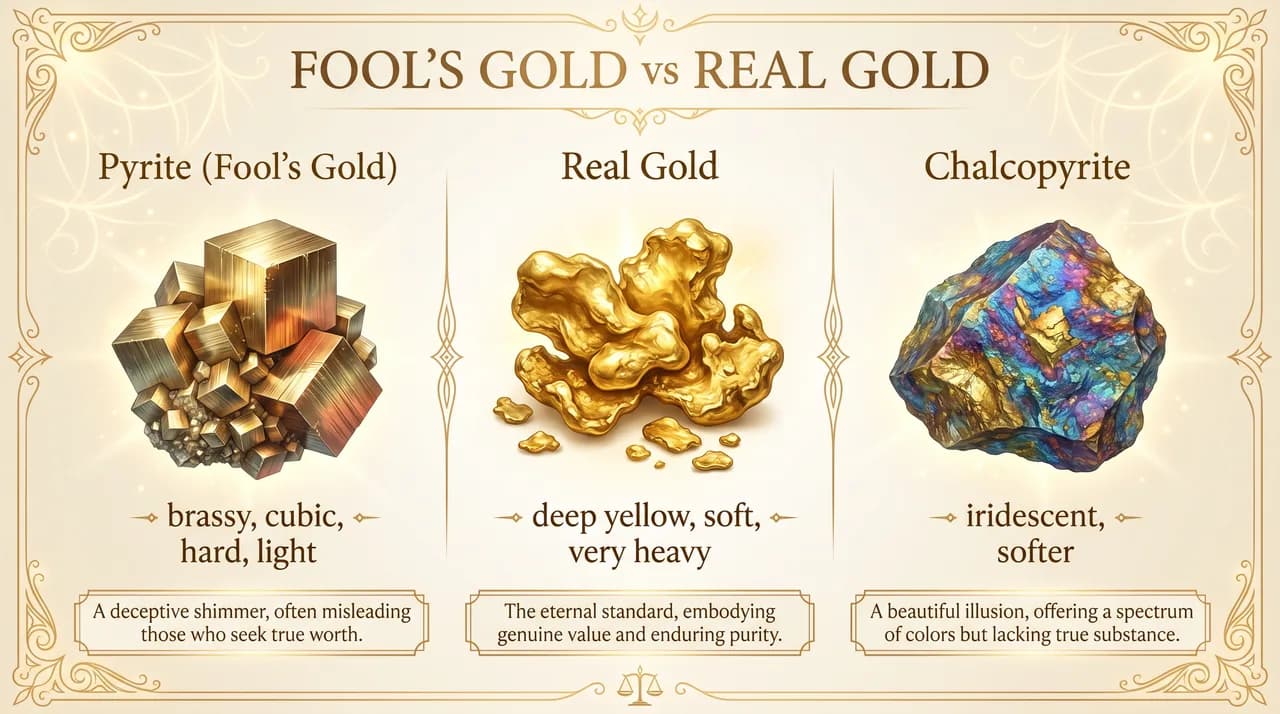
What Fool's Gold Actually Is
"Fool's gold" is a centuries-old nickname for pyrite, also called iron pyrite. Chemically it is iron disulfide (FeS2) — a compound of 46.7% iron and 53.3% sulfur. So when you see a "fool's gold bracelet" and a "pyrite bracelet," they are the exact same stone under two names. There is nothing inferior about the term; it simply records how convincingly pyrite once impersonated gold.
Pyrite has a metallic, brassy gunmetal-to-gold lustre that catches light like polished metal. It is genuinely heavy for a non-precious mineral, with a specific gravity around 5.0, and in nature it grows into striking, near-perfect cubes — a clue we will return to in the identification section.
| Common name | Fool's gold |
| Mineral name | Pyrite (iron pyrite) |
| Chemistry | Iron disulfide, FeS2 |
| Composition | 46.7% iron, 53.3% sulfur |
| Specific gravity | ~5.0 (heavy) |
| Lustre | Metallic gunmetal-gold |
Why Pyrite Is Called Fool's Gold
The name comes from the mining era, when prospectors panning rivers and digging seams repeatedly found glinting yellow flecks that looked like the real thing. Pyrite shares gold's warm metallic colour and sometimes sits in the very same rock formations, so an untrained eye — or an over-hopeful one — was easily deceived. Anyone who staked a claim on it was, in the harsh humour of the goldfields, a "fool."
The confusion was understandable: both materials are dense, both shine, and both turn up in quartz veins. The giveaways only show under closer testing. Real gold is soft enough to dent and scratch with a knife; pyrite is hard and brittle and will instead crumble or spark. Gold leaves a yellow streak; pyrite leaves a greenish-black one. And gold never forms cubes, whereas pyrite famously does.
Despite the teasing name, pyrite was never worthless. In traditional belief it became a stone of wealth, ambition and protection precisely because it mirrors gold — the universal symbol of abundance. That symbolic link is why pyrite is worn today as a money and confidence stone, while honestly being understood as tradition and intention rather than any guaranteed effect.
Pyrite vs Real Gold vs Chalcopyrite
Pyrite is not the only gold look-alike. Chalcopyrite — a copper-iron sulfide — is another brassy mineral often confused with both. Here is how the three compare on the properties that matter.
| Property | Pyrite (fool's gold) | Real gold | Chalcopyrite |
|---|---|---|---|
| Chemistry | FeS2 (iron sulfide) | Au (pure element) | CuFeS2 (copper-iron sulfide) |
| Colour | Pale brassy gold | Rich buttery yellow | Deeper golden, often iridescent tarnish |
| Hardness (Mohs) | 6 - 6.5 (hard) | 2.5 - 3 (soft) | 3.5 - 4 (soft-ish) |
| Behaviour | Brittle, sparks on steel | Malleable, dents easily | Brittle, crumbles |
| Specific gravity | ~5.0 | ~19.3 (very heavy) | ~4.2 |
| Streak colour | Greenish-black | Yellow | Greenish-black |
| Crystal shape | Sharp cubes | No cubes | Uneven, no clean cubes |
The headline difference is weight and softness. Real gold is almost four times denser than pyrite and so soft you can mark it with a fingernail-hard tool, while pyrite is light by comparison and rock-hard. Chalcopyrite sits between them in density and is softer than pyrite, with a more iridescent, peacock-like tarnish.
Real vs Fake: Pyrite Identification Checklist
"Fake pyrite" usually means dyed glass, resin or plated beads sold as the real mineral. Run through these quick checks before you trust a fool's gold bracelet.
- 1Heft test
Genuine pyrite feels noticeably heavy and cool in the hand thanks to its ~5.0 specific gravity. Glass or plastic beads feel light and warm up fast against your skin.
- 2Look for the cube
Raw pyrite often shows flat faces and sharp, blocky cube edges. Perfectly smooth, glassy rounds with zero structure may be imitation — though polished beads are legitimately rounded, so weigh this with other tests.
- 3Lustre and colour
Real pyrite has a hard metallic gunmetal-gold shine, not a painted or sprayed gold coating. Chipped paint, a seam line, or colour that rubs off signals a fake.
- 4Temperature
As a metal-rich mineral, pyrite stays cool to the touch longer than glass or resin, which quickly match body heat.
- 5Streak (loose stone only)
Dragged across unglazed ceramic, genuine pyrite leaves a greenish-black streak. Never do this to a finished bracelet — it is for raw specimens.
- 6Ask for paperwork
The most reliable check is documentation. A lab-tested, certified stone removes all guesswork that the home tests leave behind.
No single test is conclusive on its own. Combine two or three — especially heft plus lustre plus certification — for confidence.
How DivineTatva Guarantees Real Pyrite
Because "fool's gold" invites imitation, sourcing matters. Every DivineTatva pyrite bracelet is genuine iron pyrite, lab-tested for authenticity and ships with a certificate, so you never have to rely on home tests alone. Each piece is energised through Pran Pratishta in Jaipur and offered in 8mm (Rs 899) and 10mm (Rs 1099) sizes.
One care note that protects your investment: never cleanse pyrite with water. Because it is iron-rich, moisture makes it oxidise and corrode, damaging both the stone and your skin. Cleanse with dry rice, selenite or smudge instead. Worn on the left wrist, traditionally first on a Tuesday, pyrite is embraced as a stone of wealth, drive and confidence — honoured as tradition and intention, not a promise of riches.
| Stone | Genuine iron pyrite, lab-tested |
| Energised | Pran Pratishta, Jaipur |
| Ships with | Authenticity certificate |
| Sizes | 8mm Rs 899 / 10mm Rs 1099 |
| Cleanse with | Rice, selenite or smudge — never water |
Frequently asked
Last reviewed: 17 May 2026 · Verified by the DivineTatva expert panel
Is fool's gold the same as pyrite?
Yes. "Fool's gold" is simply the nickname for pyrite (iron pyrite, FeS2). A fool's gold bracelet and a pyrite bracelet are identical — two names for one brassy iron-sulfide mineral that miners once mistook for real gold.
Why is pyrite called fool's gold?
During the mining era, prospectors repeatedly mistook pyrite's brassy, metallic glint for real gold, especially as both appear in the same quartz rock. Staking a claim on the worthless-for-gold mineral marked you as a "fool," and the name stuck.
How do I tell pyrite from real gold?
Real gold is soft and dents easily, very heavy (specific gravity ~19.3), leaves a yellow streak and never forms cubes. Pyrite is hard and brittle, much lighter (~5.0), sparks on steel, leaves a greenish-black streak and grows in sharp cubes.
What is the difference between pyrite and chalcopyrite?
Pyrite is iron sulfide (FeS2) and harder, at Mohs 6 to 6.5. Chalcopyrite is copper-iron sulfide (CuFeS2), softer at 3.5 to 4, with a deeper golden colour and often an iridescent, peacock-like tarnish. Both can leave a greenish-black streak.
Is fool's gold worth anything?
It has little value as a gold source, but pyrite is valued as a decorative and spiritual stone. In tradition it symbolises wealth, ambition and protection because it mirrors gold — though this is intention and belief, not a guaranteed effect.
How can I tell if my pyrite bracelet is real or fake?
Genuine pyrite feels heavy and cool, has a hard metallic gunmetal-gold lustre with no paint or seams, and warms slowly. Fakes are light, warm fast and may show chipping. The surest proof is a lab-tested, certified stone.
Can pyrite get wet?
No. Pyrite is iron-rich and oxidises in moisture, which corrodes the stone and can irritate skin. Keep it dry and cleanse it with rice, selenite or smudge — never water.
Does fool's gold contain real gold?
Not as a rule. Pyrite is iron and sulfur, not gold. Some gold deposits sit near pyrite in the same rock, which added to the historical confusion, but the pyrite mineral itself is not gold.
Reviewed by the DivineTatva expert panel
Written and reviewed by DivineTatva's consulting Vedic astrologer. Every piece is lab-certified and energised in our Jaipur atelier. Last updated 5 May 2026.