Can Pyrite Bracelets Get Wet? The Dry-Care & Rust Guide Nobody Explains
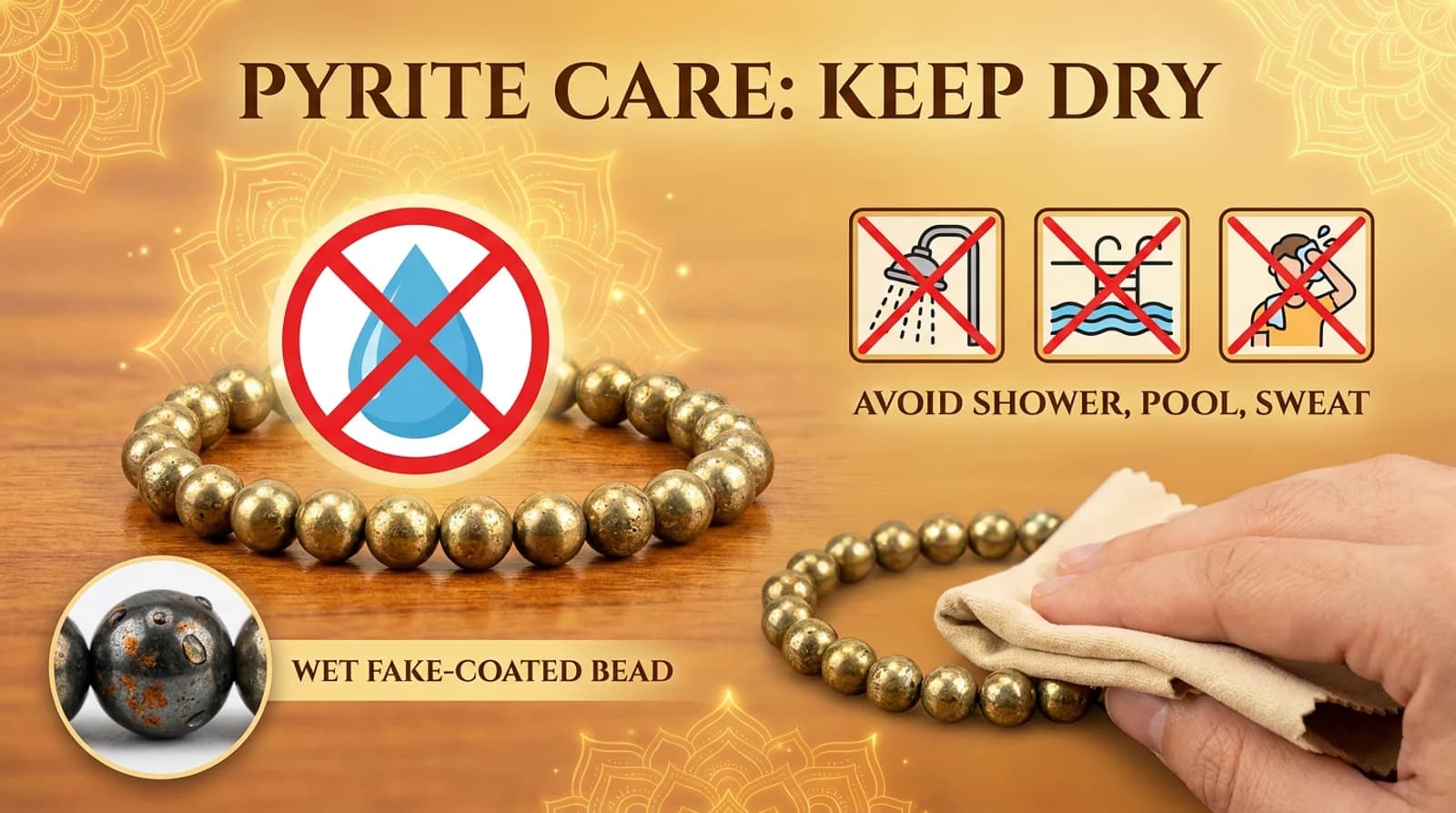
No — a pyrite bracelet should never get wet. Pyrite is iron sulphide (FeS2), a real iron mineral that tarnishes and rusts on contact with water, sweat or humidity. Keep it dry, remove it before bathing or swimming, never salt-soak it, and recharge it only by resting it on a Selenite plate.
Can a pyrite bracelet get wet?
No — a pyrite bracelet should not get wet. Pyrite is iron sulphide (FeS2), a genuine iron mineral prized for its golden metallic shine. Like any iron, it reacts with water, sweat and humid air: the surface tarnishes, dulls and can develop reddish-brown rust spots. Water is the single fastest way to ruin an otherwise beautiful, certified pyrite bracelet.
This is the one care rule almost every listing skips. Black obsidian (volcanic glass) tolerates a quick wipe far better, but you wear the two together in the wealth combo — so treat the whole bracelet as water-sensitive and keep it dry. The good news: dry care is simple once you know it, and your Selenite plate handles cleansing without a single drop of water.
| Can it get wet? | No — keep pyrite dry at all times |
| Why | Iron sulphide (FeS2) tarnishes and rusts in water |
| Remove before | Bathing, swimming, washing hands, dishes, rain |
| Cleanse with | Selenite plate only — never water or salt soak |
| Black obsidian | Volcanic glass; wipe-safe but kept dry in the combo |
Why pyrite rusts (and obsidian doesn't)
Pyrite's golden colour comes from iron. When iron meets water and oxygen it oxidises — the same process that rusts a gate or a tap. On a bracelet this shows up as dulling, dark patches, a faint sulphur smell, or orange-brown specks between the beads. Repeated wetting can even loosen the bead holes and weaken the stretch cord. None of this is a defect; it is simply what iron does in water.
Black obsidian is the opposite. It is natural volcanic glass with no iron to oxidise, so a damp wipe won't rust it. But in the wealth combo the two sit on one wrist, often on one cord, so any water that reaches the pyrite reaches everything. The safest rule is the simplest: nothing on this bracelet touches water.
| Stone | What it is | Water reaction | Verdict |
|---|---|---|---|
| Golden Pyrite | Iron sulphide, FeS2 | Tarnishes, rusts, dulls | Never wet |
| Black Obsidian | Volcanic glass | No rust; can streak | Keep dry in combo |
| Selenite (plate) | Gypsum, very soft | Dissolves / pits in water | Never wet |
The dry-care routine that keeps pyrite golden
Protecting a pyrite bracelet is about habit, not effort. Build these five steps into your day and the golden lustre can last for years.
- 1Take it off before water
Remove the bracelet before bathing, showering, swimming, washing hands or dishes, and before stepping out in the rain. This single habit prevents most pyrite damage.
- 2Wipe after wearing
At day's end, wipe both bracelets with a soft, dry cloth to lift off sweat, body oil and dust before they sit overnight.
- 3Store dry and separate
Keep it in a dry pouch or box, away from the bathroom and away from perfume, sanitiser and lotion, which carry moisture and chemicals.
- 4Apply cosmetics first
Put on perfume, sunscreen, hand cream and sanitiser, let them dry, then wear the bracelet — alcohol and water in these products tarnish pyrite.
- 5Recharge on Selenite
When it needs cleansing or feels heavy, rest it on the Selenite plate overnight. No water, no salt, no sunlight needed.
If your hands get splashed while wearing it, dry the beads immediately with a cloth — quick action usually prevents a spot from setting.
Why a salt-water soak ruins pyrite
Plenty of generic crystal guides — and even some sellers — tell you to cleanse bracelets in a bowl of salt water overnight. For pyrite this is the worst possible advice. Salt water is far more corrosive than plain water: it accelerates rust, eats into the metallic surface, and can leave permanent pitting and discolouration in hours. Dry-cleansing salt poured directly on the beads is just as damaging.
It also harms the rest of the combo. The Selenite plate is gypsum, a soft mineral that literally dissolves and turns chalky in water, so it must stay dry too. So a salt soak can wreck all three pieces at once. Use the methods below instead — they cleanse the bracelet's energy in tradition without touching its chemistry.
| Cleansing method | Safe for pyrite? | Notes |
|---|---|---|
| Selenite plate (rest overnight) | Yes — recommended | Dry, gentle, included in your combo |
| Soft dry cloth wipe | Yes | Removes oil and dust daily |
| Sound / sage / incense smoke | Yes | No moisture; passes around the beads |
| Moonlight on a dry surface | Yes | Keep off wet grass or dew |
| Plain water rinse | No | Tarnishes and rusts the iron |
| Salt-water soak | Never | Corrodes pyrite, dissolves Selenite |
What to do if your pyrite already tarnished
If your bracelet got wet or has started to dull, act dry and act fast. Most light tarnish can be improved; deep rust is harder to reverse, but you can stop it spreading.
- 1Dry it completely
Pat the beads with a soft cloth and leave them in a dry, airy spot (not direct heat). Remove all surface moisture before doing anything else.
- 2Buff gently when dry
Once fully dry, rub each bead with a soft dry or microfibre cloth. Light tarnish and oil often lift with patient buffing alone.
- 3Skip water-based cleaners
Do not use liquid jewellery cleaner, toothpaste or vinegar on pyrite — these add moisture and can worsen corrosion. No chemicals, no soaking.
- 4Reset the habit
Restart the dry-care routine and rest it on Selenite overnight. Going forward, never let it touch water again.
Honest note: if rust has eaten deep into the beads, no home method fully restores factory shine — pyrite damage is largely one-way, which is exactly why prevention matters so much. A certified bracelet that has only just started to dull is usually rescuable; one that has soaked repeatedly may need replacing.
How to cleanse and charge on the Selenite plate
This is why the wealth combo ships with a genuine Selenite plate instead of telling you to use water. Selenite is traditionally believed to cleanse and recharge other crystals through contact alone — no rinsing, no salt, no sunlight required. For an iron mineral like pyrite, a dry charging plate is the ideal partner.
- 1Wipe first
Clean both bracelets with a soft dry cloth to remove oil and dust.
- 2Rest on the plate
Lay the pyrite and black obsidian bracelets flat on the Selenite plate so the beads touch the surface.
- 3Leave 6–8 hours
Let them sit overnight. Many people recharge weekly, or whenever the bracelet feels dull or heavy.
- 4Keep the plate dry
Never wash the Selenite plate in water — it is soft gypsum and will dissolve. Dust it with a dry brush or cloth.
Honest framing: cleansing and charging are traditional crystal-healing and Indian astro practices, valued for the calm, intentional ritual they create — not a scientifically proven mechanism. The practical, provable benefit is real, though: keeping pyrite away from water genuinely preserves it.
Caring for the pyrite wealth combo as a set
The wealth combo is three pieces with one shared rule — stay dry. Golden pyrite is traditionally linked to wealth, confidence and abundance; black obsidian is the grounding, protective stone tied to warding off buri nazar and negative energy; the Selenite plate keeps both recharged without water. Cared for properly, all three last together for years.
| Pyrite bracelet | Never wet; wipe dry daily; store away from bathroom |
| Black obsidian bracelet | Keep dry in the combo; soft-cloth wipe only |
| Selenite plate | Never wash; dust dry; used to recharge both bracelets |
| First wear (tradition) | Many in India choose a Friday morning, on the receiving left wrist |
| Authenticity | Each piece backed by a named lab-certificate card from our Jaipur facility |
| Disclaimer | Wealth and protection are traditional beliefs, not medical, financial or professional advice |
Wear it with realistic expectations: a bracelet is a daily reminder of your intention to save, focus and protect your energy — it is not a guaranteed money tap. Keep it dry, recharge it on Selenite, and let the ritual support the real-world effort that actually builds wealth.
Frequently asked
Last reviewed: 17 May 2026 · Verified by the DivineTatva expert panel
Can a pyrite bracelet get wet at all?
No. Pyrite is iron sulphide (FeS2), so water, sweat and humidity make it tarnish, dull and rust — the same way iron rusts. Remove the bracelet before bathing, swimming, washing hands, doing dishes or going out in the rain. If it does get splashed, dry the beads at once with a soft cloth. Cleanse it only on the Selenite plate, never in water.
Why shouldn't I cleanse my pyrite bracelet in salt water?
Salt water is far more corrosive than plain water. It speeds up rust on pyrite's iron content and can leave permanent pitting and discolouration within hours. It also dissolves the soft Selenite plate. Despite some guides recommending salt soaks, it is the worst method for this combo. Use the included Selenite plate, a dry-cloth wipe, or smoke/sound cleansing instead — all completely dry.
How do I cleanse and charge the bracelet without water?
Wipe both bracelets with a soft dry cloth, then rest them flat on the Selenite charging plate for about 6–8 hours, ideally overnight. Selenite is traditionally believed to cleanse and recharge other crystals through contact alone, so no water, salt or sunlight is needed. Recharge weekly or whenever the bracelet feels dull. Never wash the Selenite plate itself — it dissolves in water.
My pyrite bracelet already looks dull or rusty — can I fix it?
Dry it fully first, then buff each bead gently with a soft microfibre cloth; light tarnish and oil often lift this way. Avoid liquid cleaners, toothpaste, vinegar or any soaking, as moisture worsens corrosion. Honestly, deep rust in pyrite is largely one-way and may not fully reverse — which is why staying dry matters. A bracelet that has only just started to dull is usually rescuable.
Is black obsidian also damaged by water?
Black obsidian is volcanic glass with no iron, so it doesn't rust and tolerates a quick damp wipe far better than pyrite. But in the wealth combo both stones share one wrist and often one cord, so any water reaching the pyrite reaches the obsidian too. The safe, simple rule is to keep the whole bracelet dry and cleanse the set on the Selenite plate.
How do I know my pyrite bracelet is real and certified?
Genuine pyrite has a bright golden metallic lustre, real weight (it feels heavier than plastic or resin imitations), and slightly cubic, brassy reflections — fakes look dyed, lightweight or too uniform. The reliable proof is documentation: every DivineTatva piece ships with a named lab-certificate card from our Jaipur gemstone-city facility, which beats vague 'AAA+' or self-issued claims you can't verify.
Does the pyrite bracelet really attract money?
Pyrite is traditionally called the 'money magnet' and is linked in crystal healing and Indian astro practice to wealth, confidence and abundance, while black obsidian is associated with protection from buri nazar and negative energy. These are belief-based traditions, not scientifically proven effects. Many wearers report feeling more focused and motivated — consistent with intention and ritual. Treat it as a supportive reminder, not a substitute for financial advice.
Reviewed by the DivineTatva expert panel
Written and reviewed by DivineTatva's consulting Vedic astrologer. Every piece is lab-certified and energised in our Jaipur atelier. Last updated 15 April 2026.