Real vs Fake Crystal Bracelet: Spot Dyed Red Jasper, Tiger Eye & Amethyst
A real zodiac (rashi) crystal bracelet uses genuine, lab-certified natural gemstone beads — like Red Jasper and Tiger Eye for Aries or Amethyst for Pisces. Fakes are dyed quartz, glass or plastic. You spot them through dye trapped in cracks, perfectly uniform beads, glass air bubbles, a too-good price, and a missing per-piece lab certificate.
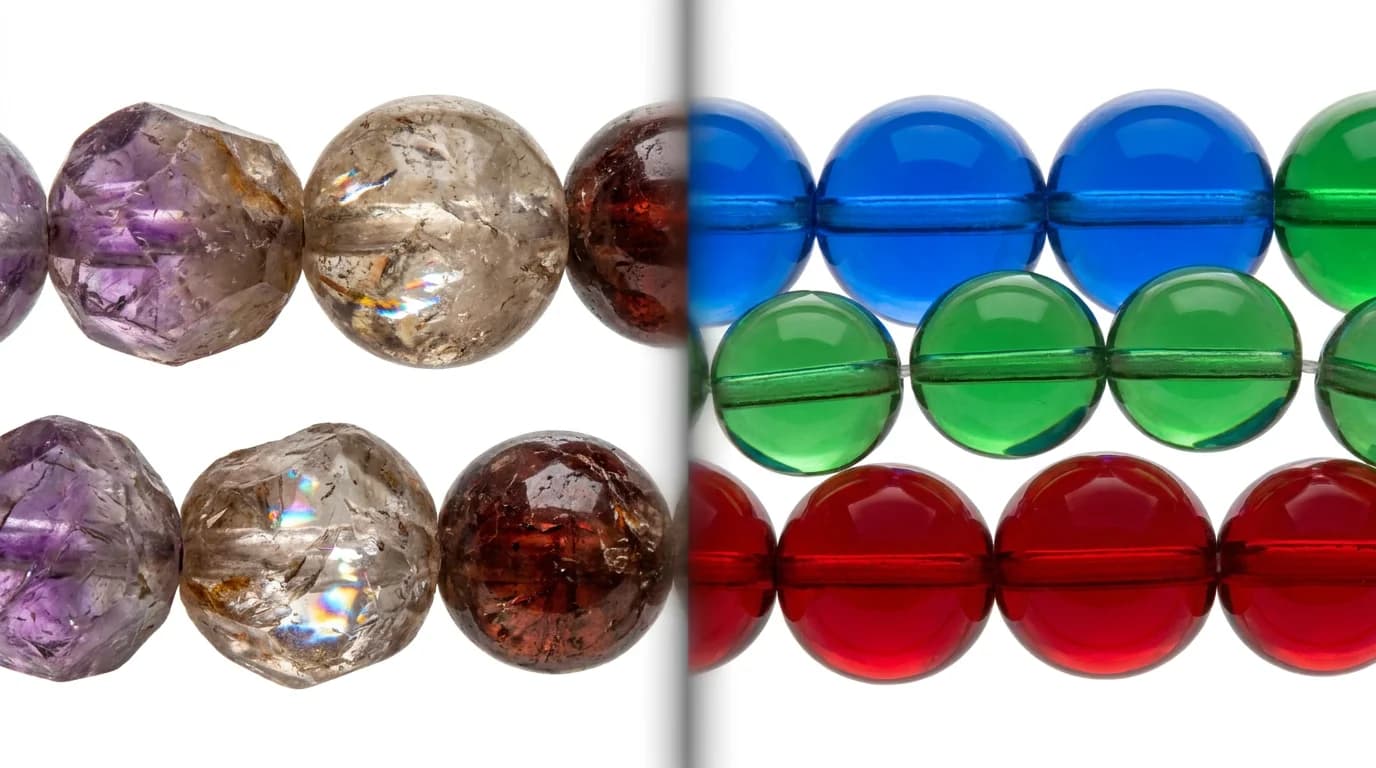
What 'real' means for a zodiac crystal bracelet
A real zodiac (rashi) crystal bracelet is a stretch bracelet strung with genuine, naturally occurring gemstone beads — typically 8mm — matched to your sign, such as Red Jasper and Tiger Eye for Aries or Amethyst for Pisces. 'Real' means the stone is the natural mineral it claims to be, not dyed quartz, glass, plastic or reconstituted powder. A trustworthy real bracelet comes with a per-piece lab certificate naming the stone.
Be clear about what 'real' does and does not promise. A genuine stone is the authentic mineral — but in Vedic and Western tradition, the qualities each sign's stone is said to carry (grounding, calm, confidence, clarity) are belief- and intention-based. There is no scientific evidence that any crystal heals, balances 'energy' or changes luck. What you can reasonably expect is a mindfulness anchor and a placebo-style benefit: a beautiful daily reminder of an intention you set. So 'real' is about the material, not a medical claim. This guide is about not paying gemstone money for plastic — it is not medical, financial or professional advice.
| Genuine bracelet | Natural mineral beads, lab-certified, named stone per order |
| Fake bracelet | Dyed quartz, glass, plastic or reconstituted powder sold as the stone |
| What real guarantees | The material is authentic |
| What real does NOT guarantee | Healing, luck or 'energy' — those are tradition + belief, not proven |
| Honest benefit | Mindfulness anchor + placebo-style reminder of your intention |
6 checks to know if a crystal bracelet is real or fake
No single test is foolproof, but six quick checks catch most fakes before you buy. Run them together — a bracelet that fails two or more is almost certainly dyed glass or quartz rather than the gemstone advertised. These are the same surface checks our Jaipur team uses before a piece even reaches lab certification.
- 1Dye trapped in cracks
Look hard at fissures and bead holes. Natural colour runs through the stone; dye pools darker inside cracks and around drill holes. Concentrated colour in the crevices is the single most reliable tell for dyed Red Jasper and Howlite painted as turquoise or other stones.
- 2Air bubbles
Glass and plastic beads often hold tiny round air bubbles — visible under a phone macro lens or 10x loupe. Real crystals have inclusions, fractures and cloudiness, but never perfectly spherical trapped bubbles.
- 3Too-perfect uniformity
Real natural stone varies bead to bead in tone, banding and inclusions. If every bead is identical in colour and pattern, suspect dyed quartz or moulded glass. Tiger Eye especially should show a moving chatoyant 'eye' that differs per bead.
- 4Temperature
Real stone feels cool and takes a few seconds to warm in your hand. Plastic and resin warm almost instantly and feel light. Glass feels cool too, so pair this with the bubble and weight checks.
- 5Weight
Genuine gemstone has heft. A bracelet that feels suspiciously light for its bead size is likely plastic or hollow resin.
- 6Price and paperwork
A price far below the market and no per-piece lab certificate are red flags. Genuine certified natural-stone bracelets sit in a known price band; rock-bottom 'natural crystal' deals are usually dyed quartz.
How to spot fakes in the common zodiac stones
The three stones most often faked in zodiac bracelets are Red Jasper, Tiger Eye and Amethyst — exactly the ones used for Aries (Red Jasper, Tiger Eye) and Pisces / Aquarius (Amethyst). Here is what genuine and fake look like side by side, so you can verify your own sign's stones.
| Stone (signs) | Real looks like | Fake / treated looks like |
|---|---|---|
| Red Jasper (Aries) | Deep brick-red, opaque, subtle earthy mottling, slight tone variation bead to bead | Bright unnatural cherry-red, dye darker in cracks and drill holes, eerily uniform — often dyed howlite or quartz |
| Tiger Eye (Aries, Capricorn) | Golden-brown with a moving silky chatoyant band ('eye') that shifts as you tilt it; each bead differs | Flat painted stripes that don't move; glass 'cat's eye' (fibre-optic) with a too-perfect single bright line and air bubbles |
| Amethyst (Pisces, Aquarius) | Natural purple with uneven colour zoning, faint inclusions, often paler patches | Glass or synthetic: vivid even purple throughout, air bubbles, sometimes colour-coated quartz that chips to clear |
| Howlite (used as a calm stone / dyed) | Naturally white-grey with grey veining; porous | Dyed blue and sold as turquoise; dye sits in the veins |
Note on care for the porous and metallic stones: keep Pyrite, Selenite and Howlite beads away from water, perfume, sweat and chemicals — they are porous or metallic and will dull, rust or crack if soaked. Wipe with a dry soft cloth and cleanse in moonlight or on a selenite plate, never in water or salt. A genuine porous stone reacting to water is normal; it is not proof of a fake, just proof you need to keep it dry.
Why a lab certificate beats a 'natural' badge
Surface tests narrow it down, but only a lab certificate confirms the mineral with certainty. Many sellers print an 'authentic' or '100% natural' badge on the page with nothing behind it — no testing house, no link, no per-order document. A real certificate names the stone, is issued per piece or per order, and can be checked. That is the difference between a claim and proof.
| Signal | Unverified badge | Per-piece lab certificate |
|---|---|---|
| Who issued it | The seller themselves | An independent gem-testing lab |
| Tied to your order | No — generic image | Yes — issued for the bracelet you receive |
| Verifiable | No link, no reference | Named stone, checkable reference |
| Names treatments | Rarely | Identifies natural vs dyed / synthetic |
| DivineTatva | We don't rely on this | Lab-certified, Jaipur-made, certificate per order |
On price: certified natural-stone zodiac bracelets in India sit in a sensible band, and we offer COD so you can inspect before fully committing. If a 'natural gemstone' bracelet is priced like a plastic fashion band, treat the price itself as a test result — it is telling you what is inside.
Safe at-home tests (and which to skip)
Some popular 'authenticity hacks' can damage a genuine bracelet, especially the porous and metallic stones in zodiac sets. Use the non-destructive checks; skip the ones that risk ruining a real stone you just paid for.
| Loupe / phone macro — SAFE | Hunt for air bubbles (fake) vs natural inclusions (real) |
| Tilt test — SAFE | Tiger Eye's 'eye' should move; painted stripes won't |
| Warmth-in-hand — SAFE | Real stone stays cool briefly; plastic warms instantly |
| Crack-and-hole inspection — SAFE | Dye concentrates in fissures and drill holes on fakes |
| Water / salt soak — AVOID | Ruins porous Pyrite, Selenite, Howlite; not a reliable test anyway |
| Scratch / fire / acid — AVOID | Damages real stones and is unsafe; leave hardness testing to a lab |
Bottom line: combine two or three safe checks, then let the certificate settle it. If you bought elsewhere and have no certificate, a local gem lab can identify the stone inexpensively — far cheaper than wearing a fake you paid gemstone prices for.
Care that protects a genuine bracelet
Once you own a real bracelet, care keeps it looking genuine — neglect can make true stone dull and look fake. This matters most for the porous and metallic beads common in zodiac sets.
Keep Pyrite, Selenite and Howlite beads away from water, perfume, sweat and chemicals — they are porous or metallic and will dull, rust or crack if soaked. Wipe with a dry soft cloth and cleanse in moonlight or on a selenite plate, never in water or salt. On care days, set your intention while you wipe it down — that is the honest 'charge': a mindfulness moment, not a literal energy transfer.
| Daily | Wipe with a dry soft cloth; remove before bathing, swimming and gym |
| Avoid | Water, perfume, sweat, sanitiser, salt — especially Pyrite, Selenite, Howlite |
| Cleanse / charge | Moonlight or a selenite plate; full-moon (purnima) night is a popular ritual choice |
| Storage | Dry pouch away from humidity; keep the lab certificate with it |
| Honest note | Cleansing is ritual and mindfulness — not proven 'energy', and not medical advice |
Frequently asked
Last reviewed: 17 May 2026 · Verified by the DivineTatva expert panel
How do I know if my crystal bracelet is real or fake quickly?
Run three fast checks. First, look at cracks and drill holes under good light — dye pooling darker in the crevices means it's dyed. Second, use your phone's macro to hunt for round air bubbles, which signal glass or plastic. Third, check uniformity: real natural stone varies bead to bead. If two of these fail, or there's no per-piece lab certificate, treat it as fake.
How can I tell real Tiger Eye from glass?
Real Tiger Eye shows a soft, moving chatoyant band — the 'eye' shifts as you tilt the bead, and every bead looks slightly different. Fake fibre-optic glass shows one too-perfect bright line that doesn't move naturally, often with tiny air bubbles inside. Painted imitations have flat stripes with no shimmer at all. Tilt the bracelet under a light: if nothing moves, be suspicious.
Is dyed Red Jasper still a 'real' stone?
Usually not in the way it's sold. Much 'Red Jasper' on cheap bracelets is dyed howlite or quartz coloured to an unnaturally bright cherry-red, with dye visible in the cracks. Genuine Red Jasper is a deep, earthy brick-red, opaque, with subtle mottling and slight tone differences between beads. If the colour is uniform and vivid and pools in fissures, it has been dyed rather than naturally coloured.
Does a lab certificate really matter, or is it marketing?
It matters because it's the only thing that confirms the mineral with certainty. Surface tests narrow it down; a certificate from an independent gem lab names the stone, identifies dye or synthetics, and is issued for your specific order. An 'authentic' badge printed on a webpage with no testing house or link behind it proves nothing. We provide a real certificate per order precisely so you aren't relying on our word alone.
Will a water test prove my bracelet is genuine?
No — and it can ruin a real one. Soaking in water or salt damages porous and metallic stones like Pyrite, Selenite and Howlite, which are common in zodiac sets; they dull, rust or crack. It also isn't a reliable authenticity test, since glass and many stones tolerate water fine. Stick to non-destructive checks: loupe for bubbles, tilt test, dye in cracks, weight and temperature.
If a stone is real, does that mean the bracelet will 'work'?
A real stone guarantees the material is authentic — nothing more. In Vedic and Western tradition each sign's stone is chosen for qualities like grounding, calm or confidence, but there's no scientific evidence crystals heal, balance energy or change luck. What you can reasonably expect is a mindfulness anchor and placebo-style benefit: a daily reminder of an intention. Wear it as a meaningful accessory, not a medical device, and never as a substitute for professional advice.
I bought a bracelet elsewhere with no certificate — what now?
Run the safe at-home checks first: inspect cracks for dye, look for air bubbles, test uniformity, weight and warmth. If you still aren't sure, any local gem-testing lab can identify the stones inexpensively — far cheaper than unknowingly wearing dyed quartz you paid gemstone prices for. Going forward, buy from sellers who issue a verifiable per-piece certificate rather than an unlinked 'natural' badge.
Reviewed by the DivineTatva expert panel
Written and reviewed by DivineTatva's consulting Vedic astrologer. Every piece is lab-certified and energised in our Jaipur atelier. Last updated 9 May 2026.