Hanuman Chalisa Kada: Brass vs Copper — Which Metal to Choose?
Brass (copper + zinc) is more durable, golden-coloured, and holds laser engraving well — ideal for general devotion. Pure copper carries stronger Mangal (Mars) energy per Vedic metal tradition and is preferred for Mangal dosha remedy, though it develops a green patina faster. Both are Ayurvedically beneficial when worn on skin.
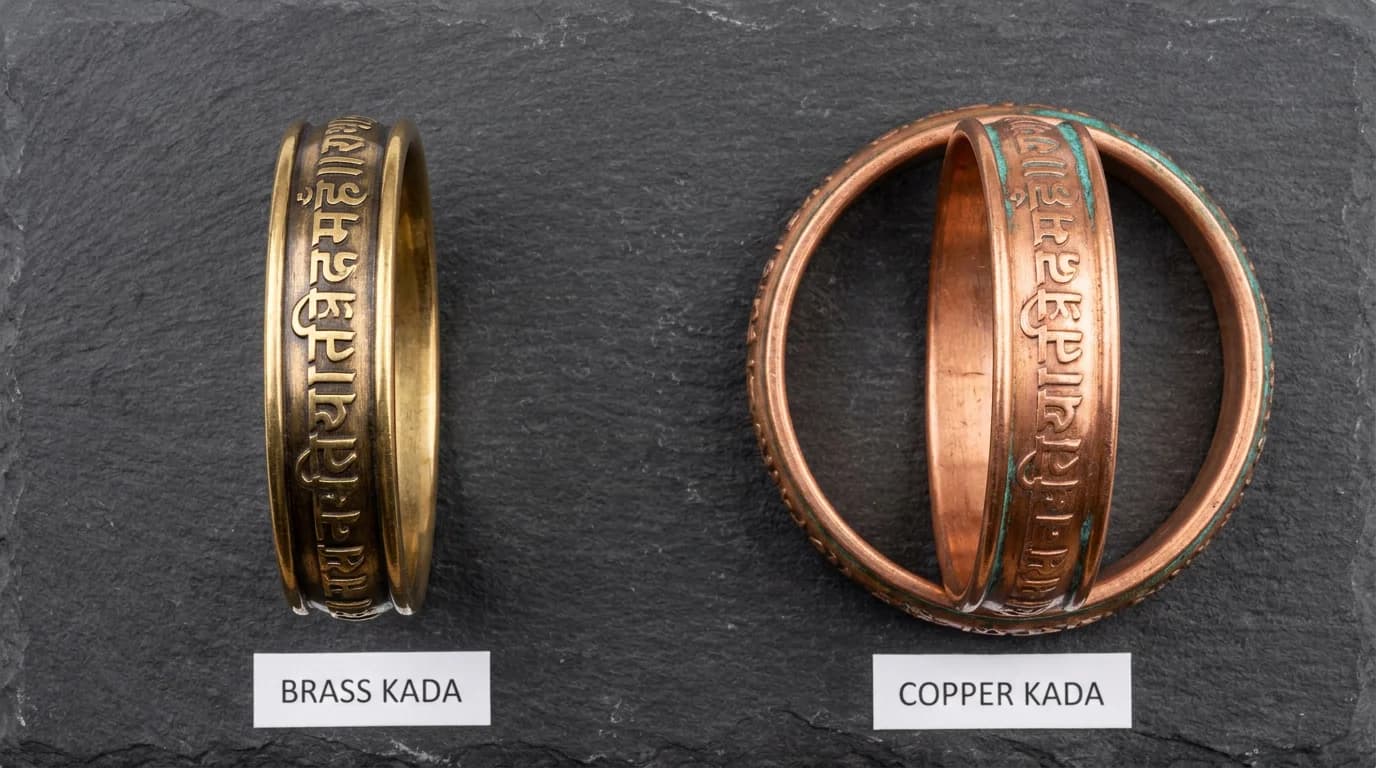
What Brass and Copper Are: Composition and Properties
Copper is a pure elemental metal (Cu) — reddish-orange in colour, naturally antimicrobial, soft enough to work easily but durable in moderate thicknesses. Brass is an alloy of copper and zinc (typically 60–70% copper, 30–40% zinc) — golden-yellow in colour, harder than pure copper, more resistant to corrosion, and widely used for devotional objects across India. Both metals have been used in Hindu worship for millennia — temple bells, lamps (diyas), puja thalis, and devotional jewellery are made from both.
| Brass composition | ~65% copper + ~35% zinc (alloy) |
| Copper composition | 99%+ pure elemental copper |
| Brass colour | Golden yellow |
| Copper colour | Reddish orange |
| Brass hardness | Higher — harder alloy, better engraving surface |
| Copper hardness | Softer — more malleable, slightly more prone to surface wear |
| Both used in | Hindu puja vessels, temple bells, diyas, devotional jewellery |
Which Metal Does Vedic Tradition Associate with Hanuman and Mars?
In classical Vedic astrology (Jyotisha) and the associated metal-therapy tradition, each planet has an associated metal. Mars (Mangal) is traditionally associated with copper (tamra). Since Hanuman is the presiding deity of Mars, copper is considered the more specific metal for Mangal-related remedies. Wearing a pure copper Hanuman Chalisa Kada on Tuesday is the most classically prescribed form of a Mangal dosha upay. Brass, being primarily copper, is considered a valid and strong general devotional metal — it simply lacks the pure Mars-copper association that copper alone carries.
Ayurvedic Properties: Copper and Brass Worn on Skin
Ayurveda has long prescribed copper for various health contexts — copper water vessels (tamra jal), copper utensils, and copper worn on skin. Modern research has documented that copper surfaces have genuine antimicrobial properties — the US EPA has registered copper alloys as antimicrobial materials. When worn on skin, small trace amounts of copper ions may be absorbed transdermally. Brass, containing significant copper, shares some of these properties. DivineTatva notes this as a parallel Ayurvedic tradition — not a medical claim for the kada specifically. The devotional value of the Hanuman Chalisa Kada is primary; the Ayurvedic dimension is supplementary context.
How Brass and Copper Age Differently: Patina, Colour, and Care
Both brass and copper oxidise over time, developing a patina — a natural surface layer from reaction with air and skin contact. In devotional tradition, this patina is considered sacred and should not be aggressively removed; it marks the kada's living relationship with the devotee. Brass patina is typically a rich antique brown or dark gold — warm and beautiful. Copper patina moves from bright reddish-orange → darker brown → eventually greenish (copper oxide / verdigris). The green colour alarms some wearers but is completely harmless — wipe gently with a dry cloth and expose to sunlight for one hour.
Brass vs Copper Hanuman Chalisa Kada: Complete Comparison
| Criterion | Brass Kada | Copper Kada |
|---|---|---|
| Composition | Copper + zinc alloy (~65/35) | Pure copper (99%+) |
| Colour (new) | Bright golden yellow | Reddish orange |
| Vedic Mars/Mangal association | Moderate (contains copper) | Strong (primary Mars metal) |
| For Mangal dosha remedy | Good | Preferred / classical prescription |
| General Hanuman devotion | Excellent | Excellent |
| Durability | Higher — harder alloy | Moderate — softer, more malleable |
| Engraving longevity | Excellent — zinc hardens surface | Good — may show more surface wear over years |
| Patina colour | Antique brown/gold | Brown then green (verdigris) |
| Green patina risk | Low | Higher — but harmless |
| Ayurvedic skin benefit | Present (copper component) | Stronger (pure copper) |
| Price | Lower (₹349 MRP ₹649 at DivineTatva) | Slightly higher |
| Best for | General devotion, first-time buyers, durability | Mangal dosha, copper therapy, Mars-specific remedy |
Which Should You Choose? The Simple Decision Framework
- 1Choose copper if
Your primary purpose is Mangal dosha relief, or a jyotishi has recommended a copper Hanuman remedy, or you want stronger Mars-energy association per Vedic metal tradition.
- 2Choose brass if
Your purpose is general Hanuman devotion, protection, courage, or Saturn period support — and you want better durability, a golden colour, and lower risk of green patina.
- 3Either works if
You are gifting to someone without a specific dosha recommendation, or choosing purely for the devotional dimension (the Chalisa engraving and Hanuman's blessing), or looking for a first Hanuman kada.
Frequently asked
Last reviewed: 17 May 2026 · Verified by the DivineTatva expert panel
Is copper or brass better for Mangal dosha?
Copper is the classically prescribed metal for Mangal (Mars) dosha in Vedic tradition, as copper is the metal of Mars. Brass contains copper and works well for general Hanuman devotion, but for a specific Mangal dosha remedy, the pure copper Hanuman Chalisa Kada is the stronger traditional choice.
Why is my copper kada turning green?
Green patina (verdigris) is copper oxide — a natural, completely harmless result of copper reacting with air and moisture. In devotional tradition, this patina is considered sacred and marks the kada's living relationship with your practice. To lighten it, wipe gently with a dry cloth and leave the kada in direct sunlight for one hour. Do not use soap, water, or chemical polish.
Does the Hanuman Chalisa Kada come in silver or gold?
DivineTatva's Hanuman Chalisa Kada is available in brass and copper — the traditional metals for Hanuman and Mangal dosha in Vedic metal therapy. Gold and silver kadas exist in the market at significantly higher price points, but brass and copper are the classically prescribed metals for this specific devotional purpose.
Is it safe to wear copper directly on skin?
Yes, for most people. Copper has been worn on skin in Ayurveda for centuries, and modern research confirms its antimicrobial surface properties. A small minority of people with copper sensitivity may experience mild skin discolouration (a greenish tinge on the wrist) — this is copper oxide from sweat reacting with the metal, and it washes off. It is not a health concern for most wearers.
Which lasts longer — brass or copper Hanuman kada?
Brass lasts longer in terms of surface durability and engraving sharpness, because the zinc content hardens the alloy. Copper is softer and the engraving may show more surface wear after several years of daily use. For a long-lasting daily wear piece, brass is the more practical choice; copper is preferred for its specific Vedic properties.
Reviewed by the DivineTatva expert panel
Written and reviewed by DivineTatva's consulting Vedic astrologer. Every piece is lab-certified and energised in our Jaipur atelier. Last updated 21 June 2026.