Hanuman Chalisa Kada Benefits, Which Hand to Wear & How to Energise
A Hanuman Chalisa Kada is a brass or copper bangle engraved with verses from the Hanuman Chalisa — Tulsidas's 40-verse hymn to Hanuman — worn as a devotional anchor for protection, courage, and Mangal dosha relief. This guide covers tradition, benefits, wearing rules, energisation, and honest framing.
What Is a Kada? India's Oldest Sacred Bangle
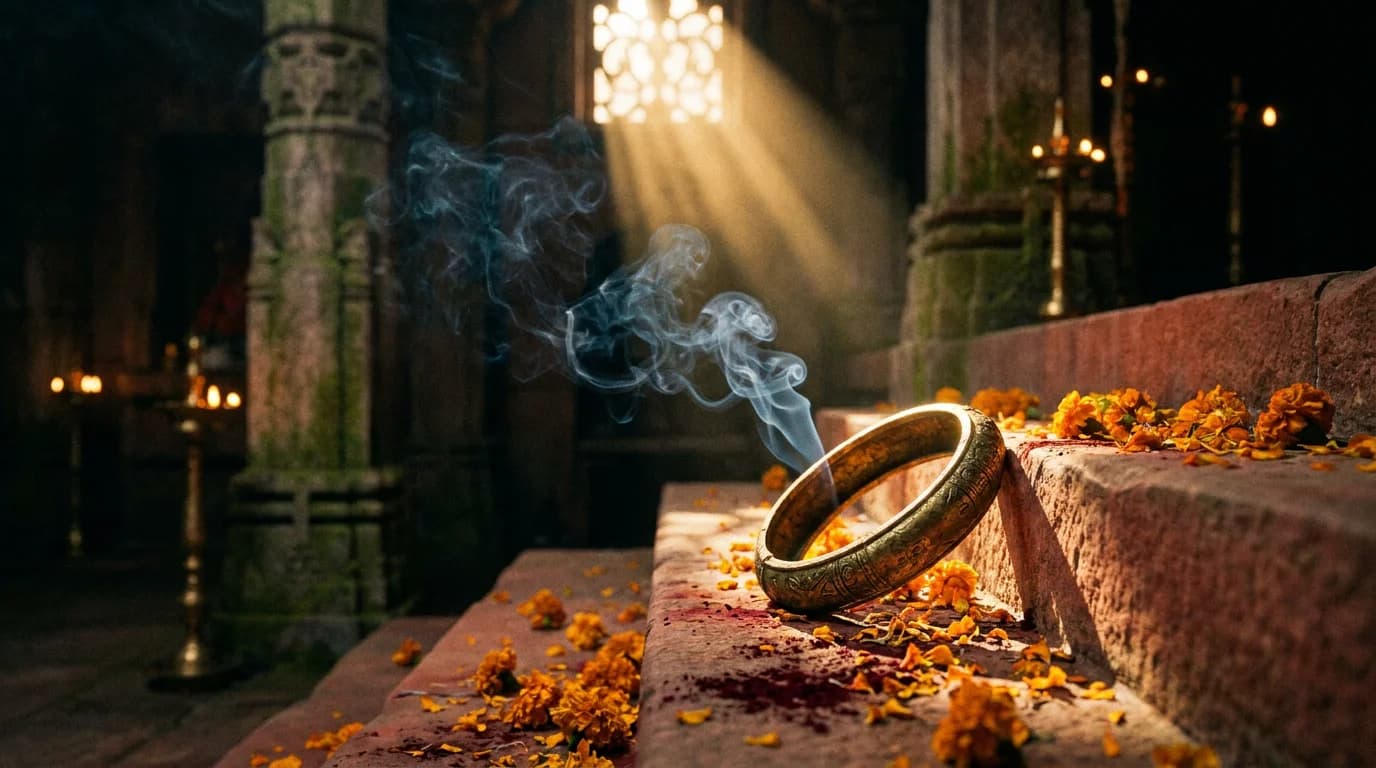
A kada (also spelled kada) is a solid bangle or cuff-style bracelet with deep roots in Indian religious and cultural life. Unlike a chain bracelet or beaded mala, a kada is a single unbroken ring — symbolising continuity, protection, and an unbroken bond with the divine. Kadaas are worn by Sikhs as one of the five Ks, by Hindus as devotional jewellery, and in Ayurveda as a metal-therapy piece. The Hanuman Chalisa Kada is a devotional variant: a brass or copper bangle with Hanuman Chalisa chaupais (verses) laser-engraved on its outer surface, making the hymn a wearable, constant companion.
| Form | Solid bangle or open cuff (adjustable or fixed diameter) |
| Material | Pure brass or pure copper; sometimes panchdhatu alloy |
| Engraving | Laser-engraved Hanuman Chalisa chaupais + Hanuman image or Om |
| Weight | Typically 25–60 g depending on metal and thickness |
| Origin tradition | Hindu devotional jewellery; North Indian bhakti tradition |
| Primary association | Hanuman — protector, remover of obstacles, strength deity |
Hanuman in Vedic Tradition: Shakti, Bhakti, and Protection
Hanuman (also called Maruti, Bajrangbali, Pawan Putra) is one of the most beloved deities in the Hindu tradition. He is the divine monkey devotee of Rama, described in the Valmiki Ramayana and the Ramcharitmanas as possessing unlimited strength, flight, the power to change size, and absolute fearlessness. In Vedic astrology, Hanuman is associated with the planet Mars (Mangal) and is invoked for courage, physical strength, and removal of obstacles. He is considered the ultimate Bhakta (devotee) and the ultimate Shakta (possessor of power) simultaneously — making him a model for the twin virtues of surrender and strength.
Hanuman is also associated with protection from negative forces. Folk tradition holds that evil spirits and negative energies cannot remain in the presence of Hanuman's name or image. This makes a Hanuman Chalisa Kada not merely decorative but, for the devotee, a constant spiritual shield worn on the body.
Why the Hanuman Chalisa on a Kada? Tulsidas's 40 Verses as Wearable Prayer
The Hanuman Chalisa is a 40-verse devotional hymn (chalisa = forty) composed by the poet-saint Tulsidas in the 16th century CE, written in Awadhi dialect. It begins with a doha invoking the guru's grace, proceeds through 40 chaupais praising Hanuman's qualities and deeds, and closes with a doha requesting blessings. The Chalisa is perhaps the most widely recited daily prayer in India — recited by millions every morning, especially on Tuesdays and Saturdays.
In Vedic tradition, words (shabda) carry vibrational energy — a principle called Shabda Shakti. Sacred text inscribed on metal is believed to radiate that vibrational quality continuously. The Hanuman Chalisa Kada thus transforms a metal bangle into a wearable sankalp (intention) — a constant, skin-close reminder of Hanuman's protection and the devotee's own commitment to courage and bhakti. DivineTatva does not claim the engraved text changes external events; this is devotional tradition, not medical or scientific claim.
Hanuman Chalisa Kada Benefits: What Tradition Says
The following benefits are drawn from Hindu devotional tradition, Vedic astrology, and reported experiences of devotees. They represent belief and practice — not clinically verified outcomes. DivineTatva presents them honestly: a Hanuman Chalisa Kada is a devotional tool, not a substitute for personal spiritual practice, medical care, or astrological remedy prescribed by a qualified jyotishi.
- 1Protection from Evil Eye (Buri Nazar)
Hanuman is considered one of the most powerful protectors against negative energy and buri nazar in Hindu tradition. The constant presence of his name and the Chalisa on the wrist is believed to create a protective field.
- 2Courage and Fearlessness
Hanuman embodies Nir-Bhay (fearlessness). Devotees report that wearing his kada strengthens resolve in difficult situations — whether in professional challenges, confrontations, or moments of self-doubt.
- 3Physical Strength and Vitality
As Bajrangbali (one with a body of thunder), Hanuman is associated with physical power. Athletes, workers in physically demanding professions, and those recovering from illness often wear the kada as a devotional anchor for strength.
- 4Mangal Dosha Relief
In Vedic astrology, Mangal (Mars) dosha creates challenges in relationships, temperament, and life decisions. Hanuman, associated with Mars, is considered the primary remedy. Wearing a copper or brass Hanuman kada on Tuesday — Mars's day — is a classical Mangal dosha upay (remedy).
- 5Saturn (Shani) Protection
According to the Ramcharitmanas, Hanuman once subdued Shani (Saturn) himself. Devotees experiencing Shani sade sati (7.5-year Saturn transit) often wear a Hanuman kada as a supplementary remedy alongside Shani upays.
- 6Mental Clarity and Focus
The Hanuman Chalisa contains verses specifically associated with intelligence (Vidya) and wisdom. Students and those in mentally demanding work wear the kada as a devotional anchor for sustained focus.
- 7Emotional Grounding
Psychologically, a devotional anchor worn on the body creates a consistent cue for the wearer to return to their spiritual practice. This repeated cue can reduce anxiety and increase a sense of groundedness.
Which Hand to Wear Hanuman Chalisa Kada: Right Wrist for Devotion
The Hanuman Chalisa Kada is traditionally worn on the right wrist — both for men and women. This differs from the left-wrist convention common for crystal or gemstone bracelets. The distinction matters: in Vedic tradition, the right hand is the active, projecting hand (used for offering, giving, actions in the world). Wearing a protection and strength deity's kada on the right wrist activates outward energy — courage projected into action, protection extended into one's environment. Crystal bracelets, by contrast, are often worn on the left (receiving) wrist to absorb energy inward.
For those who find the right wrist uncomfortable (e.g., due to watch, work constraints, or injury), wearing on the left is acceptable. In Vedic practice, the sankalp — the mental intention set at the time of wearing — carries more weight than the precise physical placement. If you wear it on your left wrist with clear intention and devotion to Hanuman, the tradition considers that valid.
| Recommended wrist | Right (both men and women for Hanuman specifically) |
| Reason | Right = active/projecting hand; Hanuman = outward protection and strength |
| Alternative | Left wrist if right is not comfortable; sankalp matters more |
| Contrast: crystal bracelet | Left wrist (receiving); opposite convention |
| Best day to first wear | Tuesday (Mangalvar) or Saturday (Shanivar) |
| Time of first wearing | Morning after bath, ideally after Hanuman Chalisa recitation |
Who Can Wear Hanuman Chalisa Kada: Men, Women, Children, All Rashis
The Hanuman Chalisa Kada is considered universally wearable in Hindu tradition. Hanuman blesses all devotees equally — there is no gender, age, caste, or rashi (zodiac sign) restriction on wearing his kada. Men, women, and children from approximately age five and above can wear it. Non-Hindu wearers who approach it with respect for the tradition may also wear it as a symbol of strength — the intention and reverence matter.
Certain groups find particular benefit in devotional tradition: those with Mangal dosha in their kundali, those experiencing Shani sade sati or dhaiya, students facing examinations, individuals in physically demanding occupations (construction, sports, military, police), those experiencing persistent fear or anxiety, and those who recite the Hanuman Chalisa daily and wish to keep the text with them always.
Brass vs Copper Hanuman Chalisa Kada: Which Metal Is Right for You?
DivineTatva offers the Hanuman Chalisa Kada in both pure brass and pure copper. Both are traditional metals in Hindu worship and Ayurveda. Your choice depends on your primary purpose, skin sensitivity, and budget.
| Criterion | Brass Kada | Copper Kada |
|---|---|---|
| Metal composition | Copper + zinc alloy | Pure copper (99%+) |
| Colour | Golden yellow | Reddish orange |
| Vedic association | General devotion, Surya (Sun) energy | Mangal (Mars) energy specifically |
| For Mangal dosha | Good | Preferred / stronger remedy |
| Durability | Higher — harder alloy | Slightly softer, more malleable |
| Engraving quality | Excellent — zinc hardens surface | Good — slightly more prone to wear |
| Patina over time | Rich antique brown/gold | Turns reddish-brown then green (copper oxide) |
| Green patina (verdigris) | Rare | More common; harmless; wipe with dry cloth |
| Price | More affordable (₹349 MRP ₹649) | Slightly higher |
| Ayurvedic benefit | Beneficial when worn on skin | Copper has documented antimicrobial properties |
| Recommended for | General devotion, durability, first-time buyers | Mangal dosha, Mars-related issues, copper therapy |
How to Energise a Hanuman Chalisa Kada on Tuesday
DivineTatva Hanuman Chalisa Kadas are energised in Jaipur before dispatch. If you wish to personally energise (or re-energise) your kada, Tuesday morning (Mangalvar) is the traditional day for Hanuman rituals. Saturday (Shanivar) is also auspicious, especially for Shani-related intentions.
- 1Cleanse yourself
Take a bath before the ritual. Wear clean, preferably red or orange clothing — colours associated with Hanuman.
- 2Set up a clean space
Place the kada on a clean red cloth before a Hanuman image or idol, or in your puja room. Light a ghee diya if available.
- 3Offer sindoor and flowers
Hanuman is traditionally offered sindoor (vermilion) and orange/marigold flowers. A small application of sindoor near the kada is considered auspicious.
- 4Recite the Hanuman Chalisa
Recite the full Hanuman Chalisa once (ideally three or eleven times). This charges the kada with your sankalp and devotion.
- 5State your sankalp
Hold the kada in your right palm and mentally state your intention: protection, courage, Mangal relief, Saturn protection — whatever is primary for you.
- 6Wear on right wrist
After recitation, place the kada on your right wrist. Offer a mental pranaam to Hanuman.
- 7Ongoing practice
To maintain the kada's devotional charge, recite at least one doha of the Hanuman Chalisa daily when you touch or adjust the kada.
How to Care for Your Hanuman Chalisa Kada
Polish with a dry soft cloth to maintain shine. Brass and copper naturally oxidise over time — this patina is considered sacred and should not be aggressively removed. For light cleaning, use a dry natural fibre cloth. Avoid water, chemical polish, and soap. If the kada develops a green patina (copper oxide), wipe gently with a dry cloth and expose to sunlight for 1 hour. Remove before immersion in water.
| Daily care | Wipe with dry soft cloth after wearing |
| Green patina (verdigris) | Harmless — wipe with dry cloth and expose to sunlight 1 hour |
| Avoid | Water immersion, soap, chemical polish, abrasive scrubs |
| Swimming / bathing | Remove the kada before entering water |
| Patina attitude | Considered sacred in devotional tradition — do not force-polish away |
| Storage | Dry environment; red cloth pouch or wooden box ideal |
Gifting a Hanuman Chalisa Kada: Occasions and Meaning
A Hanuman Chalisa Kada is one of the most meaningful devotional gifts in the Hindu tradition. Unlike a decorative item, it carries a specific spiritual intention — protection, strength, and Hanuman's blessings for the recipient. Gifting one says: 'I wish you courage and divine protection.' DivineTatva ships in a kraft box with a jiyo card explaining the tradition, making it gift-ready without additional packaging cost.
- 1Mundan / naming ceremonies
A Hanuman Chalisa Kada for a child's first religious ceremony is a lasting, meaningful gift from grandparents or family elders.
- 2Before examinations
Students appreciate the devotional anchor of a Hanuman kada before board exams, competitive entrances, or job interviews.
- 3Hanumanji jayanti or Ram Navami
Religious festivals associated with Hanuman are natural gifting occasions.
- 4For someone facing hardship
Those going through a difficult Saturn period, health challenges, or major life transitions receive the kada as a symbol of wished-upon strength and protection.
- 5Diwali or Raksha Bandhan
Both are popular gifting seasons; the Hanuman Chalisa Kada is appropriate for brothers, fathers, or any devotee in the family.
Hanuman Chalisa Kada Price in India: What to Expect
The DivineTatva Hanuman Chalisa Kada is priced at ₹349 (MRP ₹649), placing it in the honest mid-range — meaningfully better than cheap printed kadaas under ₹200, and accessible compared to premium solid copper pieces above ₹600. Price is not the primary indicator of a good devotional kada — but metal purity, engraving depth, and energisation are.
| Price Range | What You Get | Recommended? |
|---|---|---|
| ₹100–200 | Thin brass, printed (not engraved) text, fades quickly, may be plated not solid | No — avoid |
| ₹250–349 | Decent brass, laser-engraved, decent weight — DivineTatva tier | Yes for brass |
| ₹400–650 | Copper engraved, heavier, richer patina over time | Yes for copper |
| ₹800+ | Premium solid copper or silver, hallmarked, artisan-finished | Yes if budget allows |
Frequently asked
Last reviewed: 17 May 2026 · Verified by the DivineTatva expert panel
Can women wear a Hanuman Chalisa Kada?
Yes. Hanuman blesses all devotees equally and there is no gender restriction in the Hanuman bhakti tradition. Women wear the Hanuman Chalisa Kada on the right wrist, same as men. Many women wear it specifically for protection, courage during pregnancy, or Mangal dosha remedy.
Is there a specific time to put on the Hanuman Chalisa Kada for the first time?
Tuesday morning (Mangalvar) after a bath is the traditional first-wearing time, ideally after reciting the Hanuman Chalisa. Saturday morning is also auspicious, especially for Saturn-related intentions. If neither day is feasible, any morning after bathing and with clear sankalp is acceptable.
Can I wear the Hanuman Chalisa Kada while sleeping?
Most devotees keep the kada on continuously — sleeping, working, during daily activities. Remove it only before immersion in water (bathing, swimming) to prevent tarnishing. Some prefer to remove all jewellery before sleep; that is a personal preference, not a religious requirement.
Does the Hanuman Chalisa Kada have scientific proof of its benefits?
There is no scientific evidence that wearing an engraved metal bracelet changes external events or health outcomes. Copper worn on skin has documented mild antimicrobial properties, which is separate from the devotional claims. The benefits described in this guide are from Hindu devotional tradition and devotee experience — presented honestly, not as medical or scientific fact.
Can a non-Hindu wear a Hanuman Chalisa Kada?
Non-Hindus may wear it as a symbol of strength and protection if they approach it with respect for the tradition. The Hanuman Chalisa tradition does not prescribe restrictions on who may carry Hanuman's name. Wearing with reverence — even without deep knowledge of the tradition — is generally considered respectful and not appropriative.
What should I do if the brass turns green?
Green patina (verdigris / copper oxide) on brass or copper is completely harmless and is considered sacred in the devotional tradition. Wipe gently with a dry cloth and leave the kada in direct sunlight for one hour. Do not use chemical polish or soap. The patina will naturally lighten; you do not need to return it to a shiny new state.
Can I wear a Hanuman Chalisa Kada along with other bracelets?
Yes. The Hanuman Chalisa Kada is commonly worn alongside rudraksha malas, crystal bracelets, or other devotional pieces. If wearing multiple items, the Hanuman kada traditionally goes on the right wrist while crystal bracelets go on the left — keeping the traditions coherent.
Is brass or copper better for Mangal dosha?
Pure copper is the preferred metal for Mangal (Mars) dosha specifically, because copper is the Vedic metal of Mars. Brass (copper + zinc) works as a general Hanuman devotion piece. For a specific Mangal dosha remedy, choose the copper variant; for general wear and durability, brass is excellent.
How do I know if the engraving is laser vs stamped?
Laser engraving is precise, deep, and shows clear individual characters — run a fingernail across the text and you will feel each letter distinctly. Stamped or printed text feels shallower or raised rather than incised. DivineTatva uses laser engraving; cheap kadaas under ₹150 typically use print transfer that fades within months.
Does DivineTatva energise the Hanuman Chalisa Kada before shipping?
Yes. DivineTatva Hanuman Chalisa Kadas are energised in a Jaipur puja before dispatch, with a Hanuman Chalisa recitation. The energisation process is documented on the product page. You may also re-energise it personally following the Tuesday morning ritual described in this guide.
What size is the Hanuman Chalisa Kada? Is it adjustable?
The DivineTatva Hanuman Chalisa Kada is available in adjustable open-cuff form that fits most adult wrist sizes (approx. 6–8 cm inner diameter when adjusted). A separate smaller size is available for children. Check the product page for current size options.
Can I gift this to someone of a different religion?
Yes, with a brief note explaining the tradition. The Hanuman Chalisa Kada is a symbol of strength, protection, and devotion — values that transcend religious boundaries. DivineTatva's kraft gift box includes a tradition card explaining the significance, which is helpful for recipients unfamiliar with Hanuman bhakti.
Reviewed by the DivineTatva expert panel
Written and reviewed by DivineTatva's consulting Vedic astrologer. Every piece is lab-certified and energised in our Jaipur atelier. Last updated 20 June 2026.