Lumba Rakhi from Jaipur
The rakhi that is tied on bhabhi's bangle, not the wrist — Rajputana tradition, hand-made in our atelier.
A lumba rakhi is the traditional Marwari/Rajputana rakhi tied on the bhabhi's (sister-in-law's) bangle rather than on her wrist — a custom acknowledging that the brother's protection extends to his wife and his household. Authentic lumba rakhis are built on a lac (resin) base sourced from Jaipur's traditional bangle-makers in Tripolia Bazaar, with mirror chips, gota-zardozi thread, kundan stones, and seed-pearl danglers strung by hand. DivineTatva's lumba rakhis are made in our C-Scheme atelier by women whose families have been doing this work for three generations; a single lumba takes 35-45 minutes to string.
Lumba sets, for bhabhi & bhaiya.
Each lumba ships as a set — lumba for bhabhi, matching wrist rakhi for the brother.
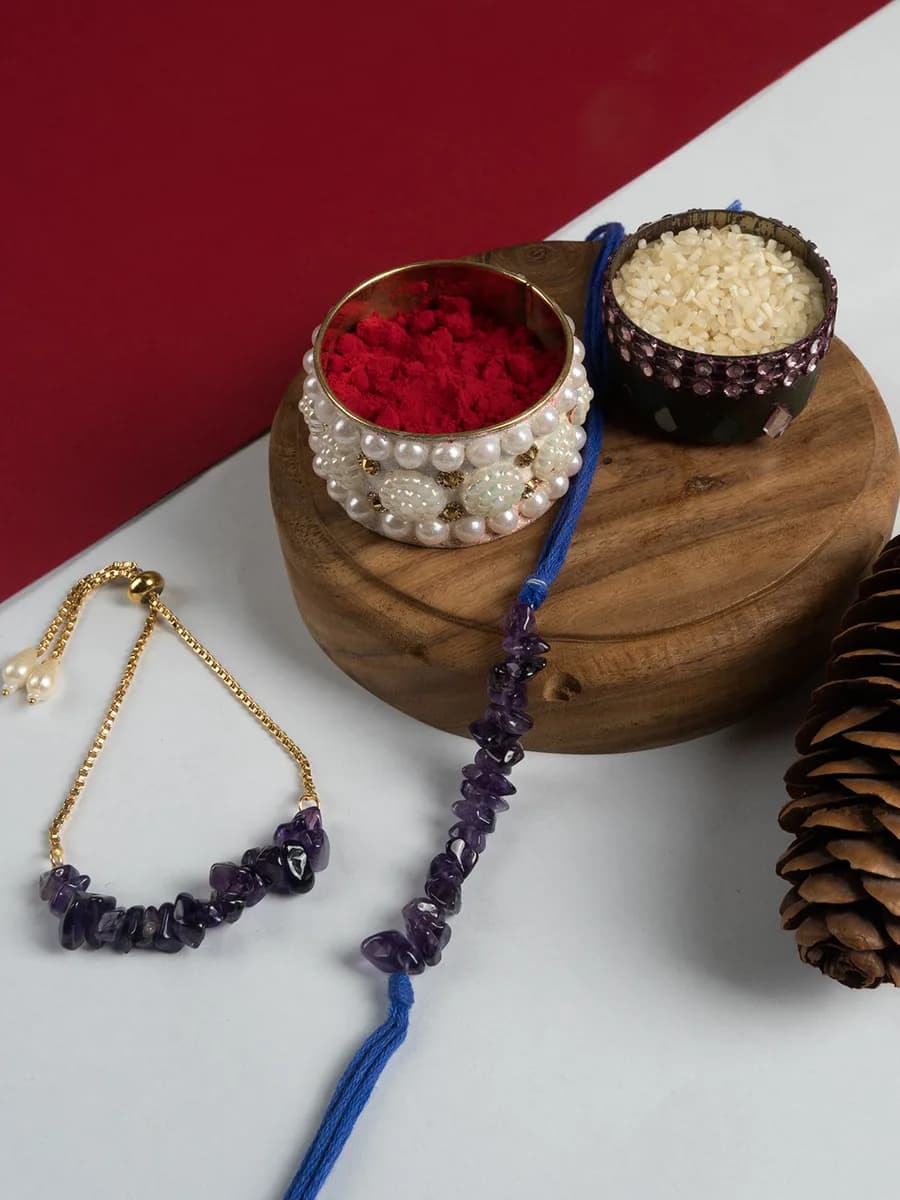
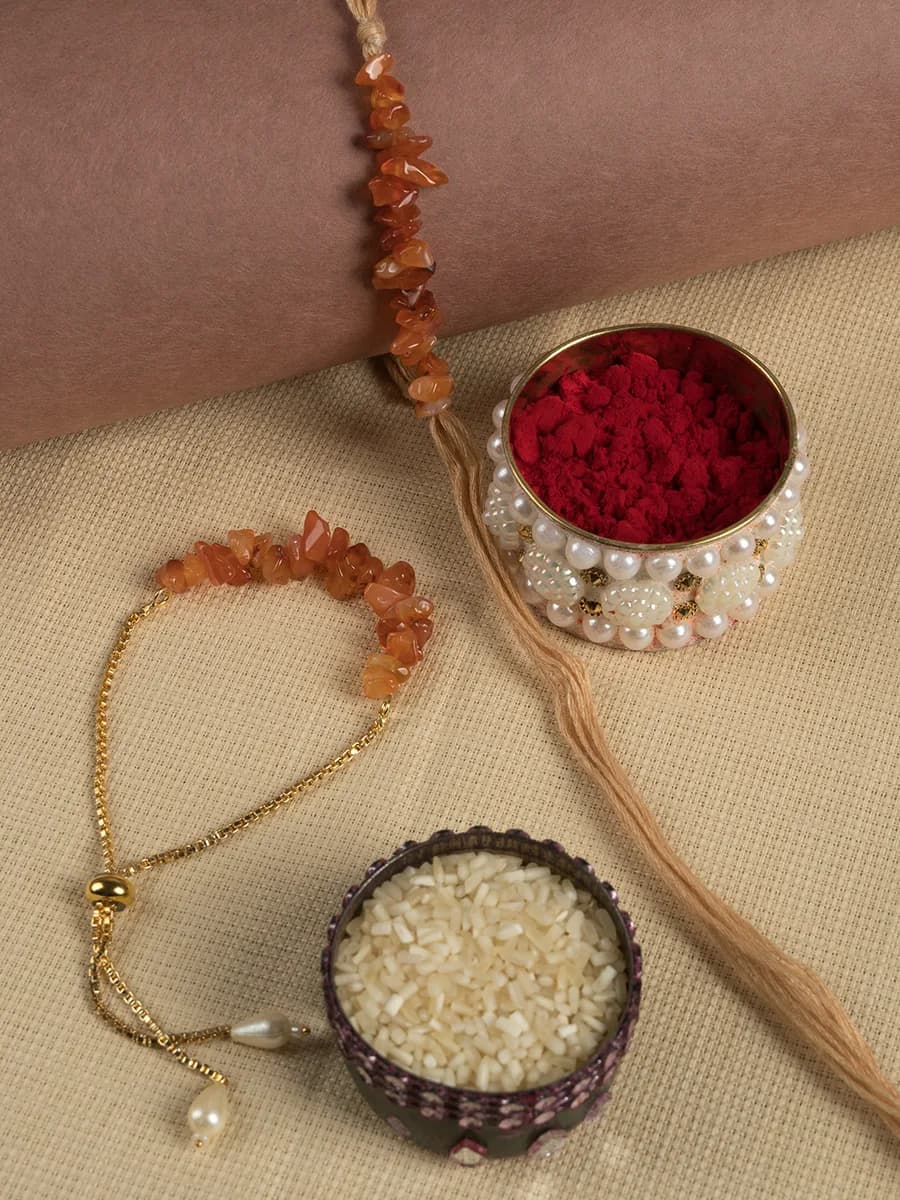
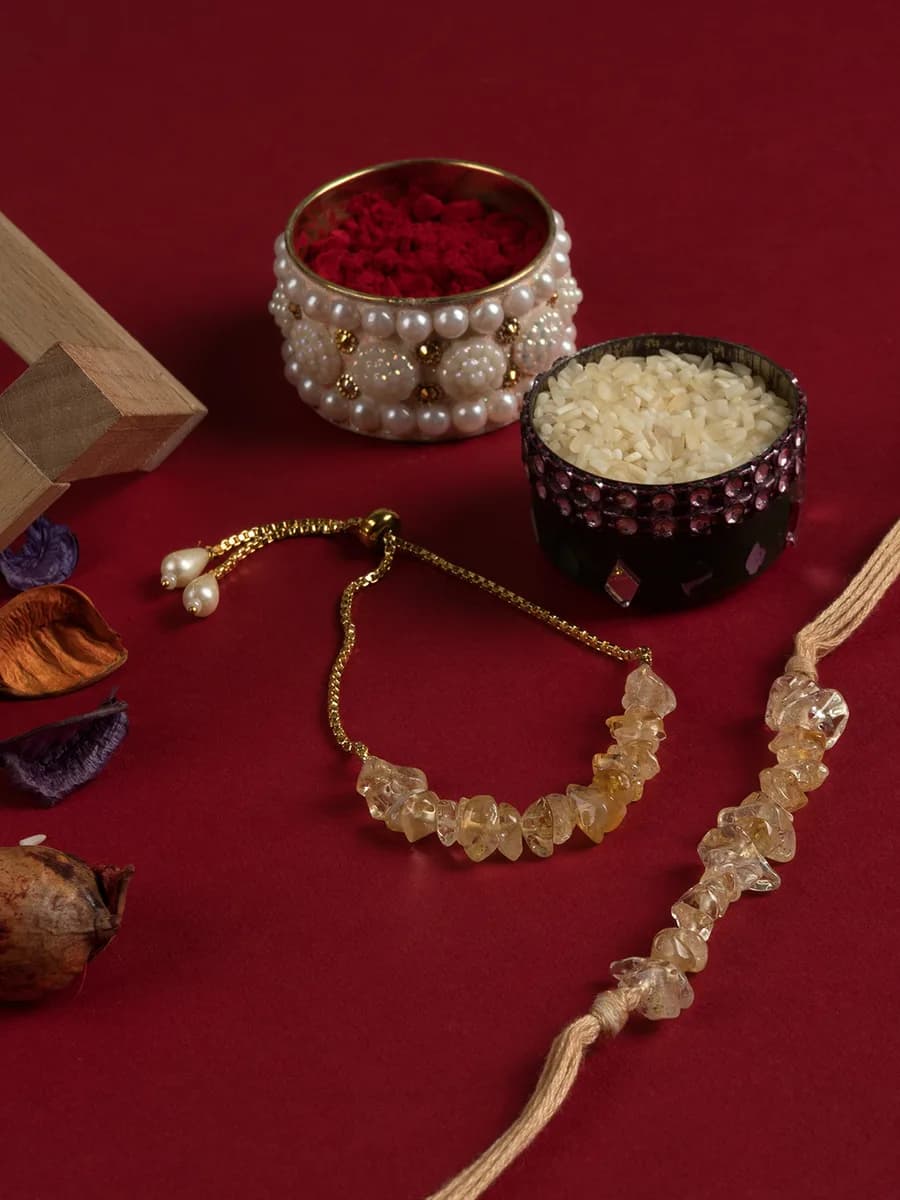
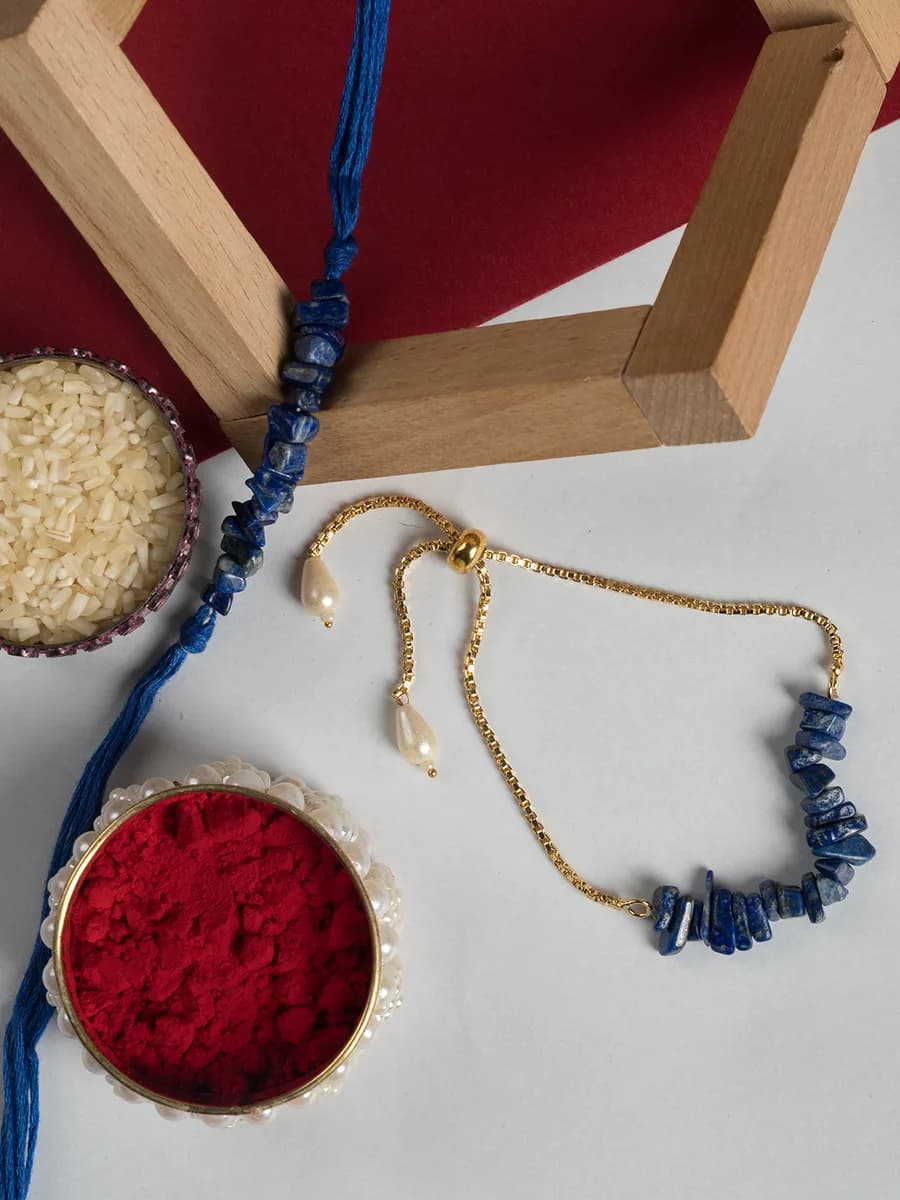
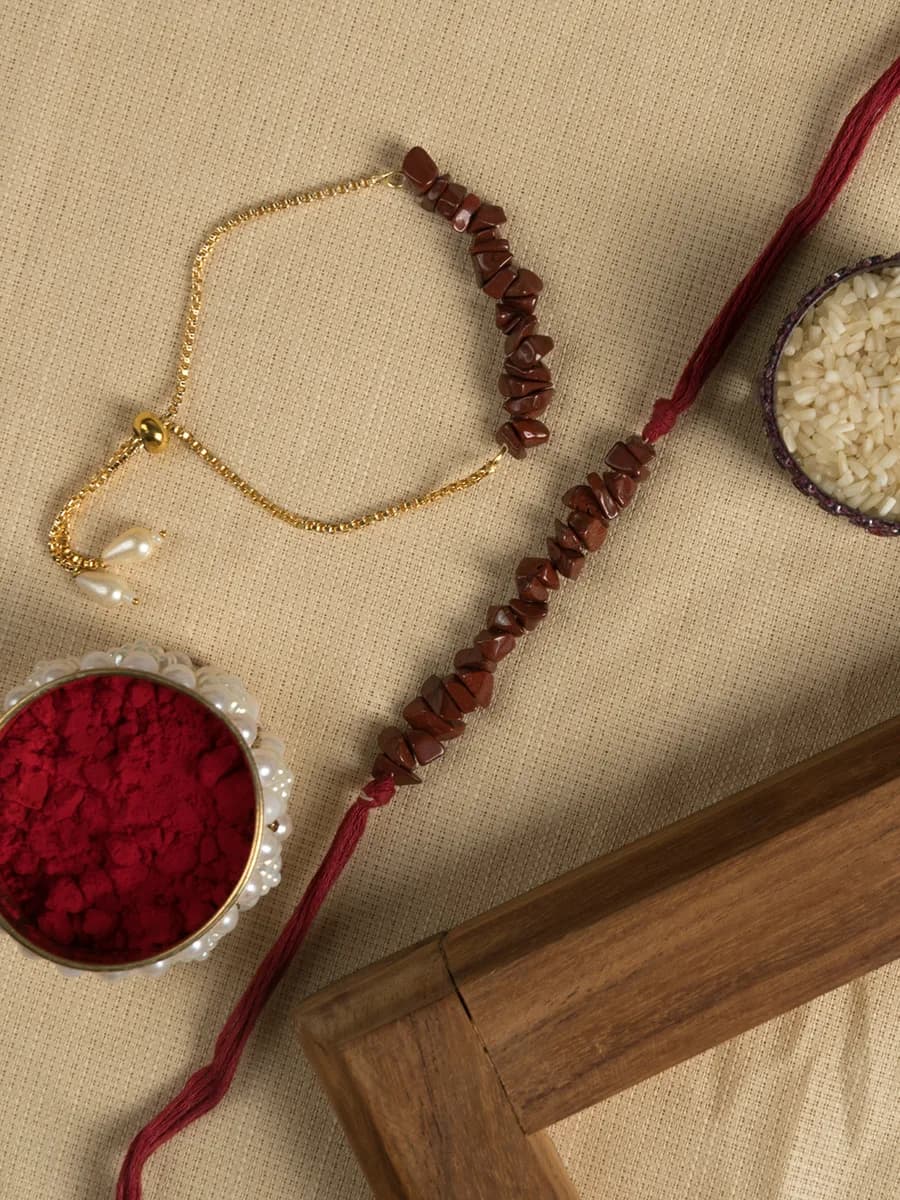
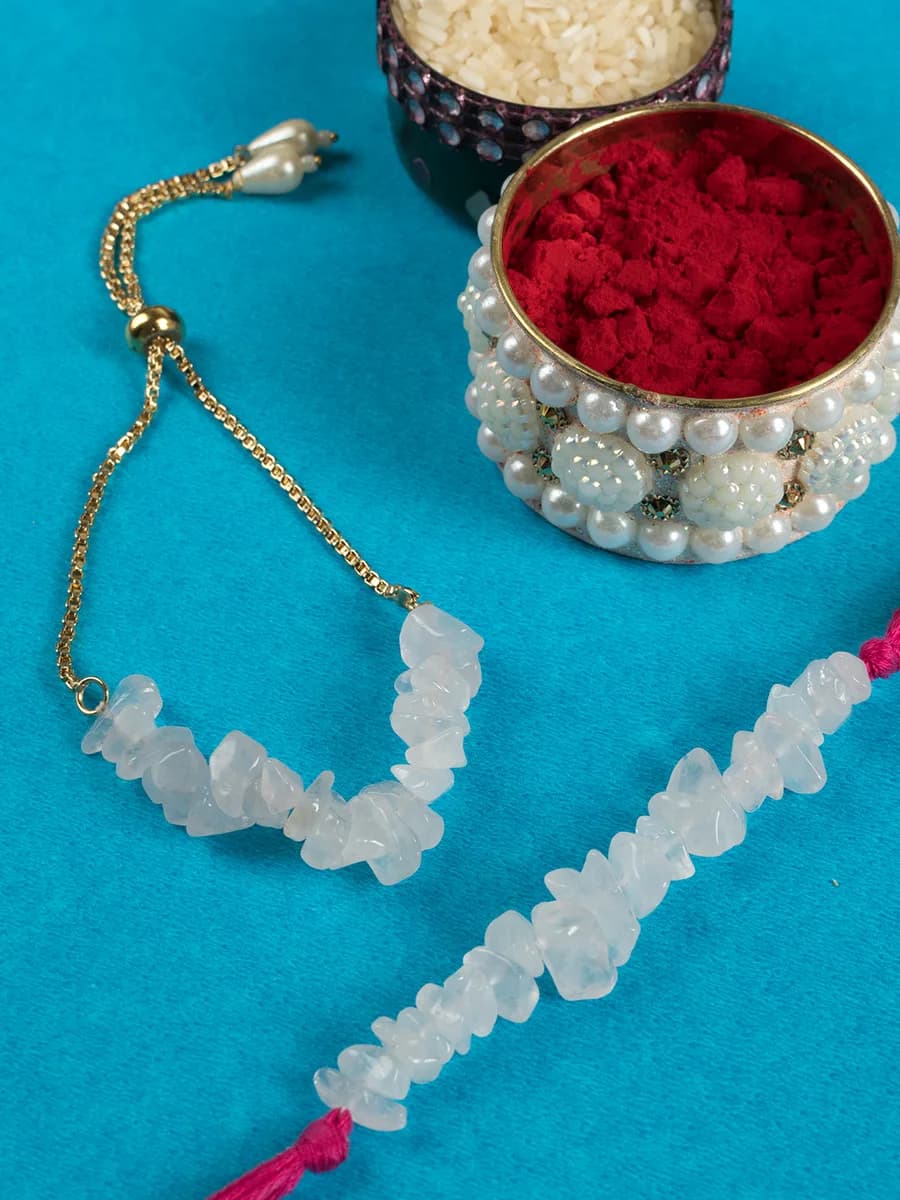
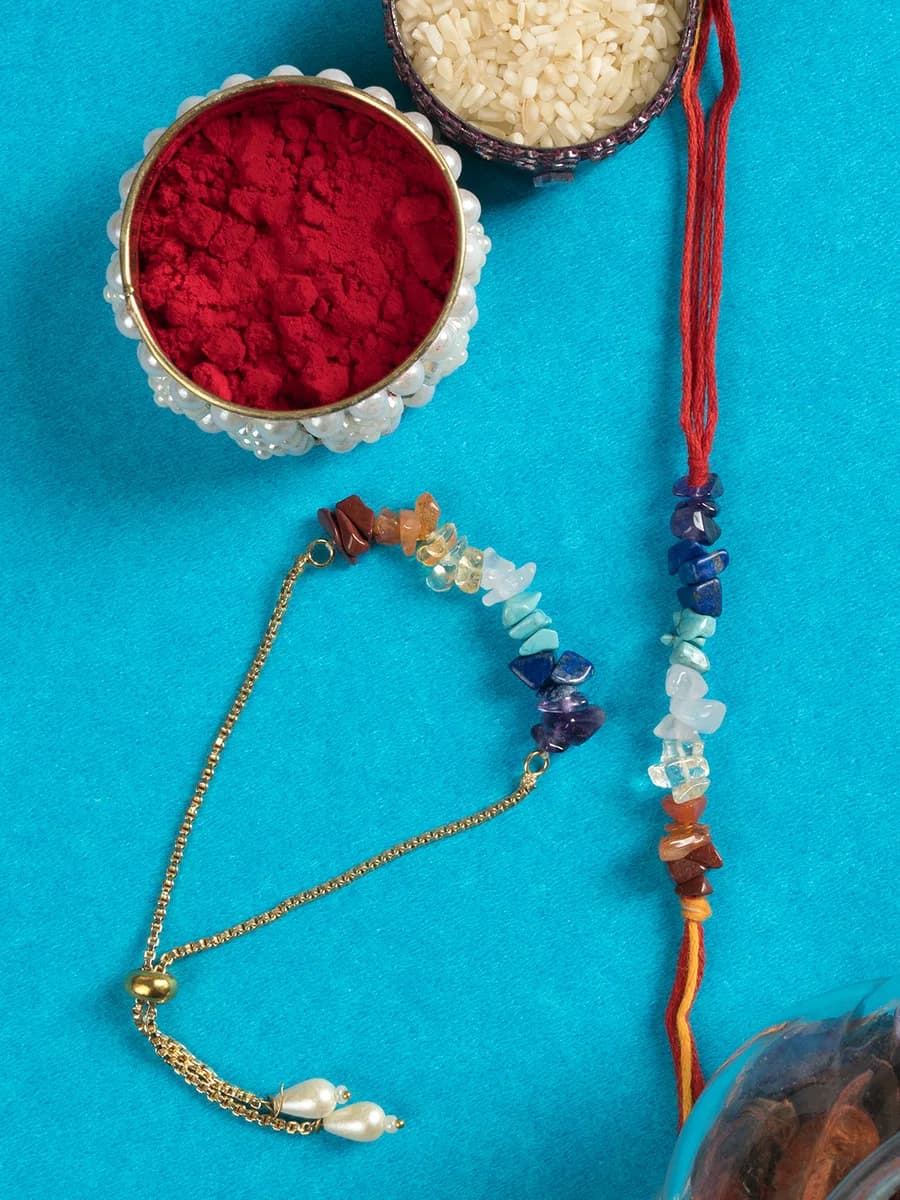
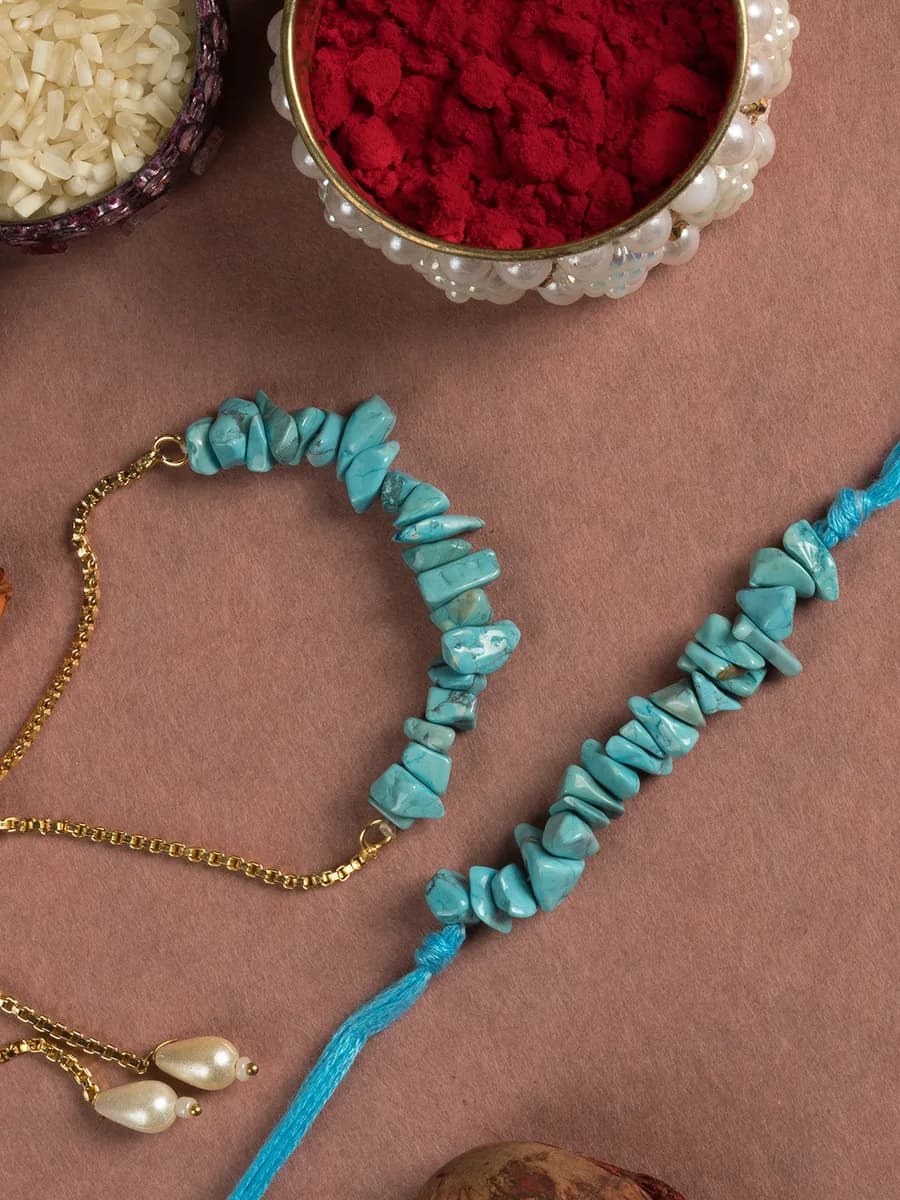
The lac, the bazaar, the karigar.
Most lumba rakhis sold online are machine-stamped from Surat or Mumbai, with synthetic lac, glass-on-plastic mirrors and polyester danglers. Authentic Jaipur lumba uses natural lac sourced from the same Tripolia Bazaar lac-bangle-makers who have supplied royal weddings for four generations. The mirror chips are cut by hand from beveled glass, not punched from foil. The danglers are hand-strung on cotton thread, not glued. The difference shows in the second year — a Jaipur lumba is still intact at Raksha Bandhan 2027; a Surat-stamped piece is usually broken by Diwali.
About from jaipur.
What is a lumba rakhi?
Lumba rakhi is the traditional Marwari and Rajputana rakhi tied on the bhabhi's (brother's wife's) bangle rather than on her wrist. It acknowledges that the brother's protective bond extends to his wife and his household. The lumba is recognisable by its danglers — beaded, mirrored or pearl strings that hang from the central lac base. It is almost always sold as a set with a matching wrist rakhi for the brother himself.
Who ties the lumba rakhi?
The sister ties the lumba on the bhabhi's bangle after the main wrist rakhi ceremony — usually the same morning, before noon. In strict Rajputana convention, the lumba is tied on the right hand bangle. In south-Marwari and Gujarati households, both wrists are acceptable. The bhabhi reciprocates with a gift or shagun.
Is lumba rakhi only for the elder brother's wife?
Traditionally yes — lumba is tied to the eldest bhabhi as the senior matriarch of the brother's household. In modern households, lumba is often tied for all bhabhis (each one separately), and many families now also tie a lumba for sister-in-law's-mother as a courtesy. The DivineTatva set defaults to one lumba + one brother rakhi; multi-bhabhi sets can be requested in checkout notes.
What makes a Jaipur lumba authentic?
Three markers: (1) Natural lac base — not plastic or resin; sourced from Tripolia Bazaar bangle-makers. (2) Hand-cut beveled glass mirrors — not foil-punched or printed; they reflect crisply. (3) Hand-strung danglers on cotton thread — not glue-tipped or polyester. An authentic Jaipur lumba weighs 12-18g; a stamped imitation weighs 4-7g. Our hallmark video sent on WhatsApp shows the karigar stringing your specific piece.
Can I gift a lumba rakhi to bhabhi without the wrist rakhi for brother?
Possible but not traditional — the lumba is symbolic of the protection extending from brother to bhabhi, so the wrist rakhi for the brother completes the gesture. We default to selling lumba as a 2-piece set; if you want lumba-only (unusual), mention in checkout notes and we will adjust pricing.
How long does a lumba rakhi last?
An authentic Jaipur lumba, made with natural lac and cotton thread, lasts indefinitely if kept in the original box away from moisture and direct sunlight. The lac softens slightly in extreme heat (>40°C continuous) but reverts on cooling. Many Marwari families keep the lumba as a keepsake — pinned to the wedding album, framed, or saved in a dedicated rakhi box that accumulates over years.