7 Chakra Bracelet — meaning, benefits & real vs fake
A 7 chakra braceletis a beaded wrist bracelet strung with seven natural stones — one for each of the body's seven energy centres (chakras) — arranged in root-to-crown colour order: red, orange, yellow, green, blue, indigo and violet. It is worn to keep all seven chakras balanced at once, supporting grounding, confidence, emotional balance, clear communication, intuition and calm. DivineTatva 7 chakra bracelets use AA-grade natural stones (not dyed glass), are lab-certified, and are energised in our Jaipur atelier before dispatch.
Which hand? Left wrist to receive calming/balancing energy; right to project it outward.
Real or fake? Real stone is cool, slightly heavy, naturally varied, with no air bubbles and no dye that bleeds — and the colours follow the correct order.
Price in India? ₹600–₹1,200 for certified natural stone; under ₹300 is usually dyed glass. DivineTatva: ₹599 (8mm) / ₹799 (10mm).
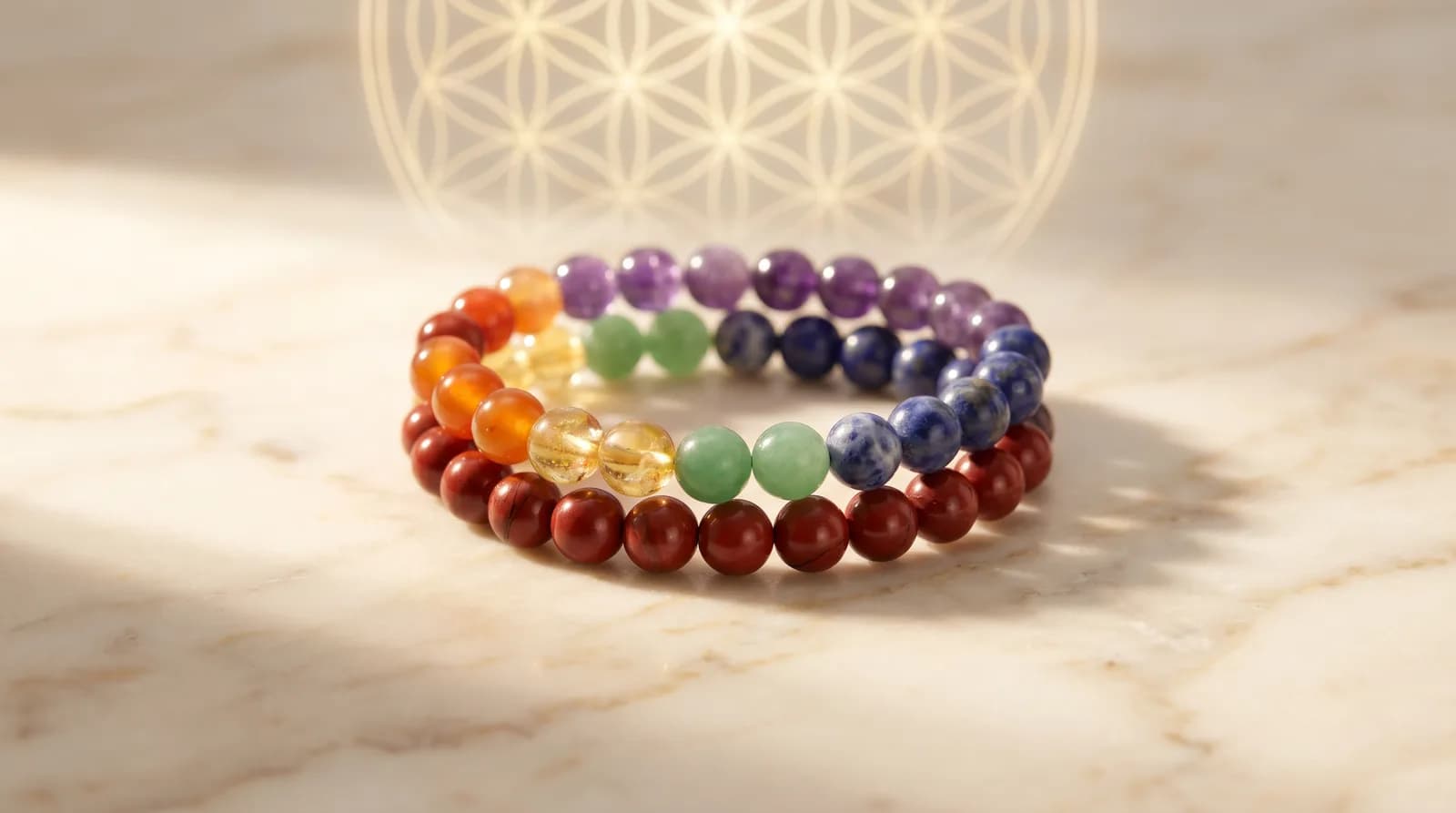
What is a 7 chakra bracelet?
A 7 chakra bracelet is a stretch or beaded bracelet that carries seven different natural stones, one matched to each of the seven chakras — the energy centres that, in yogic and Ayurvedic tradition, run from the base of the spine (root) to the top of the head (crown). Each chakra has a signature colour, and the stones are chosen so their colours follow that exact spectrum, from red at the root to violet at the crown.
Because it covers all seven centres in one piece, people wear it as a single daily "all-rounder" — rather than choosing one stone for one issue, the chakra bracelet is a balanced, beginner-friendly way to keep the whole system in mind. That is also why it is one of the most-gifted crystal bracelets: the meaning is easy to understand and it suits any wearer.
The 7 stones, colours & meanings (root to crown)
Here is the standard root-to-crown set. The colour order is fixed; the specific stone can vary slightly between makers (we note the common swaps below the table).
| Chakra | Sanskrit | Colour | Stone | Governs |
|---|---|---|---|---|
| Root | Muladhara | Red | Red Jasper | Grounding, security, survival |
| Sacral | Swadhisthana | Orange | Carnelian | Creativity, desire, vitality |
| Solar Plexus | Manipura | Yellow | Citrine | Confidence, willpower, drive |
| Heart | Anahata | Green | Green Aventurine | Love, compassion, balance |
| Throat | Vishuddha | Blue | Sodalite | Communication, truth, expression |
| Third Eye | Ajna | Indigo | Lapis Lazuli | Intuition, clarity, insight |
| Crown | Sahasrara | Violet | Amethyst | Awareness, peace, spirituality |
Common swaps: some sets use turquoise or blue howlite for the throat, and clear quartz for the crown. These are valid as long as the red-to-violet colour sequence is preserved — if the order or colours are wrong, the bracelet was strung carelessly or is a cheap imitation.
Benefits — an honest belief-vs-evidence note
Traditionally, a 7 chakra bracelet is worn to balance all seven energy centres at once: grounding and stability (root), creativity and confidence (sacral and solar plexus), compassion and emotional balance (heart), honest communication (throat), and intuition and calm awareness (third eye and crown). Many wearers describe feeling more centred, focused and mindful through the day.
We want to be straight with you: there is no clinical, peer-reviewed evidence that crystals emit measurable healing energy, and we will not pretend otherwise. What is real and documented is the power of intention and ritual — wearing the bracelet is a small, physical anchor that keeps your intention in front of you, and that mindfulness has genuine day-to-day value. Treat it as a meaningful spiritual and wellness practice, never as a substitute for medical care.
Real vs fake — 8 ways to spot a fake
Dyed glass and resin "chakra" beads are everywhere, often sold as natural stone. Run these checks before you buy or right after your bracelet arrives.
The beads must run red → orange → yellow → green → blue → indigo → violet (root to crown). Wrong order or off colours is a red flag for a carelessly made or fake piece.
Natural stone feels cool and stays cool for a few seconds when you pick it up. Glass warms a little; plastic and resin warm almost instantly to body heat.
Real stone beads are noticeably heavier than plastic of the same size. A suspiciously light bracelet is usually resin or plastic.
Hold each bead to the light. Tiny round air bubbles trapped inside mean it is moulded glass, not natural stone.
Rub a bead gently with a cotton pad dampened with acetone or nail-polish remover. If colour transfers to the pad, it is dyed — natural stone colour does not bleed.
Real stones show slight variation in tone and tiny natural inclusions or banding. Perfectly uniform, candy-bright beads are usually dyed.
Look at the bead hole under light. A surface coating that chips at the hole — revealing a different colour underneath — means it is coated or dyed.
A genuine natural-stone bracelet comes with a lab certificate and rarely costs under ₹300. No certificate plus a too-good-to-be-true price almost always means glass or resin.
Which hand, how to wear, cleanse & charge
Which hand: wear it on the left wrist if you want to receive and absorb calming, balancing energy — this is the right choice for most people wearing a chakra bracelet for peace, sleep and emotional balance. Wear it on the right wrist to project that balanced energy outward into work and action. If you are strongly left-handed the sides can feel reversed; go with what feels grounded and stay consistent.
First wear & activation:hold the bracelet in your palms, take a few slow breaths, and set a simple intention (for example, "I am balanced and calm"). Slip it on. A quiet morning after bathing is a nice time to start.
Rest the bracelet on dry rice or a selenite plate for 12–24 hours, or smudge it with sage or sandalwood incense, to clear accumulated energy.
Leave it under indirect moonlight overnight — a full moon is ideal. Avoid long sun exposure, which fades amethyst and citrine.
Remove it before showering, swimming, gym sweat, lotions and perfume. Soap, chlorine and salt water dull the polish and weaken the elastic.
Store flat in a pouch, away from harder jewellery that can scratch it. Elastic naturally relaxes over 12–18 months of daily wear — restring it rather than stretching a tired cord.
Price in India & how to choose (8mm vs 10mm)
The single biggest price driver is whether the stones are natural and certified. Here is what the India market looks like:
| Dyed glass / resin 'chakra' bracelet | ₹150–₹350 — avoid |
| Mass-market natural stone, no certificate | ₹400–₹700 |
| Certified AA natural stone (India) | ₹600–₹1,200 |
| DivineTatva — lab-certified + energised + Jaipur | ₹599 (8mm) / ₹799 (10mm) |
The other choice is bead size. Both sizes carry the same seven stones — pick by wrist size and the look you want:
| 8 mm | 10 mm | |
|---|---|---|
| Feel | Lighter, everyday, easy to stack | Bolder, heavier, statement |
| Best for | Women, teens, smaller wrists, daily wear | Men, larger wrists, worn solo |
| DivineTatva price | ₹599 | ₹799 |
Whatever you choose, insist on a certificate that names the stones and confirms they are natural. DivineTatva 7 chakra bracelets ship with a lab certificate, are energised in our Jaipur atelier, and come with a care card and a 7-day return guarantee.
Frequently asked
Last reviewed: 17 May 2026 · Verified by the DivineTatva expert panel
Which hand should I wear a 7 chakra bracelet on — left or right?
Wear it on the LEFT wrist if your goal is to receive and absorb calming, balancing energy — the left is the receiving (yin) side in Vedic and crystal-healing tradition, and this is right for most people wearing a chakra bracelet for peace, sleep and emotional balance. Wear it on the RIGHT wrist if you want to project that balanced energy outward into action and work. If you are strongly left-handed, the receiving side can feel reversed — comfort and consistency matter more than the rule.
How can I tell if a 7 chakra bracelet is real or fake?
Real natural-stone beads are cool to the touch and stay cool, are slightly heavier than plastic, show subtle natural colour variation and tiny inclusions (not flat uniform colour), and have no internal air bubbles. Fakes are usually dyed glass or resin: they warm quickly in the hand, are uniformly bright, often contain visible bubbles, and the dye bleeds onto a cotton pad dampened with acetone or nail-polish remover. The correct root-to-crown colour order (red, orange, yellow, green, blue, indigo, violet) is itself a quick authenticity check — many cheap versions get the order or colours wrong. Always ask for a lab certificate.
Do 7 chakra bracelets actually work?
There is no peer-reviewed clinical evidence that crystals emit measurable healing energy, and we will not claim otherwise. What is well documented is the value of intention and ritual: wearing a chakra bracelet acts as a daily, physical reminder of an intention (calm, focus, balance), and many people report a real sense of grounding and mindfulness from that. Treat it as a meaningful wellness and spiritual practice, not a medical treatment — and never use it to replace medical care.
What are the 7 stones and colours, in order?
From root to crown: Root (Muladhara) — red — Red Jasper; Sacral (Swadhisthana) — orange — Carnelian; Solar Plexus (Manipura) — yellow — Citrine; Heart (Anahata) — green — Green Aventurine; Throat (Vishuddha) — blue — Sodalite; Third Eye (Ajna) — indigo — Lapis Lazuli; Crown (Sahasrara) — violet — Amethyst. Some sets swap the throat stone for turquoise or blue howlite and the crown for clear quartz; the colour sequence stays the same.
What is the price of an original 7 chakra bracelet in India?
A genuine natural-stone 7 chakra bracelet in India typically costs ₹600–₹1,200 when it is AA-grade and certified. Anything under about ₹300 is almost always dyed glass or resin. DivineTatva 7 chakra bracelets are ₹599 (8mm) and ₹799 (10mm), lab-certified for natural stone, energised in our Jaipur atelier, and shipped with a certificate and care card.
How do I cleanse and charge my 7 chakra bracelet?
Cleanse it about once a month. Safe methods: rest it on a bed of dry rice or on a selenite plate for 12–24 hours, smudge it with sage or sandalwood incense, or place it under indirect moonlight overnight (a full moon is ideal). Avoid prolonged sunlight, which fades amethyst and citrine, and avoid salt water, which can damage softer or porous beads and the elastic cord.
Can I wear my 7 chakra bracelet while sleeping or showering?
You can sleep in it — many people do, to support calm and rest — but a snug fit avoids snagging. Do not wear it in the shower, pool or sea: soap, shampoo, chlorine and salt water dull the polish, can fade dyed accents, and weaken the elastic over time. Take it off before swimming, bathing, gym sweat and applying lotions or perfume.
What is the benefit of wearing a 7 chakra bracelet?
Traditionally each of the seven stones is linked to one energy centre, so the bracelet is worn to keep all seven chakras balanced at once — grounding (root), creativity (sacral), confidence (solar plexus), love and compassion (heart), clear communication (throat), intuition (third eye) and calm awareness (crown). In practical terms, most wearers value it as a single daily anchor for emotional balance, focus and mindfulness.
Should I choose 8mm or 10mm beads?
8mm is the everyday, versatile size — lighter, easy to stack with other bracelets, and flattering on smaller and average wrists; it is the most popular choice for women and for daily wear. 10mm is a bolder, heavier statement bead, usually preferred for larger or male wrists and worn on its own. Both carry the same seven stones; pick by wrist size and the look you want.
Who should not wear a 7 chakra bracelet, and are there side effects?
A 7 chakra bracelet is gentle and generally suitable for everyone, including beginners and (with a smaller size) children. There are no physical side effects beyond possible skin sensitivity to the elastic or metal spacer in rare cases. It is not a Vedic ratna tied to a specific planet, so there are no strict astrological restrictions — but if you are using gemstones as a planetary remedy, consult an astrologer before mixing them.
What certification should a genuine 7 chakra bracelet have?
Ask for a gem-testing-laboratory certificate or report that names the stones and confirms they are natural (not dyed glass, reconstituted or synthetic). In India, look for labs aligned with recognised bodies; a credible seller will show the certificate up front rather than 'on request'. DivineTatva ships every bracelet with a lab certificate and a natural-stone, AA-grade assurance.
Is a 7 chakra bracelet good for men, women and kids?
Yes — it is unisex. Women and teens usually prefer 8mm; men often prefer 10mm. For children, choose a smaller wrist size and natural, undyed stones, and supervise younger kids around small beads. It also makes a popular gift because the seven-stone meaning is easy to understand and suits any wearer.
Reviewed by the DivineTatva expert panel
Written and reviewed by DivineTatva's consulting Vedic astrologer and cross-checked against gemological identification practice. Every bracelet is lab-certified for natural stone and energised in our Jaipur atelier. Last updated 18 June 2026.