Types of Rudraksha: 1 to 21 Mukhi Benefits, Ruling Deity, Planet and Who Should Wear Each
A mukhi is a natural vertical line or face on a rudraksha bead, and the count tells you its type. The 1 to 14 mukhi beads are the ones most people wear, each linked in tradition to a deity and a planet. The 5 mukhi is the most common and is widely regarded as suitable for almost everyone. Pick a bead by purpose, remember that associations vary between traditions, and buy lab-tested Nepali or Indonesian beads.
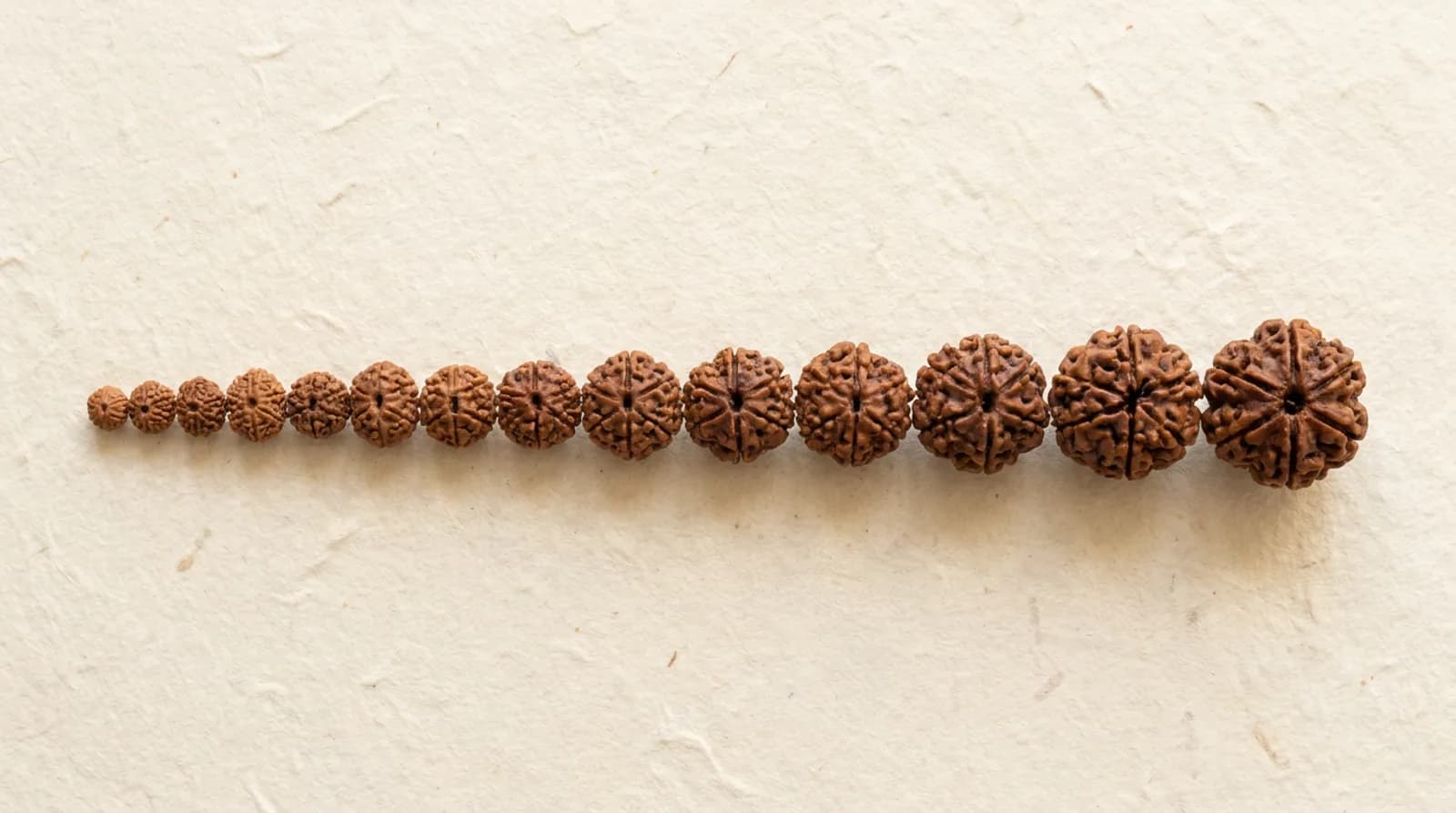
What a mukhi is and how to count it
A mukhi (Sanskrit for 'face') is a natural segment or line that runs lengthwise along a rudraksha bead, from the top point down to the base. The mukhi number is how many of these natural lines the bead has. Hold the bead under good light, start at the top and count only the lines that belong to the bead itself, not scratches or drawn marks. If you cannot see the lines clearly, ask the seller for a closer photo or video before you buy.
| What a mukhi is | A natural face or segment running lengthwise on the bead |
| How to count | Count the natural lines from the top point to the base; the total is the mukhi number |
| Most worn | 1 to 14 mukhi |
| Most common | 5 mukhi |
| Rarest | 15 to 21 mukhi, sold as collector beads |
1 to 14 mukhi: ruling deity, planet and benefits
Traditional texts link each mukhi to a ruling deity and, in astrology, to a planet. The table shows the most commonly cited associations. Sources differ between schools and regions, so treat them as a guide rather than a fixed rule.
| Mukhi | Ruling deity (tradition) | Planet (commonly) | Worn for (tradition) |
|---|---|---|---|
| 1 mukhi | Shiva | Sun | Focus, spiritual growth |
| 2 mukhi | Ardhanarishvara (Shiva-Parvati) | Moon | Harmony in relationships |
| 3 mukhi | Agni | Mars | Confidence, letting go of the past |
| 4 mukhi | Brahma | Mercury | Learning, speech, students |
| 5 mukhi | Kalagni Rudra | Jupiter | Calm, everyday spiritual practice (most common) |
| 6 mukhi | Kartikeya | Venus | Willpower, creativity, emotional balance |
| 7 mukhi | Mahalakshmi | Saturn | Wealth, Sade Sati remedy |
| 8 mukhi | Ganesha | Rahu | Removing obstacles |
| 9 mukhi | Durga | Ketu | Energy, courage |
| 10 mukhi | Vishnu | No single planet | Protection |
| 11 mukhi | Hanuman (Ekadash Rudra) | — | Courage, strength |
| 12 mukhi | Surya | Sun | Leadership, confidence |
| 13 mukhi | Kamadeva | Venus | Charm, attraction |
| 14 mukhi | Hanuman (Deva Mani) | Saturn | Intuition, decisions |
15 to 21 mukhi: rare collector beads
Beads from 15 to 21 mukhi are extremely rare. They are sought by collectors, they are very expensive, and many of the beads sold under these counts are fakes with lines drawn, carved or glued on. The 21 mukhi is associated with Kuber, the deity of wealth, in tradition. Because the stakes are high, insist on an X-ray and a lab report before buying any bead in this range, and be wary of a seller who offers one without a clear, verifiable report.
Which rudraksha is best for me?
- 1Calm and beginners: 5 mukhi
The 5 mukhi is the usual first bead. It is the most common, one of the least costly, and the bead most people start with for daily japa or quiet practice.
- 2Wealth: 7 mukhi
Traditionally linked to Mahalakshmi and to wealth, and the bead most often recommended as a Sade Sati remedy in Saturn tradition.
- 3Students and exams: 4 or 6 mukhi
The 4 mukhi (Brahma, Mercury) is the classic bead for learning and speech. The 6 mukhi is often chosen for willpower and steady effort.
- 4Relationships: 2 mukhi or Gauri Shankar
The 2 mukhi (Ardhanarishvara, Moon) is traditionally associated with harmony in partnerships. A Gauri Shankar bead, two beads naturally joined, is worn for the same purpose.
- 5Obstacles or a new start: 8 mukhi or Ganesh rudraksha
The 8 mukhi (Ganesha, Rahu) is worn in tradition for removing obstacles before a new venture or a new phase of life.
- 6Courage: 9 or 11 mukhi
The 9 mukhi (Durga, Ketu) is linked to energy and courage. The 11 mukhi (Hanuman, Ekadash Rudra) is worn for courage and strength.
- 7Leadership: 12 or 1 mukhi
The 12 mukhi (Surya, Sun) is worn for leadership and confidence. The 1 mukhi (Shiva, Sun) is worn for focus and spiritual growth.
- 8Birth-chart based choice
For a choice tied to your birth chart, consult a qualified astrologer. Date-of-birth calculators online give only a rough suggestion because they use simplified rules.
Nepali vs Indonesian rudraksha
Both are genuine seeds of the Elaeocarpus ganitrus tree. Nepali beads are generally larger, with deeper, more pronounced mukhi lines, and they cost more. Indonesian beads are generally smaller and smoother, and more affordable. Neither origin makes a bead automatically better. A clear, natural count and a lab report matter more than where the bead comes from.
| Feature | Nepali | Indonesian |
|---|---|---|
| Size | Generally larger | Generally smaller and more compact |
| Mukhi lines | Deeper, more pronounced | Finer, smoother surface |
| Price | Costlier | More affordable |
| Botanical source | Elaeocarpus ganitrus seeds | Elaeocarpus ganitrus seeds |
| Good for | Collectors and anyone who wants bold lines | Everyday wear and budget-conscious buyers |
Buying honestly and fair prices
- 1Count the lines yourself
Count on the bead in person or on a close video before buying. Ask for a clear photo of the top point and the base.
- 2X-ray for rare beads
Ask for an X-ray or lab report for 1 mukhi, 14 mukhi and above, and for Gauri Shankar beads, because a natural join or carved lines are harder to judge by eye.
- 3Beware glued or carved lines
Extra lines can be carved, painted or glued on. Natural lines run through the bead, while drawn lines sit on the surface and can wear off.
- 4Fair price bands
5 mukhi beads are inexpensive. 1 mukhi and 14 mukhi or above cost thousands of rupees, so a very cheap bead sold as rare is a warning sign.
| Bead | DivineTatva price |
|---|---|
| 5 Mukhi pendant | ₹999 |
| Nepali Rudraksha bead (5 or 7 mukhi) | ₹1,299 |
| 6 Mukhi Nepal pendant | ₹1,899 |
| Gauri Shankar rudraksha | ₹2,999 |
| 7 Mukhi Nepal bead | ₹3,499 |
| 1 Mukhi half-moon | ₹4,999 |
| 9 Mukhi Nepal | ₹5,499 |
| 11 Mukhi Nepal | ₹7,499 |
| 14 Mukhi Nepal | ₹24,999 |
| 1 to 14 Mukhi Siddha Mala | ₹18,999 |
What the evidence says
The associations on this page come from traditional texts and astrology, and they differ between schools and regions. There is no scientific evidence that rudraksha changes health, wealth or relationships. People wear rudraksha as a spiritual practice and a daily reminder. Nothing on this page is medical advice or a guarantee of results.
Frequently asked
Last reviewed: 17 May 2026 · Verified by the DivineTatva expert panel
Which rudraksha is best for me?
There is no single best bead. Start with your goal: 5 mukhi for calm and everyday practice, 7 mukhi for wealth, 4 or 6 mukhi for students, 2 mukhi or Gauri Shankar for relationships, and 8 mukhi for obstacles. For a choice based on your birth chart, consult an astrologer.
How many types of rudraksha are there?
Traditional texts describe 1 to 21 mukhi types. Most beads worn in India are 1 to 14 mukhi, while 15 to 21 mukhi beads are rare collector pieces.
Can everyone wear a 5 mukhi rudraksha?
The 5 mukhi is widely regarded as suitable for almost everyone and is the most common bead. Traditional practices still vary, so if you have a health condition or doubts, ask a qualified professional.
Which rudraksha is the rarest?
Beads with 15 or more mukhi are the rarest and are sold as collector pieces. They are very expensive and often faked, so an X-ray or lab report is important.
How do I know the number of mukhi on my bead?
Count the natural lines running from the top point to the base, under good light. Check your count against a clear photo or video, and for rare beads ask for an X-ray or lab report.
What is the price of a 1 mukhi rudraksha?
Genuine 1 mukhi beads cost thousands of rupees. The DivineTatva 1 Mukhi half-moon is ₹4,999.
Can I wear two different mukhi together?
Yes, many people wear more than one, such as a 5 mukhi with a Gauri Shankar bead. Choose beads for one clear purpose, and remember that traditions differ on mixing beads.
Can women wear rudraksha?
Yes. In most traditions women wear rudraksha in the same way as men. Some families have customs about wearing it during periods, which is a personal choice.
Reviewed by the DivineTatva expert panel
Written and reviewed by DivineTatva's consulting Vedic astrologer. Every piece is lab-certified and energised in our Jaipur atelier. Last updated 11 October 2026.