Is Your Hematite Real? The Magnet Test and How to Spot Fake Magnetic Hematite
A magnet test for hematite checks whether your bead reacts to a magnet. Genuine natural hematite is only weakly magnetic — it gives a faint tug. A bead that snaps hard onto a magnet is usually hematine (magnetised synthetic). Pair this with the conchoidal-fracture and cool-touch tests for black obsidian to verify a real protection bracelet.
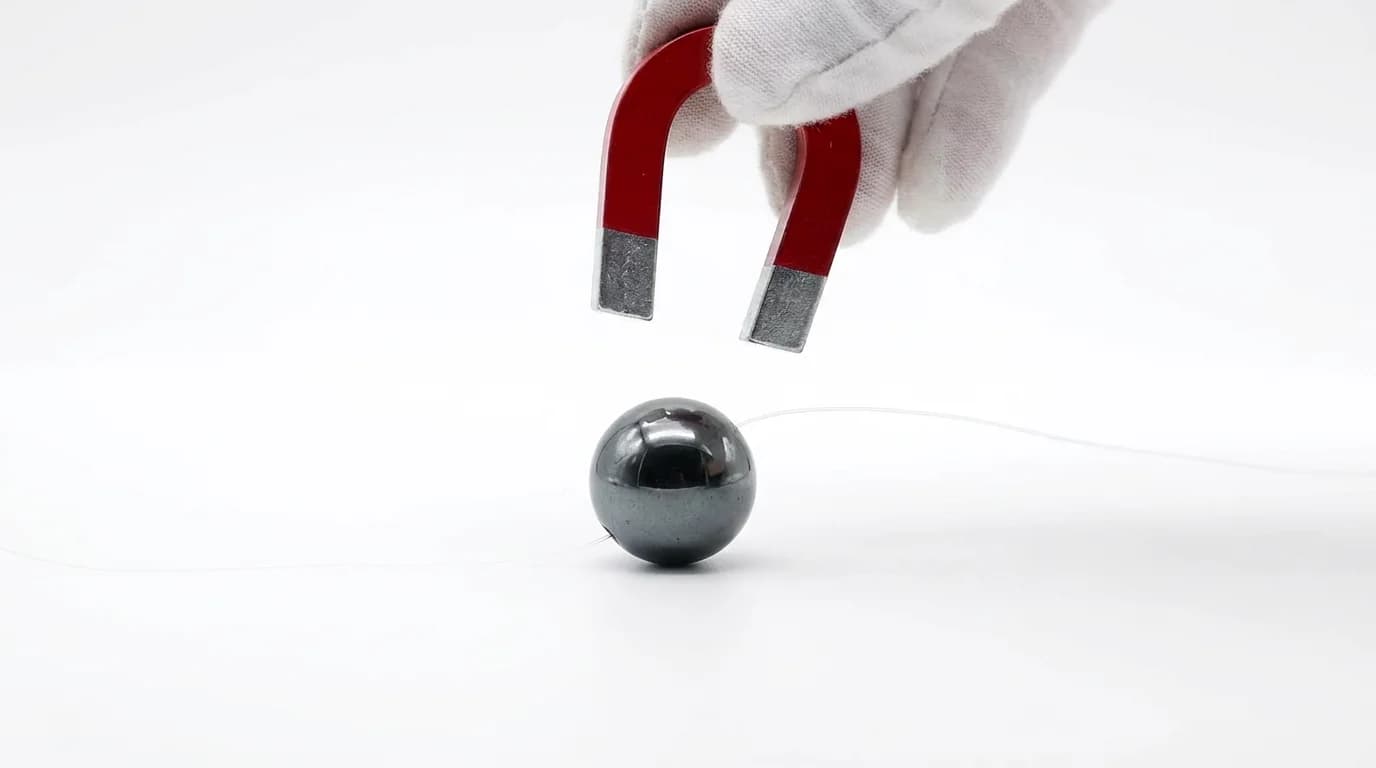
What the hematite magnet test actually checks
The hematite magnet test is a 30-second home check that uses a small magnet to confirm whether a black, metallic-looking bead is genuine hematite. Real hematite is an iron-oxide mineral, so it is weakly magnetic — it gives a soft, faint tug toward a strong magnet. A bead that leaps or sticks firmly is almost always hematine, a man-made magnetised substitute.
This matters because hematite is one of the most commonly faked grounding stones in India. Sellers mix in dyed glass, resin, or strongly-magnetised reconstituted powder and still call it 'hematite'. The magnet behaviour is the single fastest tell most buyers can run without any equipment, before you even look at the lab certificate.
| What it tests | Whether a bead is genuine iron-oxide hematite |
| Time needed | About 30 seconds per bead |
| Tool needed | Any fridge or neodymium magnet |
| Genuine result | Weak, faint pull toward the magnet |
| Fake/synthetic result | Strong snap, or no reaction at all |
| Best paired with | Per-piece lab certificate + obsidian fracture test |
The 30-second home magnet test, step by step
You can run this on the kitchen table. A neodymium magnet (the kind in fridge hooks or old hard drives) works best, but a basic fridge magnet usually shows enough. Keep the bracelet on a flat surface and bring the magnet close slowly.
- 1Isolate a bead
Lay the bracelet flat so one hematite bead sits free of the others, with the elastic loose.
- 2Approach with the magnet
Slowly bring the magnet to within a few millimetres of the bead and watch closely.
- 3Read the pull
Genuine hematite leans or rolls gently toward the magnet — a faint, polite tug, not a snap.
- 4Check for over-reaction
If the bead jumps onto the magnet or the magnet sticks hard, you likely have magnetised hematine, not natural hematite.
- 5Check for no reaction
Zero response usually means dyed glass, resin or ceramic sold as hematite.
- 6Confirm with the cert
Match your result against the per-piece lab certificate that names the stone and testing — the test and the paper should agree.
One honest caveat: magnet strength varies. A very powerful neodymium magnet can make even genuine hematite react more briskly, and a weak fridge magnet may show little on a small 8mm bead. That is exactly why the magnet test is a screening tool, not a verdict — it narrows things down, and the lab certificate settles them.
Real hematite vs hematine (magnetic synthetic)
The confusion is mostly one word: hematine. Hematine (also sold as 'magnetic hematite' or 'hemalyke') is a manufactured material — iron powder and a binder, pressed and deliberately magnetised. It looks almost identical to polished hematite but behaves very differently with a magnet, and it is what 'super-strong magnetic hematite bracelets' usually are.
| Property | Genuine natural hematite | Hematine / magnetic synthetic |
|---|---|---|
| Magnet pull | Weak, faint tug | Strong snap, often two clear poles |
| Origin | Mined iron-oxide mineral | Pressed, magnetised iron powder + binder |
| Weight | Noticeably heavy for its size | Can feel slightly lighter or uniform |
| Streak test | Reddish-brown streak on unglazed tile | Often grey/black or no rust-red streak |
| Beads sticking together | Do not cling to each other | Frequently click and stick end to end |
| What it's sold as | Hematite, sometimes 'haematite' | 'Magnetic hematite', 'magno', 'hemalyke' |
A simple giveaway: line up several beads of the same bracelet. Genuine hematite beads sit quietly next to each other. Hematine beads tend to click together end-to-end like tiny magnets, because they are. Neither is dangerous, but only one is the real mineral, and only one carries the traditional grounding associations buyers are paying for.
Is the black obsidian real too? Two quick tests
A protection bracelet is only as honest as both stones. Black obsidian is natural volcanic glass — formed when lava cools too fast to crystallise — so it behaves like glass, not stone. Most fakes are moulded black resin or ordinary dyed glass, and two checks catch them quickly.
| Conchoidal fracture | Real obsidian chips in curved, shell-like, glassy arcs — never blocky |
| Temperature | Cool to the touch and slow to warm in the hand |
| Surface | Smooth, glassy lustre; may show faint swirl or tiny gas bubbles |
| Air bubbles | Perfectly round, evenly spaced bubbles often signal moulded glass |
| Weight | Lighter than dense crystals like hematite — obsidian is glass |
| Sound | A soft, glassy click rather than a dull plastic tap |
You will not snap a finished bead to inspect its fracture, and you should not. Instead judge lustre, temperature and any bubbles, and lean on the certificate. Be wary of 'rainbow obsidian' or 'gold sheen' beads with a sheen that looks painted on rather than appearing only at certain angles — natural sheen shifts as you tilt the bead toward the light.
Why obsidian and hematite are paired for protection
In Vedic and feng-shui practice, black obsidian and hematite are a classic grounding-and-shielding pair. Obsidian is worn to absorb and deflect negative energy and buri nazar; hematite is the heavy, root-chakra anchor linked to Saturn (Shani) and Mangal, worn to steady an overactive mind. Worn together, they are believed to keep you grounded while shielded.
Honestly: these are well-documented traditional and belief practices, not clinically proven medical effects. There is no laboratory evidence that either stone treats anxiety or blocks harm. What people consistently report is a sense of calm, focus and feeling 'protected' — outcomes very much in keeping with intention, ritual and the comfort of a wearable reminder. We frame this as belief and tradition, not cure, and it is not a substitute for medical, financial or professional advice.
| Stone | Traditional role | What's verifiable |
|---|---|---|
| Black obsidian | Shielding, deflecting negativity, buri nazar | Real obsidian is glass: conchoidal fracture, cool touch |
| Hematite | Grounding, root-chakra anchor, Shani/Mangal | Real hematite is iron-oxide: weakly magnetic, heavy |
| Together | Grounded and shielded at once | Two genuine stones, each independently testable |
You can absolutely wear obsidian and hematite together — there is no traditional clash between them, and many grounding bracelets combine exactly these two. In India the bracelet is usually worn on the left wrist, the receiving side, for absorbing supportive energy through the day.
Care, the rust risk and your lab certificate
Because hematite contains iron, the most important care rule is to keep the bracelet dry. Keep this bracelet dry — hematite contains iron and can develop surface rust if soaked, so avoid wearing it in the shower or pool and never cleanse it in salt water; wipe with a soft dry cloth and cleanse with moonlight, sage or selenite instead.
- 1Keep it dry
No showers, pools or salt-water cleansing — water plus iron means rust.
- 2Wipe, don't wash
A soft, dry cloth after wear keeps both stones clean.
- 3Cleanse monthly
Use moonlight, sage smoke or a selenite plate rather than liquids.
- 4Avoid chemicals
Keep away from perfume, sanitiser and harsh cleaners that dull obsidian.
- 5Store separately
A dry pouch prevents knocks that can chip glassy obsidian beads.
Finally, the test and the paper should agree. Every DivineTatva bracelet ships with a per-piece lab certificate naming the stones and testing, shown on the product page — so your home magnet test and conchoidal-fracture check simply confirm what the certificate already states. That is the difference between a verifiable certificate and an unsubstantiated '100% certified' badge. Jaipur-made, lab-certified, with transparent INR pricing, COD and free India shipping.
Frequently asked
Last reviewed: 17 May 2026 · Verified by the DivineTatva expert panel
Is my hematite real if it sticks strongly to a magnet?
Probably not. Genuine natural hematite is only weakly magnetic — it gives a faint, polite tug toward a strong magnet, not a snap. A bead that leaps onto the magnet, holds it firmly, or clicks end-to-end with other beads is almost always hematine: a man-made, deliberately magnetised iron-powder substitute. Use the magnet test to screen, then confirm with the per-piece lab certificate.
What is the difference between hematite and hematine?
Hematite is a mined iron-oxide mineral that is weakly magnetic and heavy. Hematine (also sold as 'magnetic hematite' or 'hemalyke') is manufactured from pressed iron powder and a binder, then strongly magnetised. They look almost identical, but hematine snaps hard to a magnet and the beads cling to each other. Only natural hematite carries the traditional grounding associations buyers are seeking.
Can I wear obsidian and hematite together?
Yes. There is no traditional clash between black obsidian and hematite — they are a classic grounding-and-shielding pair in Vedic and feng-shui practice, obsidian for deflecting negativity and buri nazar, hematite for grounding and root-chakra stability. Many protection bracelets combine exactly these two stones. In India it's usually worn on the left wrist, the receiving side.
How do I tell if my black obsidian is real?
Real black obsidian is natural volcanic glass, so it behaves like glass: it feels cool to the touch and slow to warm, shows a smooth glassy lustre, and chips in curved, shell-like (conchoidal) arcs rather than blocky pieces. Perfectly round, evenly spaced air bubbles often signal moulded glass. Judge lustre, temperature and bubbles, then rely on the lab certificate.
Does a black obsidian and hematite bracelet actually work?
It depends what you mean by work. The grounding, shielding and buri-nazar benefits come from Vedic and feng-shui tradition and belief — there is no clinical proof that either stone treats anxiety or blocks harm. Wearers consistently report calm and a sense of protection, consistent with intention and ritual. We frame it as belief, not cure, and not a substitute for medical or professional advice.
Why does hematite rust, and how do I prevent it?
Hematite is an iron-oxide mineral, and iron plus water means surface rust over time. Keep the bracelet dry: avoid the shower and pool, and never cleanse it in salt water. Wipe it with a soft dry cloth after wear, and cleanse with moonlight, sage or selenite instead of liquids. Stored dry and away from chemicals, hematite beads keep their metallic shine for years.
What does a lab certificate prove that a magnet test can't?
The magnet test is a fast home screen — it suggests whether a bead is genuine hematite, but magnet strength and bead size affect the result, so it isn't a verdict. A per-piece lab certificate names the actual stones and the testing performed, settling the question objectively. The two should agree: your home test confirms what the certificate already states, which is what 'verifiable' means versus an empty badge.
Reviewed by the DivineTatva expert panel
Written and reviewed by DivineTatva's consulting Vedic astrologer. Every piece is lab-certified and energised in our Jaipur atelier. Last updated 5 April 2026.