Black Obsidian & Hematite Protection Bracelet: Benefits, Real vs Fake, Who Should Wear It & Price in India (2026 Guide)
A black obsidian & hematite protection bracelet pairs natural black obsidian — a volcanic glass formed when lava cools fast — with hematite, a heavy iron-oxide stone that tugs a magnet. In Vedic and feng-shui tradition it's worn for grounding, shielding from negative energy and buri nazar, and calming a busy mind. The materials are verifiable; the energy effects are belief, not proven medicine.
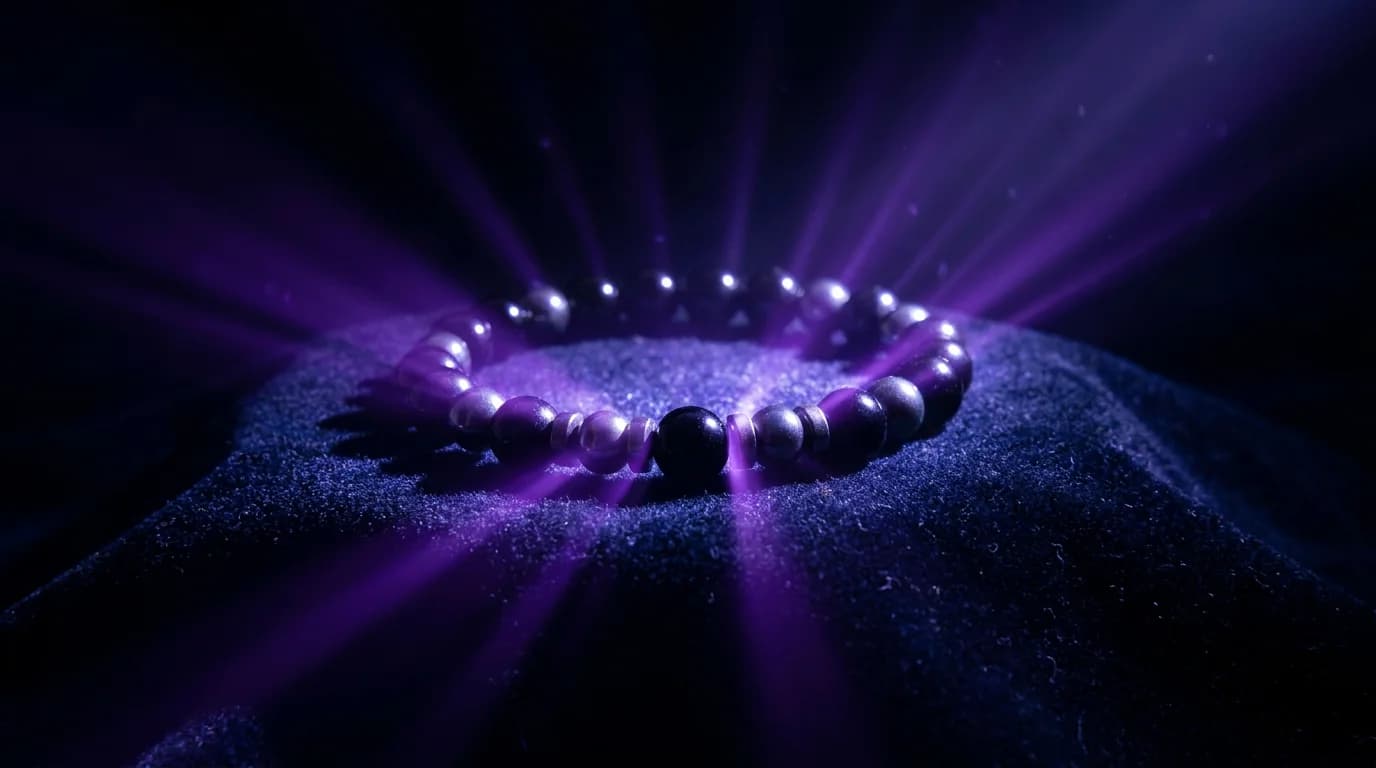
What a Black Obsidian & Hematite Protection Bracelet Is
A black obsidian & hematite protection bracelet is a beaded stretch bracelet combining natural black obsidian — a glossy volcanic glass formed when lava cools too fast to crystallise — with hematite, a dense iron-oxide stone that is naturally heavy and weakly magnetic. In Vedic and feng-shui practice it is worn for grounding, shielding from negative energy and buri nazar, and quietening an overactive mind.
Honest note: the stones themselves are verifiable (real obsidian shows curved, glassy fracture and runs cool; genuine hematite tugs a magnet), but the protective and calming effects come from tradition and personal belief, not clinical proof. Wear it as a meaningful ritual object — not a substitute for medical, financial or professional advice.
| Stones | Black obsidian (volcanic glass) + hematite (iron oxide) |
| Worn for (belief) | Grounding, protection, buri nazar, emotional calm |
| Verifiable | Material identity, conchoidal fracture, magnet pull |
| Tradition links | Saturn/Shani, Mangal, root chakra, feng-shui |
| Evidence status | Belief & tradition; not clinically proven |
| Best wrist | Left (receiving), per Indian custom |
| Care | Keep dry — hematite can rust; cleanse monthly |
| DivineTatva | Lab-certified, magnet-tested, COD, Jaipur-made |
Benefits of the Obsidian + Hematite Pairing
The two stones are paired because tradition treats them as complementary: obsidian is the 'shield' that deflects and absorbs negative energy, while hematite is the 'anchor' that pulls scattered attention back down to the body. Below is each commonly claimed benefit, honestly tagged as tradition or evidence so you know exactly what you're buying into.
| Claimed benefit | What tradition says | Evidence status |
|---|---|---|
| Grounding & stability | Hematite is a root-chakra/Saturn stone that 'roots' restless energy | Belief; many users report feeling steadier — consistent with ritual focus |
| Negative-energy shield | Black obsidian deflects and absorbs ill intent and heavy moods | Belief; no physical mechanism, but valued as a protective practice |
| Buri nazar / evil-eye | Dark, reflective stones are classic nazar protection across India | Cultural tradition; not measurable, deeply meaningful to wearers |
| EMF / electronics calm | Hematite's iron is said to 'ground' device energy | Belief only; no proof a bead reduces real EMF exposure |
| Emotional calm & focus | The weight + intention act as a tactile 'pause' reminder | Belief + plausible placebo/anchoring effect; users report calmer focus |
| Confidence & courage | Mangal/iron association lends 'warrior' steadiness | Tradition; symbolic, not a medical claim |
In short: the documented value is psychological and ritual — a heavy, deliberate object on your wrist that reminds you to slow down and reset intention. That is real and useful; it just isn't a cure.
Does It Actually Work? Belief vs Evidence
This is the question every honest buyer asks, and most sellers dodge it. Here is the straight answer: there is no peer-reviewed clinical evidence that black obsidian or hematite emits healing energy, blocks negative forces, or alters health. What science does establish is purely material — and that part is genuinely interesting.
| Domain | What is established | What remains belief |
|---|---|---|
| Obsidian (science) | Real, naturally occurring volcanic glass; cool, glassy, conchoidal fracture | Any 'protective' or 'energy-deflecting' effect |
| Hematite (science) | Iron oxide; dense, weakly magnetic, tugs a magnet | 'Grounding the body' or absorbing EMF in any measurable way |
| Vedic / Shani tradition | Long-standing cultural practice linking dark iron stones to Saturn & discipline | Astrological outcomes; these are faith-based |
| Feng-shui | Black stones used for protection in the bagua wealth/career sectors | Energetic flow ('chi'); not physically demonstrated |
| User reports | Many feel calmer, more focused, more 'anchored' | Whether the stone causes it vs intention, routine & placebo |
Our view: wear it because the ritual, symbolism and the simple act of choosing calm are valuable — and because a calm, focused mind genuinely changes how you act. Don't wear it instead of therapy, medication, or sound financial advice. Believe in the practice; stay clear-eyed about the proof.
Real vs Fake: Obsidian Fracture Test & Hematite Magnet Test
India's market is flooded with moulded black glass and resin sold as 'obsidian', and lightweight hematite-look-alikes sold as the real stone. The good news: both have a quick home test. No lab needed to catch the obvious fakes.
- 1Look for conchoidal fracture
Real obsidian breaks in smooth, curved, shell-like ridges with a glassy sheen. Moulded glass beads show seams, flat moulding lines or perfectly uniform shape.
- 2Check for trapped air bubbles
Hold a bead to strong light. Tiny round air bubbles inside usually mean man-made glass; natural obsidian is bubble-free (it may show faint flow banding instead).
- 3Feel the temperature
Genuine obsidian feels noticeably cool to the touch and warms slowly. Plastic and resin warm up fast and feel light.
- 4Hunt the greenish edge
Hold a thin edge to bright light — real black obsidian often glows a subtle greenish, brownish or grey undertone at the edge; dyed glass tends to look dead-flat black.
- 5Do the hematite magnet test
Genuine hematite gives a clear tug toward a small magnet (it's iron oxide). No pull at all suggests painted/coated stone; a violently strong snap suggests synthetic 'magnetic hematite' (hematine), not natural hematite.
- 6Weigh it in your hand
Hematite is dense and surprisingly heavy for its size. A suspiciously light 'hematite' bead is likely glass or plastic.
| Test | Genuine | Likely fake |
|---|---|---|
| Obsidian fracture | Curved, glassy, conchoidal | Mould seams, flat lines |
| Air bubbles | None (maybe flow banding) | Round bubbles inside |
| Temperature | Cool, slow to warm | Warms fast, feels light |
| Edge undertone | Greenish/grey glow | Dead-flat dyed black |
| Hematite magnet | Clear gentle tug | No pull, or violent snap |
| Weight | Dense, heavy | Light, hollow feel |
For a full walkthrough with photos, see our deep-dive guides on spotting fake obsidian and the hematite magnet test, linked at the end of this page.
Lab Certification Explained
Most Indian listings slap a '100% certified / lab-verified' badge on the page with zero document behind it. A badge is a graphic; a certificate is testable evidence. Here is what a real DivineTatva certificate records for your specific bracelet, so 'lab-certified' actually means something.
| Stone identity | Confirms natural black obsidian and natural hematite |
| Treatment check | Notes dyeing, coating or synthetic substitution if any |
| Magnet verification | Records hematite's magnetic response (iron-oxide confirmation) |
| Per-piece reference | Tied to your order, not a generic stock photo |
| Issuer & date | Named testing lab, signature and issue date |
| What it does NOT claim | No medical, astrological or 'energy' guarantee — only material facts |
A certificate honestly verifies the material, not the metaphysics. That distinction is the whole point of our certification: you can trust exactly what the stone is, and decide the belief part for yourself. A sample certificate image is shown on this page and on the product listing so you can see the format before you buy.
Who Should Wear a Black Obsidian & Hematite Bracelet
This bracelet suits anyone drawn to a grounding, protective ritual object — but tradition gives some specific guidance. None of this is a prescription; it's the Vedic and feng-shui framing that buyers ask about most.
| If you are… | Why tradition suggests it | Honest note |
|---|---|---|
| Anxious / overthinking | Hematite's 'grounding' is the classic anchor stone | Tactile calm + routine help; not a treatment for anxiety disorders |
| A protection seeker | Obsidian shields from negativity & buri nazar | Cultural practice — wear for reassurance, not as a guarantee |
| EMF-sensitive | Hematite is folklore-linked to 'grounding' device energy | Belief only; no proof it reduces real exposure |
| Scorpio / Vrishchik | Co-ruled by Mangal; intense water sign favoured for obsidian | Astrological tradition |
| Sagittarius / Dhanu | Suits grounding to balance restless fire energy | Astrological tradition |
| Capricorn / Makar | Ruled by Shani (Saturn) — hematite's Saturn link aligns | Astrological tradition |
| Men wanting a low-key piece | Matte black obsidian + steely hematite reads neutral & masculine | Style preference; unisex |
Shani/Saturn seekers favour this combo for discipline and steadiness, and Mangal-linked wearers for courage. If you follow rashi guidance, an astrologer can confirm suitability for your chart — but there's no harm in wearing it simply because the symbolism resonates.
Side Effects, Contraindications & 'Detox' Claims
Crystals are inert stones, so there is no pharmacological 'side effect' — but a few honest, practical cautions are worth knowing, and some sellers exaggerate 'detox' reactions to explain away discomfort.
| 'Detox' / overwhelm | Some wearers feel restless or low at first and call it 'release'. More likely it's adjustment or unrelated mood — there's no detox mechanism. If it persists, simply stop wearing it. |
| Over-sensitivity | Heavy, very intense stones aren't for everyone; if a piece makes you uneasy, it's fine to take it off — no rule says you must push through. |
| Hematite skin staining | Dense iron stones can occasionally leave a faint grey mark on damp skin; harmless and wipes off. |
| Rust risk | Hematite contains iron and can surface-rust if soaked — a care issue, not a health one (see cleansing below). |
| Children & metal allergy | Stretch bracelets are a choking risk for small children; check clasp/charm metals if you have sensitivities. |
| Never a medical substitute | Do not replace prescribed treatment, therapy or professional advice with a bracelet. |
Bottom line: this is low-risk to wear, but be sceptical of anyone who frames bad feelings as proof the stone is 'working'. A genuine seller tells you when to simply take it off.
Which Hand & How to Wear It
In Indian and many Eastern traditions the left wrist is the 'receiving' side — you wear stones there to draw in their qualities (grounding, protection, calm). The right wrist is the 'projecting/giving' side, used when you want to send energy outward. For protection and grounding, most wearers choose the left.
- 1Pick the wrist by intent
Left to receive grounding and protection (most common); right if you want to project steadiness outward.
- 2Start on a Saturday
Saturday is Shani's (Saturn's) day — the traditional day to begin wearing dark, grounding iron stones.
- 3Set a clear intention
Hold the bracelet, take a breath, and name what you want it to remind you of (calm, focus, protection).
- 4Pair thoughtfully
Pairs well with black tourmaline (more shielding) or clear quartz (clarity). Avoid over-stacking many 'intense' stones at once.
- 5Style it simply
Matte black + steel-grey is neutral; wear solo for a clean look or stacked with a single accent bracelet.
There's no wrong answer if a tradition doesn't apply to you — comfort and consistency matter more than rules. Wearing it daily is what turns it into a real habit-anchor.
How to Cleanse and Charge Your Bracelet
Cleansing 'resets' the bracelet in belief practice and, practically, keeps it clean. The critical rule for THIS bracelet is water discipline, because of the hematite.
Keep this bracelet dry — hematite contains iron and can develop surface rust if soaked, so avoid wearing it in the shower or pool and never cleanse it in salt water; wipe with a soft dry cloth and cleanse with moonlight, sage or selenite instead.
- 1Moonlight (safest)
Leave it on a windowsill under the full-moon night to recharge — no water, no risk to the iron.
- 2Selenite or clear quartz
Rest the bracelet on a selenite plate or beside clear quartz overnight; a dry, gentle reset.
- 3Sage or incense smoke
Pass it briefly through sage, palo santo or dhoop smoke while setting your intention.
- 4Dry wipe
Clean the beads with a soft, dry cloth. Skip soap, harsh chemicals and ultrasonic cleaners.
- 5Affirmation
Hold it, breathe, and restate your intention — the belief-side 'charge'.
- 6Avoid running water
Skip the popular 'rinse under running water' tip here — even brief soaking invites rust in hematite.
| Cleanse how often | Roughly monthly, or after stressful days |
| Water | Avoid — keep dry; never salt water |
| Safe methods | Moonlight, selenite, sage, dry cloth |
| Avoid | Soaking, chemicals, perfume sprays, ultrasonic |
| Storage | Dry pouch, away from humidity |
Sizing and Fit
'Free size only' is a common cop-out. A bracelet that's too loose slides and snags; too tight feels uncomfortable. Measure once and pick correctly.
- 1Measure your wrist
Wrap a flexible tape (or a strip of paper + ruler) snugly around your wrist bone and note the cm.
- 2Add comfort room
Add about 1.5–2 cm to your wrist measurement for a comfortable beaded fit that doesn't pinch.
- 3Choose bead size
8 mm beads give a slimmer, everyday look; 10 mm beads feel bolder and more substantial (popular with men).
- 4Confirm bead count
Bead count scales with size; a typical wrist uses roughly the counts in the table below. Stretch cord absorbs small differences.
| Wrist size | Bracelet length | 8 mm beads | 10 mm beads |
|---|---|---|---|
| 14–15 cm (S) | ~16–16.5 cm | ~20 | ~16 |
| 15.5–16.5 cm (M) | ~17.5–18 cm | ~22 | ~18 |
| 17–18 cm (L) | ~19 cm | ~24 | ~19 |
| 18.5–20 cm (XL) | ~20.5–21 cm | ~26 | ~21 |
Counts are approximate and vary slightly with spacer beads and any accent stones. Our stretch band flexes to fit, but choosing the right base size keeps the beads sitting snug and the bracelet lasting longer.
Price in India: What's Fair and What's a Red Flag
Genuine, lab-certified black obsidian + hematite bracelets sit in a fair mid-range. Prices swing mainly on whether the stones are real, the bead size, and whether you get an actual per-piece certificate.
| Tier | Typical INR range | What you usually get |
|---|---|---|
| Ultra-cheap (red flag) | ₹99–₹299 | Moulded glass/resin, no cert, '70% off' framing |
| Budget genuine | ₹400–₹799 | Real stones, basic finish, often no certificate |
| Certified mid (fair) | ₹800–₹1,599 | Genuine, magnet-tested, lab certificate, COD |
| Premium / larger bead | ₹1,600–₹2,800 | 10 mm beads, accent stones, full documentation |
| Price drivers | Genuine vs glass, bead size, certification, finish |
| COD | Available across India |
| Shipping | Free India shipping at DivineTatva |
| Red flag | Constant '70–80% off' on 'rare' stones = moulded fake |
| Why certified costs more | Real material + testing + per-piece documentation |
If a 'rare protection bracelet' is perpetually 80% off at ₹149, the maths only works if the stone isn't real. Fair pricing reflects genuine material and proof — not a discount theatre.
Why Choose DivineTatva
We built this product around proof and candour — the two things the crystal market lacks most. Here's the short version of why buyers in India trust us.
| Verifiable certificate | A real per-piece lab certificate you can read — not a badge graphic |
| Magnet-tested hematite | Each piece checked for genuine iron-oxide magnetic pull |
| Honest framing | Belief-vs-evidence stated plainly; we never sell a cure |
| Jaipur-made | Crafted and quality-checked in Jaipur |
| India-localised | Transparent INR pricing, COD, free shipping, clear returns |
| Care honesty | We tell you hematite can rust and how to avoid it |
Want to go deeper before you buy? Read our real-vs-fake obsidian guide, the hematite magnet test, and the rashi/Shani wearing guide linked below — then shop the certified bracelet with confidence.
Frequently Asked Questions
The recurring questions buyers ask about the black obsidian & hematite protection bracelet, answered honestly below.
Frequently asked
Last reviewed: 17 May 2026 · Verified by the DivineTatva expert panel
What is a black obsidian and hematite bracelet good for?
In Vedic and feng-shui tradition it's worn for grounding, shielding from negative energy and buri nazar, and calming an overactive mind — obsidian acts as the protective 'shield' and hematite as the steadying 'anchor'. Many wearers report feeling calmer and more focused. Honestly, these are belief and ritual benefits, not clinically proven medical effects, so wear it as a meaningful practice rather than a cure.
How can I tell if my black obsidian is real?
Real black obsidian is natural volcanic glass: it breaks in smooth, curved, shell-like (conchoidal) ridges, feels cool to the touch, has no trapped round air bubbles, and often glows a faint greenish or grey undertone at a thin edge held to light. Moulded glass shows seams, flat moulding lines, internal bubbles and warms up quickly. A lab certificate confirms it beyond home tests.
Is my hematite real? What's the magnet test?
Genuine hematite is iron oxide, so it gives a clear, gentle tug toward a small magnet and feels dense and heavy for its size. No pull at all suggests a painted or coated fake; a violently strong snap usually means synthetic 'magnetic hematite' (hematine), not natural hematite. Combine the magnet test with the weight check for a quick, reliable read.
Does a black obsidian bracelet actually work?
There's no peer-reviewed evidence that obsidian or hematite emits healing energy or blocks negative forces. What's verifiable is the material. Many people genuinely feel calmer and more grounded — likely from intention, routine and the tactile reminder rather than the stone itself. We frame it honestly as belief and ritual: valuable as a practice, not a substitute for medical, financial or professional advice.
Which hand should I wear it on?
In Indian tradition the left wrist is the 'receiving' side, so for drawing in grounding and protection most wearers choose the left. The right wrist is the 'projecting' side, used when you want to send steadiness outward. There's no wrong choice if a tradition doesn't apply to you — comfort and daily consistency matter more than the rule.
Who should wear a black obsidian bracelet by rashi?
Tradition often suggests it for Scorpio (Vrishchik), Sagittarius (Dhanu) and Capricorn (Makar), and links it to Shani/Saturn for discipline and Mangal for courage. Anxious overthinkers and protection seekers are drawn to it too. This is astrological tradition, not prescription — an astrologer can confirm suitability for your chart, but you can also simply wear it because the symbolism resonates.
Are there any side effects?
Crystals are inert stones, so there's no pharmacological side effect. A few honest cautions: some wearers feel restless at first (call it 'adjustment', not 'detox'), dense hematite can leave a harmless faint grey mark on damp skin, and the iron can surface-rust if soaked. Stretch bracelets are a choking risk for small children. If a piece ever makes you uneasy, it's fine to take it off.
How do I cleanse and charge it?
Keep it dry — hematite contains iron and can rust if soaked, so never use water or salt water. Wipe with a soft dry cloth and cleanse with moonlight, selenite or sage smoke instead, then restate your intention. Skip the popular 'rinse under running water' tip for this bracelet specifically. Cleanse roughly monthly or after stressful days, and store it in a dry pouch.
Can I wear obsidian and hematite together?
Yes — they're a classic complementary pairing. Tradition treats obsidian as the protective shield that deflects negativity and hematite as the grounding anchor that steadies a scattered mind. There's no conflict between the two, and they're commonly combined in protection bracelets. Just avoid over-stacking many very intense stones at once if you prefer a gentler feel.
What does 'lab-certified' actually mean here?
It means a real per-piece certificate, not a badge graphic. A DivineTatva certificate confirms the stones are natural black obsidian and hematite, notes any dyeing or synthetic substitution, records hematite's magnetic response, and carries the testing lab's name, signature and date. It verifies the material only — never the metaphysics — so you can trust exactly what the stone is and decide the belief part yourself.
How much should a genuine bracelet cost in India?
A genuine, lab-certified black obsidian + hematite bracelet typically runs about ₹800–₹1,599, with larger 10 mm beads or accent stones reaching ₹1,600–₹2,800. Budget genuine pieces without certificates sit around ₹400–₹799. Be wary of pieces perpetually '70–80% off' at ₹99–₹299 — that price usually only works if the 'stone' is moulded glass or resin. DivineTatva offers COD and free India shipping.
Is this bracelet suitable for men?
Yes, it's unisex. Matte black obsidian paired with steel-grey hematite reads neutral and understated, and the bolder 10 mm bead size is especially popular with men. Measure your wrist and add about 1.5–2 cm for a comfortable fit. The grounding and protection symbolism applies to everyone regardless of gender.
Reviewed by the DivineTatva expert panel
Written and reviewed by DivineTatva's consulting Vedic astrologer. Every piece is lab-certified and energised in our Jaipur atelier. Last updated 4 April 2026.
- Real vs Fake Black Obsidian
- Is Your Hematite Real? The Magnet Test and How to Spot Fake Magnetic Hematite
- Who Should Wear a Black Obsidian Bracelet? Rashi, Shani & Saturn Guide for India
- Shop the certified black obsidian bracelet
- Black Obsidian Bracelet Price in India 2026
- Black Obsidian Side Effects & Contraindications
- Which Hand to Wear Black Obsidian