Who Should Wear a Black Obsidian Bracelet? Rashi, Shani & Saturn Guide for India
A black obsidian bracelet is a protection and grounding band of volcanic-glass beads, often paired with iron-rich hematite. In Vedic and feng-shui tradition it is worn to shield from negative energy and buri nazar, steady an anxious mind, and support those moving through Shani or Mangal phases. Suitability is belief-based, not a medical or astrological cure.
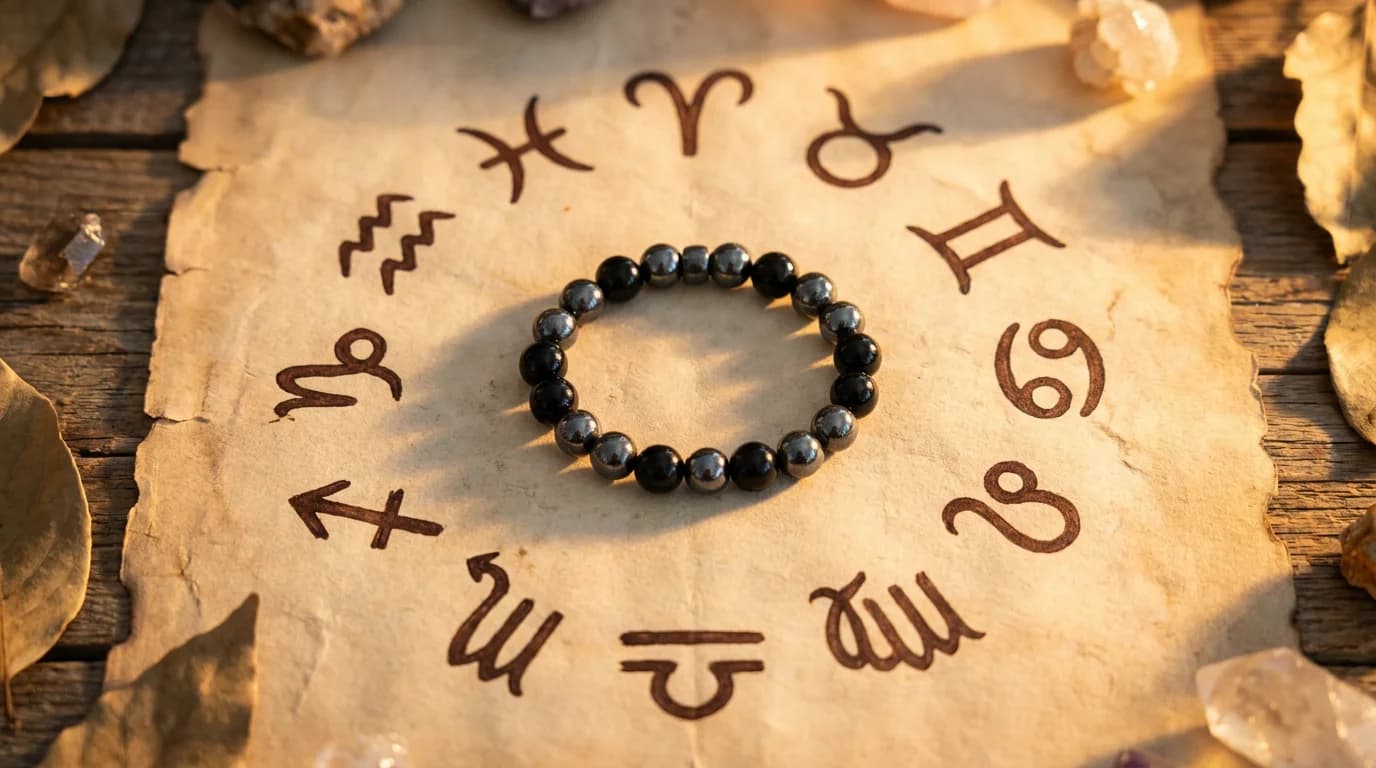
Who Should Wear a Black Obsidian Bracelet?
A black obsidian bracelet is traditionally worn by people who feel scattered, overstimulated or energetically drained — those wanting grounding, protection from negative energy and buri nazar, and a steadier mind. In Vedic and feng-shui belief it suits anyone moving through a hard transition, sensitive empaths, and people drawn to Saturn's discipline. This is a belief and ritual practice, not a clinical treatment.
Pairing black obsidian with hematite — a heavy, iron-rich stone — is said to deepen the grounding effect, anchoring an overactive head back into the body. Below we cover rashi suitability, the Shani and Mangal connection, which hand to wear it on, and who may want to skip it, all framed honestly as tradition plus intention rather than guaranteed outcomes.
| Best for (belief) | Grounding, protection, calming an anxious or racing mind |
| Stone pairing | Black obsidian (volcanic glass) + hematite (iron oxide) |
| Tradition | Vedic, feng-shui, root-chakra grounding |
| Planetary link | Shani (Saturn) and Mangal (Mars) in popular practice |
| Honest status | Belief, ritual and placebo — not medical or astrological proof |
| Not suited to | Anyone wanting a guaranteed cure or replacement for advice |
Which Rashi or Sun Sign Suits a Black Obsidian Bracelet?
In Vedic practice black obsidian and hematite are linked to Saturn (Shani) and Mars (Mangal), so signs ruled or strongly influenced by these planets are most often advised to wear them. That said, obsidian is widely considered a 'universal protector' — there is no rashi traditionally forbidden from it, unlike some coloured gemstones tied strictly to one planet.
| Rashi (sign) | Planetary link | Why it's suggested (belief) |
|---|---|---|
| Makar (Capricorn) | Saturn-ruled | Grounding and discipline; supports Shani's lessons |
| Kumbh (Aquarius) | Saturn-ruled | Calms an overactive, restless mind |
| Mesh / Vrishchik (Aries/Scorpio) | Mars-ruled | Hematite's iron tempers Mangal aggression |
| Tula / Vrishabh (Libra/Taurus) | Venus-ruled | Adds missing grounding and emotional steadiness |
| All other rashis | General | Worn as a neutral protector against negative energy |
Note the honest caveat: matching a bracelet to your rashi is a traditional belief system, not a tested mechanism. If you follow Jyotish seriously, treat this as a starting point and confirm with a trusted astrologer who has seen your full chart — a bracelet is a support, not a remedy that overrides professional guidance.
Black Obsidian, Hematite and the Saturn Connection
Saturn (Shani) governs discipline, patience, hard lessons and slow, grounded growth — and dark, heavy stones are traditionally associated with its energy. People going through Sade Sati, Shani Dhaiya or a difficult Saturn mahadasha often turn to black obsidian and hematite hoping for steadiness and protection while the transit runs its course.
Hematite's iron content gives it real weight and a faint magnetic tug, which is why folk practice ties it to both Saturn's grounding and Mangal's (Mars) strength and courage. The metaphysical claim is that the stone 'absorbs' excess fire and anchors restless energy. Verifiable fact: hematite genuinely contains iron and is weakly magnetic — that is chemistry, not proof of any spiritual effect.
| Shani (Saturn) | Discipline, grounding, endurance through hard phases |
| Sade Sati / Dhaiya | Commonly worn as a supportive ritual, not a cure |
| Mangal (Mars) | Hematite's iron linked to courage and steadiness |
| Root chakra | Said to anchor and stabilise base energy |
| Honest line | Tradition and belief; no clinical or astrological proof |
Which Hand and How to Wear It
In Indian crystal practice the left wrist is the 'receiving' side — the side you wear a bracelet on when you want to draw in its qualities, such as protection, calm and grounding. The right wrist is the 'giving' or projecting side, chosen when you want to send energy outward. For a protective grounding stone, most wearers choose the left wrist.
- 1Pick the wrist
Left wrist to receive grounding and protection; right to project it outward.
- 2Set an intention
Hold the bracelet, breathe, and quietly name what you want — protection, calm, focus.
- 3Wear it daily
Consistency matters more than timing; many start on a Saturday for Shani.
- 4Keep it dry
Remove before bathing or swimming so the hematite does not rust.
- 5Cleanse monthly
Refresh with moonlight, sage or selenite to reset your intention.
There is no single 'correct' hand mandated by science — the left-wrist rule comes from energy tradition, and the benefit you feel is shaped by ritual, intention and attention. Wear it on whichever wrist helps you remember your intention; the consistency of the habit is the real anchor.
Side Effects and Who Should Avoid It
Black obsidian and hematite are inert stones — there are no proven physical side effects from wearing them. The 'side effects' people describe are usually emotional: obsidian is reputed to surface buried feelings, so a few wearers report feeling more aware of stress before they feel calmer. If a bracelet ever feels heavy or distracting, simply take it off.
| Physical risk | None proven; stones are inert (mild nickel-clasp allergy possible) |
| Emotional 'side effect' | Belief that obsidian surfaces suppressed feelings |
| Children | Fine as a charm; supervise — small beads are a choking risk |
| Medical conditions | Never replace prescribed treatment or therapy with a bracelet |
| Magnetic concern | Hematite is only weakly magnetic; not a medical device |
Who should be cautious: anyone hoping a bracelet will cure anxiety, illness, financial trouble or relationship issues. It may support a calmer mindset through ritual and intention, but it is not a substitute for medical, financial or professional advice. If you have persistent anxiety, please speak to a qualified professional — wear the bracelet alongside real care, not instead of it.
Black Obsidian vs Hematite: What Each One Does
This bracelet pairs two stones with different traditional roles. Black obsidian — natural volcanic glass — is the 'shield', associated with protection and cutting through negativity. Hematite — a heavy iron-oxide stone — is the 'anchor', associated with grounding and stability. Together, belief holds, they protect and steady at once. You can also verify each is genuine with simple at-home tests.
| Property | Black obsidian | Hematite |
|---|---|---|
| What it is | Volcanic glass (lava cooled fast) | Iron-oxide mineral |
| Traditional role | Protection, shielding negativity | Grounding, root-chakra stability |
| Feel | Cool, smooth, glassy | Noticeably heavy, metallic sheen |
| Authenticity test | Conchoidal (curved, glassy) fracture | Tugs a magnet (real iron content) |
| Planet link | General protection | Saturn / Mars (Shani / Mangal) |
Can you wear obsidian and hematite together? Yes — they are complementary, not conflicting, in tradition. The combination is exactly why a two-stone protection band exists. Care note: keep this bracelet dry — hematite contains iron and can develop surface rust if soaked, so avoid wearing it in the shower or pool and never cleanse it in salt water; wipe with a soft dry cloth and cleanse with moonlight, sage or selenite instead.
Buying a Real, Lab-Certified Bracelet in India
The market is full of cheap glass and resin sold as 'genuine obsidian' and dyed plastic sold as 'magnetic hematite'. Two quick tests protect you: real obsidian fractures in smooth curved (conchoidal) shells and feels cool and glassy, while genuine hematite is heavy and visibly tugs a magnet. A per-piece lab certificate adds verifiable proof beyond any '100% certified' badge.
| Typical price (India) | ~Rs 600-1,800 for a genuine certified band |
| Bead sizes | 8mm (slimmer) or 10mm (bolder); check bead count |
| Obsidian test | Conchoidal fracture; cool, glassy feel |
| Hematite test | Heavy weight; tugs a magnet |
| Proof to demand | Named lab certificate per piece, not a generic badge |
| India perks | Transparent INR pricing, COD, free shipping, clear returns |
At DivineTatva each bracelet is Jaipur-made and ships with a real lab certificate you can actually see on the page — not an unverified claim. Be wary of 70%-off framing and 'free size only' listings; a fair price, a stated bead size, an honest sizing guide and a certificate are the trust signals that separate a genuine protection bracelet from a costume copy.
Frequently asked
Last reviewed: 17 May 2026 · Verified by the DivineTatva expert panel
Who should wear a black obsidian bracelet?
Anyone seeking grounding, protection from negative energy and buri nazar, or a calmer, less scattered mind. In Vedic belief it suits people in a hard transition, sensitive empaths, and those moving through Shani or Mangal phases. It is also worn as a neutral protector by any rashi. Remember this is tradition and intention, not a medical or astrological cure.
Which rashi can wear a black obsidian bracelet?
Every rashi can wear it — obsidian is considered a universal protector with no forbidden sign. It is most often suggested for Saturn-ruled Makar and Kumbh and Mars-ruled Mesh and Vrishchik because the stones are linked to Shani and Mangal. If you follow Jyotish closely, confirm with an astrologer who has seen your full chart before relying on it.
Which hand should I wear my black obsidian bracelet on?
In Indian crystal tradition the left wrist is the receiving side, chosen when you want to draw in protection, calm and grounding — so most wearers pick the left. The right wrist projects energy outward. There is no scientifically correct hand; wear it where it best reminds you of your intention, since the consistent habit is what really anchors the practice.
Are there any side effects of wearing black obsidian?
There are no proven physical side effects — obsidian and hematite are inert stones, though a nickel clasp could irritate sensitive skin. Some wearers believe obsidian surfaces buried emotions, so they feel more aware of stress before feeling calmer. If it ever feels heavy or distracting, take it off. Never use it to replace medical, mental-health or professional care.
Does black obsidian and hematite actually work?
There is no clinical proof that the stones change your energy, luck or health. What is real is the chemistry — obsidian is genuine volcanic glass and hematite genuinely contains magnetic iron. Many users report feeling calmer, more focused or more protected, consistent with intention, ritual and the placebo effect. We frame the benefits honestly as belief and tradition, not established science.
Can I wear obsidian and hematite together?
Yes. In tradition they are complementary, not conflicting — obsidian is the protective shield and hematite is the grounding anchor, which is exactly why a two-stone protection bracelet exists. Just keep it dry: hematite contains iron and can surface-rust if soaked, so avoid showers, pools and salt-water cleansing, and refresh it with moonlight, sage or selenite instead.
How do I know my black obsidian bracelet is real?
Use two quick tests. Real obsidian shows conchoidal fracture — smooth, curved, glassy chips — and feels cool and glassy, while glass fakes often have bubbles. Genuine hematite is noticeably heavy and visibly tugs a magnet; dyed plastic does not. Beyond tests, demand a named per-piece lab certificate rather than a generic '100% certified' badge, which any seller can print.
Reviewed by the DivineTatva expert panel
Written and reviewed by DivineTatva's consulting Vedic astrologer. Every piece is lab-certified and energised in our Jaipur atelier. Last updated 4 April 2026.