Evil Eye Bracelet (Nazar Kavach): Meaning, Benefits & Wearing Guide for India
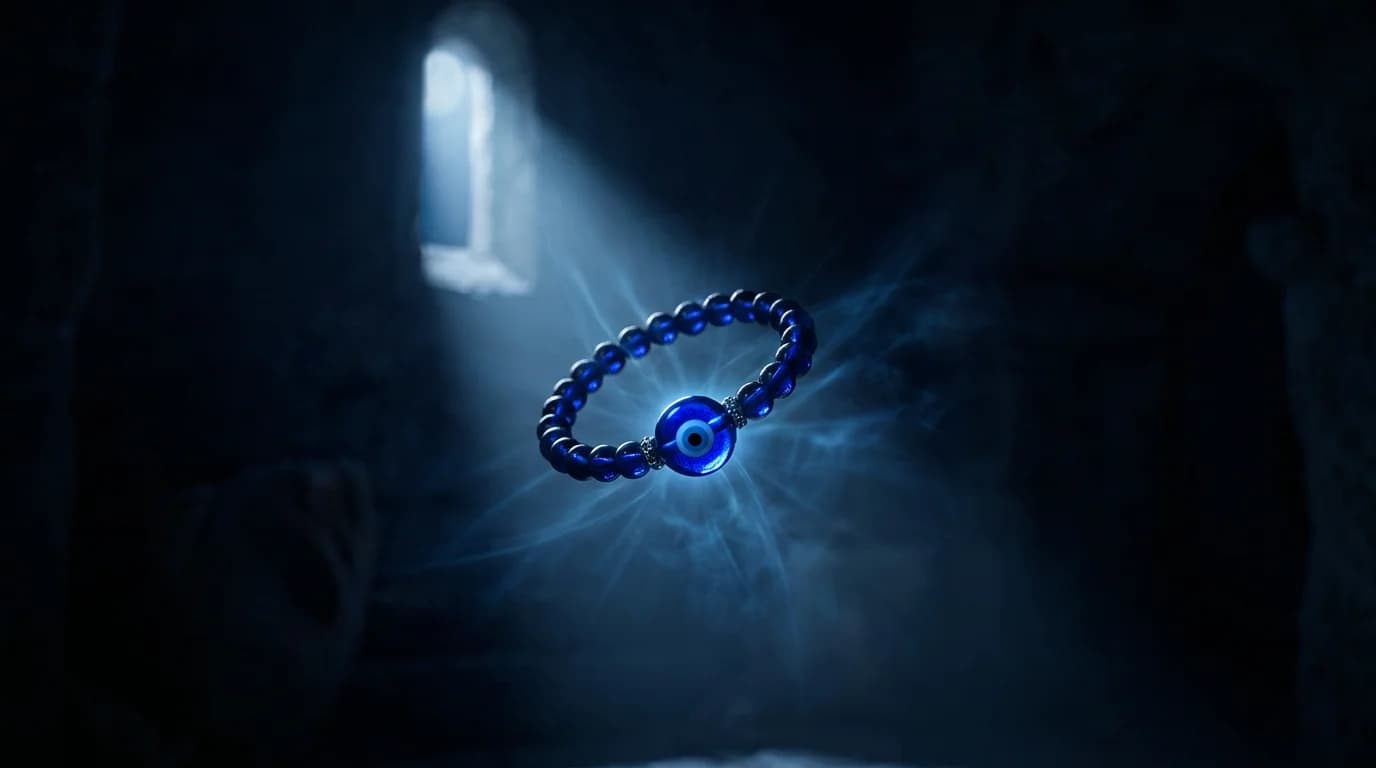
An evil eye bracelet — known in India as a nazar kavach — is a glass-bead charm worn on the wrist to deflect buri nazar (the malevolent gaze of envy). Rooted in Indian folk tradition and Vedic belief, it is worn primarily on the left wrist as a symbolic shield against concentrated negative energy from others.
- What Is the Evil Eye / Nazar?
- Why Blue? The Symbolism of the Blue Evil Eye
- Which Hand to Wear It — Left Wrist Tradition
- Who Can Wear an Evil Eye Bracelet?
- Evil Eye Colours and Their Meanings
- How to Check Glass Quality
- What It Means When It Breaks
- How to Cleanse and Care for Your Bracelet
- Does It Work? Vedic Belief vs Evidence
- Side Effects and Who Should Be Cautious
- Gifting an Evil Eye Bracelet
- The DivineTatva Difference
Evil eye bracelet (nazar kavach) — what it is and what it does.
An evil eye bracelet (nazar kavach) is a glass-bead charm worn on the left wrist to deflect buri nazar — the negative energy transmitted through an envious gaze. It is a ritual protection object rooted in the Atharvaveda and Indian folk tradition, not a medical device. DivineTatva's version uses a hand-applied blue lampwork glass focal bead energised through Pran Pratishta before dispatch.
| Material | Blue lampwork glass focal bead + crystal / lapis / onyx support beads |
| Tradition | Atharvaveda-rooted buri nazar (evil eye) protection — India, Turkey, Mediterranean |
| Wearing hand | Left wrist — the receiving side in Vedic tradition |
| Who can wear | Anyone — no lagna, rashi or age restriction |
| Energisation | Pran Pratishta (astrologer-performed ritual) before dispatch |
| When to replace | When the bracelet breaks or glass bead cracks — tradition says it absorbed nazar |
| Price (DivineTatva) | ₹799 — includes lab certificate, free India shipping, COD |
What Is the Evil Eye (Nazar) in Indian Tradition?
The evil eye — called nazar or buri nazar in Hindi — is the Indian folk belief that a concentrated gaze of envy, jealousy or admiration from another person can transmit negative energy to the recipient. This 'drishti' (literally: vision or gaze) is not considered a conscious curse; it is believed to be an involuntary transfer of negative intent that can disturb a person's wellbeing, luck or health. The concept is ancient and widespread: references appear in Atharvaveda and in regional traditions across Rajasthan, Punjab, Uttar Pradesh and beyond.
The nazar kavach — a talisman worn or displayed to deflect this gaze — takes many forms: black tikka dots on infants' foreheads, nimbu-mirchi hangings at doorways, and in modern usage, the blue glass evil eye bracelet. The bracelet form became popular in India partly through its overlap with Mediterranean hamsa and nazar bead traditions that share the same underlying belief: a watchful eye that looks back at the looker, neutralising the envious gaze before it can settle.
DivineTatva's Evil Eye Bracelet uses a hand-applied blue glass focal bead — the nazar kavach charm — combined with supporting crystal or lapis or onyx beads, and is energised through Pran Pratishta before dispatch. It is not a medical device and carries no warranty of metaphysical outcomes; it is a meaningful ritual object rooted in a living tradition.
Why Blue? The Symbolism of the Blue Evil Eye
The blue colour of the traditional nazar kavach is not arbitrary. In Turkish and Mediterranean nazar bead tradition — which heavily influenced the Indian version — deep blue was associated with water, sky and the divine gaze of protective deities. Blue was also considered the colour closest to the 'evil eye' itself in those traditions: by confronting the envious gaze with a mirror-like blue eye, the malevolent energy is reflected back before it can cause harm.
In Indian Vedic colour symbolism, blue (nila) is connected to Shani (Saturn), to protective planets, and to the throat chakra (Vishuddha), which governs speech and the expression of truth — relevant because buri nazar often arises from spoken envy (someone saying 'oh how lovely your child is' and the energy of jealousy riding on the words). The concentric circle design of the evil eye — dark pupil, white or light blue iris, dark blue outer ring — is believed to mimic the structure of a human eye, creating a look-back effect.
| Blue colour | Reflects and mirrors the malevolent gaze — most protective, most traditional |
| Concentric circles | Represent the eye looking back at the looker — a symbolic deflection shield |
| Glass material | Transparent, smooth surface thought to act as a mirror for negative energy |
| Focal bead position | Worn at the centre of the wrist so it faces outward toward others |
| Pran Pratishta | Energisation ritual at DivineTatva that sets protective intention in the charm |
Which Hand to Wear It — The Left Wrist Tradition
In Indian and broader nazar kavach tradition, the left wrist is considered the receiving hand — it is the side through which energy enters the body. Wearing the evil eye bracelet on the left wrist is therefore believed to position the kavach where it can intercept incoming buri nazar most effectively. The left side is also associated with Ida nadi (moon channel) in yogic anatomy — a calmer, receptive energy channel.
The right wrist is the projecting hand — associated with giving energy outward. While wearing an evil eye on the right wrist is not harmful, it is less traditional for nazar protection specifically. Some practitioners wear the bracelet on the right wrist when they want to project positive energy or wish protection for others. For children and infants, left wrist is standard.
| Wrist | Role in tradition | Best for |
|---|---|---|
| Left wrist | Receiving hand — intercepts incoming energy | Nazar protection, deflecting buri nazar, daily wear |
| Right wrist | Projecting hand — sends energy outward | Wishing well for others; less common for self-protection |
| Either wrist | When gifted — wear on wrist the gifter specifies | Gifted bracelets; intention of the giver matters |
There is no hard scriptural restriction. If you find a left-wrist bracelet uncomfortable for practical reasons (dominant hand, workplace), wear it where you will wear it consistently. In belief systems that emphasise nazar kavach, consistency and intention matter more than anatomical precision.
Who Can Wear an Evil Eye Bracelet?
Anyone can wear an evil eye bracelet. There are no rashi (zodiac) restrictions, no age limits, and no gender specification in the mainstream nazar kavach tradition. In fact, the most common recipients of evil eye talismans in India are infants and small children — considered most vulnerable to buri nazar because they attract admiring gazes and cannot verbally deflect attention.
| Infants / children | Traditional recipients; often worn as anklet or bracelet; black thread + evil eye charm common |
| Adults — all rashis | No restriction; Mesha through Meena, all rashis can wear blue evil eye |
| Pregnant women | Commonly worn in India as protection against others' nazar during pregnancy |
| Students / professionals | Worn during exams, job interviews, business launches to deflect envy |
| Gifting | Deeply auspicious — gifting a nazar kavach is a protective gesture; activate before gifting |
If you are pregnant or have a known skin sensitivity to metals in the string clasp, check the bracelet materials before wearing. DivineTatva bracelets use adjustable cotton or elastic cord and a silver-finish clasp — suitable for most skin types. If any irritation occurs, discontinue use. The bracelet is not a medical device.
Evil Eye Colours and What Each One Means
While blue is the most recognised and traditional nazar kavach colour, evil eye bracelets are made in several colours, each associated with a different protective intention in folk and crystal tradition. Colour choice is a matter of personal resonance and specific intention — there is no clinical evidence that colour choice affects outcomes.
| Colour | Traditional meaning | Best used for |
|---|---|---|
| Blue (medium) | Protection, calm, deflects malevolent gaze — the classic nazar kavach colour | Everyday protection, nazar deflection, children |
| Dark / Navy Blue | Deeper karmic protection, fate protection, serious drishti ward | Chronic envy situations, business protection |
| Black | Absorbs negativity powerfully; itself becomes 'full' and must be replaced sooner | Intense negative environment; replace promptly when darkening |
| Red | Courage, passion, energy field protection; less traditional for nazar specifically | Confidence in new ventures; protection of energy levels |
| Green | Prosperity, growth, new beginnings; folk luck association | New business, exam season, fresh starts |
| White / Clear | Purity, spiritual protection, clarity of mind | Spiritual practice, new relationships, spiritual gifts |
| Gold / Yellow | Power, confidence, solar energy, abundance protection | Leadership roles, wealth intention, Surya-aligned practice |
DivineTatva's core Evil Eye Bracelet uses the traditional medium-blue glass charm — the most widely accepted form of nazar kavach in India. If you are drawn to a different colour, that intuition is worth honouring; the ritual intention you set when putting on the bracelet matters more than the specific shade.
How to Check Glass Quality in an Evil Eye Bracelet
The evil eye charm is a glass bead — there is no 'natural evil eye stone.' Quality therefore comes down to the precision and durability of the glass. Cheap bracelets often use printed plastic beads or low-grade glass with blurry concentric rings. Here is how to check what you have.
- 1Concentric ring clarity
Hold the charm up to natural light. A quality glass evil eye has sharp, defined rings — dark pupil, clean white iris, clear blue outer ring. Blurry or bleeding rings indicate low-grade glass or a printed plastic bead.
- 2Surface smoothness test
Run your fingernail across the surface. Quality glass is perfectly smooth and cold to the touch. Ridges, rough patches or a warm plastic feel indicate poor material.
- 3Weight and temperature
Glass beads are noticeably heavier and cooler than plastic equivalents of the same size. Hold the charm: it should feel dense and cool within seconds.
- 4Supporting bead colour uniformity
Check the accompanying beads. Dyed plastic fades within weeks; quality glass or crystal beads hold colour and have internal depth you can see when tilted in light.
- 5UV light test
Quality glass does not fluoresce under a UV torch. Cheap plastic or resin filler glows white or green under UV — a clear sign of synthetic material.
- 6Return policy check
A seller confident in their glass quality will offer returns. No-return policy on a bracelet priced under ₹200 is a strong signal of disposable-quality materials.
DivineTatva's evil eye bracelet comes with a per-piece quality certificate confirming the blue glass charm meets our lampwork glass standard. Each bracelet is inspected for concentric ring definition before dispatch.
What It Means When Your Evil Eye Bracelet Breaks or Cracks
In Indian nazar kavach belief, a cracked or broken evil eye bracelet is a positive sign, not a negative one. It means the bracelet has absorbed a strong hit of buri nazar on your behalf — it has done its protective job and is now spent. The belief holds that the bracelet sacrificed itself so that harm would not reach you. Replace it immediately — do not repair or continue wearing a cracked charm, as a damaged kavach is considered spiritually weakened and can no longer protect.
To be honest: there is no scientific mechanism by which glass cracking correlates with envy-energy absorption. The crack is most likely caused by impact, temperature change, or material stress. However, the ritual meaning — that the bracelet is spent and must be renewed — serves a useful psychological purpose: it gives you a clear, actionable moment to reset your protective intention rather than continuing to rely on an object you may have stopped noticing.
- 1Acknowledge the break
Recognise it as a sign that the bracelet has completed its protective role — do not panic or see it as bad luck.
- 2Remove immediately
Take off the bracelet as soon as you notice the crack or break. Do not wear a damaged nazar kavach.
- 3Wrap in white cloth
White is associated with purity and completion. Wrap the broken bracelet in a white cloth or tissue.
- 4Dispose ritually
Bury the wrapped bracelet in soil or immerse it in flowing water (river, stream). Avoid throwing it in regular household waste — the ritual disposal completes the cycle.
- 5Cleanse yourself
Briefly pass incense smoke (loban or camphor) around your wrist and body as a reset gesture.
- 6Replace with a new energised bracelet
Order a new bracelet and set a fresh sankalp (intention) when you put it on. The renewal is the point.
How to Cleanse and Care for Your Evil Eye Bracelet
An evil eye bracelet requires both physical care — maintaining the glass charm and beads — and energetic cleansing, which resets the protective intention and clears accumulated negativity the bracelet is believed to have absorbed.
Physical care: Wipe the evil eye glass charm and crystal beads with a dry or barely damp soft cloth — do not soak or use harsh cleaners. If the glass charm chips or cracks, replace the bracelet immediately — a damaged nazar kavach is considered spiritually weakened. Cleanse energetically with incense smoke (dhoop/loban) or sound (singing bowl) weekly.
| Incense smoke (dhoop/loban) | Pass the bracelet through smoke for 30–60 seconds — most accessible weekly cleanse |
| Singing bowl sound | Place the bracelet near a ringing bowl; sound vibration is considered a reset |
| Moonlight | Leave on a windowsill on Purnima (full moon) — gentle energetic recharge |
| Sunlight | Brief morning sun (under 30 min) is acceptable; extended sun can fade coloured supporting beads |
| Salt water | NOT recommended — salt can corrode the clasp and degrade crystal beads over time |
| Frequency | Weekly energetic cleanse is ideal; physical wipe as needed |
Does the Evil Eye Bracelet Work? Vedic Belief vs Evidence
This is the honest answer: there is no peer-reviewed scientific evidence that buri nazar is a physical phenomenon, or that wearing a glass bead bracelet can intercept negative energy directed at you from other people. No randomised controlled trials exist on nazar kavach efficacy.
What Indian Vedic and folk tradition says is different: that concentrated jealousy and envy produce a 'drishti' (gaze energy) that can subtly affect the recipient's wellbeing, mood and luck — and that a protective talisman, properly energised and worn with intention, deflects or absorbs this before it can settle. This belief is thousands of years old and is practised across cultures globally.
What many wearers report — and this is consistent and worth noting — is a psychological benefit: feeling watched over, feeling calmer in environments where they previously felt unsettled by others' attention, and a greater sense of agency over their energetic boundaries. These effects are consistent with what psychology calls intention-setting and symbolic anchoring: the bracelet acts as a tactile reminder of protective intention, which may genuinely reduce anxiety.
| Perspective | What it says | Evidence level |
|---|---|---|
| Scientific | No physical mechanism for nazar; no RCTs on bracelet protection | No supporting clinical evidence |
| Vedic / folk tradition | Drishti (gaze energy) is real; kavach deflects it through symbolic mirroring | Thousands of years of cultural practice; not scientifically tested |
| Psychological | Bracelet as anchor for protective intention reduces anxiety; mindfulness effect | Consistent with established intention-setting research; plausible |
DivineTatva's position: this bracelet is a meaningful ritual object from a living tradition. It is not a substitute for medical, financial or professional advice. Wear it with the intention that feels right to you; the sincerity of your intention is the active ingredient.
Side Effects and Who Should Be Cautious
No harmful side effects are associated with wearing an evil eye bracelet in mainstream nazar kavach tradition. The bracelet is a passive protective object — it does not emit energy at the wearer. A few practical cautions apply.
| Skin sensitivity | The metal clasp may cause irritation for nickel-sensitive wearers; choose cord-only closure if needed |
| Infants under 6 months | Beaded bracelets pose a choking/strangulation risk; consult a paediatrician; black thread tikka is safer alternative |
| Cracked charm | Do not continue wearing a cracked or chipped evil eye — the glass edge may scratch skin; replace immediately |
| Over-reliance | Using the bracelet as a substitute for professional help (medical, mental health, financial) is not advised — it is a complementary ritual object |
| Water exposure | Prolonged water exposure (swimming, daily shower wear) degrades the string and can cloud the glass; remove before bathing |
Gifting an Evil Eye Bracelet — Traditions and Tips
Gifting a nazar kavach is considered deeply protective and auspicious in Indian tradition — you are expressing the wish that the recipient be shielded from buri nazar. Gifted evil eye bracelets are especially common for newborns, new brides, students starting exams, and people entering new ventures.
Traditional guidance: it is considered ideal to gift the bracelet already energised (DivineTatva performs Pran Pratishta before dispatch). The recipient wears it on the left wrist, sets a sankalp (protective intention), and the bracelet begins its role immediately. Some families specify that the gift-giver should not accept the bracelet back or inspect it too closely after gifting, as the recipient's accumulated nazar 'transfers' to the bracelet and should not return to the giver — but this is a regional folk custom, not a universal rule.
| Best occasions | Newborn blessing, baby shower, namakarana ceremony, bride's farewell (vidaai), exam season, business launch |
| Best day to gift | Tuesday or Friday in traditional Indian practice; no hard restriction |
| Wrapping colour | Red, white or gold are auspicious wrap colours for nazar kavach gifts |
| DivineTatva gifting | All orders can include a handwritten blessing card — note in order comments; comes in gift-ready box |
| Energised before gifting | DivineTatva bracelets are Pran Pratishtha-energised before dispatch — no additional activation needed |
The DivineTatva Difference
Most evil eye bracelets sold online in India are mass-produced imports with no quality verification, no spiritual energisation, and no care guidance. DivineTatva's bracelet is made in Jaipur and comes with a per-piece quality certificate confirming the glass charm meets our lampwork standard — sharp concentric rings, no air bubbles, proper glass weight.
| Feature | DivineTatva | Typical marketplace listing |
|---|---|---|
| Glass quality | Lampwork glass with sharp concentric rings; certified per piece | Unclear; often printed plastic or blurry glass |
| Energisation | Pran Pratishta performed before dispatch | None stated |
| Certificate | Per-piece quality certificate included | Rarely offered |
| Care guidance | Detailed care and replacement guidance provided | No guidance |
| Honest claims | Belief-based, no over-promise of clinical protection | Often over-promise 'guaranteed' protection |
| Returns | Easy returns within 7 days if charm is defective | Often no returns on ₹99 bracelets |
| COD available | Yes, across India | Varies |
Frequently asked
Last reviewed: 17 May 2026 · Verified by the DivineTatva expert panel
Which hand should I wear the evil eye bracelet on?
The left wrist is the traditional choice for nazar kavach wear in India. The left hand is considered the receiving hand — the side through which energy enters the body — so wearing the evil eye bracelet on the left wrist positions it to intercept incoming buri nazar. If the left wrist is not practical for you, intention matters more than side.
What happens when my evil eye bracelet breaks?
In nazar kavach tradition, a broken evil eye bracelet means it has absorbed a strong hit of buri nazar on your behalf — it has done its job. Remove it immediately, wrap it in white cloth, and dispose of it by burying in soil or immersing in flowing water. Do not repair or continue wearing a cracked charm. Replace it with a new, energised bracelet as soon as possible.
Can anyone wear an evil eye bracelet — any rashi or religion?
Yes. There are no rashi restrictions and no religious exclusivity on wearing a nazar kavach bracelet. The evil eye belief spans Hindu, Muslim, Jewish, Christian and secular traditions globally. In India, people of all backgrounds wear nazar kavach as a protective gesture. Children, pregnant women and the elderly are among the most common wearers.
Does the evil eye bracelet actually protect against buri nazar?
Scientifically, there is no evidence that buri nazar is a physical force or that a bracelet can intercept it. In Vedic and Indian folk tradition, the kavach is believed to deflect the energy of envy through its mirroring design. Many users report feeling calmer and less anxious about others' envy when wearing it — consistent with intention-setting and symbolic anchoring. It is not a substitute for medical or professional advice.
What does the blue colour of the evil eye mean?
Blue is the most traditional colour for a nazar kavach because it is believed to reflect and mirror the malevolent gaze back to the sender. In Mediterranean tradition (from which the modern Indian glass bead derives), blue was associated with the protective divine gaze. In Indian colour symbolism, blue connects to Shani (Saturn), protective energies, and the Vishuddha chakra governing speech — where spoken envy is said to originate.
How often should I cleanse my evil eye bracelet?
A weekly energetic cleanse is recommended — pass the bracelet through incense smoke (loban or dhoop) for 30 to 60 seconds, or place it near a ringing singing bowl. For physical cleaning, wipe with a dry or barely damp soft cloth as needed. Do not soak the bracelet or use harsh cleaners. Avoid prolonged exposure to water as it can degrade the string and cloud the glass.
Is DivineTatva's evil eye bracelet real glass or plastic?
It is lampwork glass — a specific glass-bead type made by working soft glass over a flame to create precise concentric ring patterns. Each bracelet comes with a per-piece quality certificate. You can verify: quality glass is cold and smooth to the touch, heavier than plastic, and the concentric rings are sharply defined when held to natural light. Plastic feels warm and lightweight by comparison.
Can I wear the evil eye bracelet while bathing or swimming?
We recommend removing it before bathing or swimming. Prolonged water exposure weakens the string, can corrode the metal clasp, and may gradually cloud the glass charm. Sea water and pool chlorine are particularly harmful to coloured beads and string material. Remove it, keep it on a clean surface, and put it back on after drying.
Can I gift an evil eye bracelet to a newborn?
Gifting a nazar kavach to a newborn is one of the most traditional uses in India — newborns are considered very susceptible to buri nazar because they attract admiring gazes. However, a beaded bracelet can pose a choking risk for very young infants. Consider a black thread nazar anklet or attach the charm to the crib instead. For infants over one year, a properly fitted elastic bracelet with no small loose parts is safer.
How long does it take for the evil eye bracelet to work?
In tradition, the bracelet is considered active from the moment you set your sankalp (protective intention) while putting it on — there is no waiting period. Some wearers report feeling its calming influence immediately; others notice it over time as a growing sense of confidence about their energetic boundaries. There is no scientifically defined mechanism or timeline.
Is there a specific day to start wearing the evil eye bracelet?
Tuesday and Friday are traditionally considered auspicious days to begin wearing a new nazar kavach in Indian practice. Saturday (Shanivar) is also considered supportive if you are wearing it for protection against envy related to Shani influences. That said, there is no hard rule — if the bracelet arrives on a Wednesday and you feel the urge to wear it, your intention on any day is valid.
What is the price of DivineTatva's evil eye bracelet?
The DivineTatva Evil Eye Bracelet is priced at ₹799 (MRP ₹1,499). It includes the blue glass evil eye charm, supporting crystal beads, per-piece quality certificate, and comes Pran Pratishtha-energised. Cash on delivery (COD) is available across India. Easy 7-day returns apply if the charm is defective on arrival.
Reviewed by the DivineTatva expert panel
Written and reviewed by DivineTatva's consulting Vedic astrologer. Every piece is lab-certified and energised in our Jaipur atelier. Last updated 2 June 2026.