Green Aventurine Bracelet Price in India: Bead Sizes, Quality & What You Should Pay
A green aventurine bracelet is round or faceted green-quartzite beads — coloured by tiny fuchsite inclusions that give a soft shimmer — strung on elastic. In India it sells for roughly ₹300 to ₹1,900, depending on bead size, grade, lab certification and energising. This page breaks down what each level actually costs and how to pay fairly.
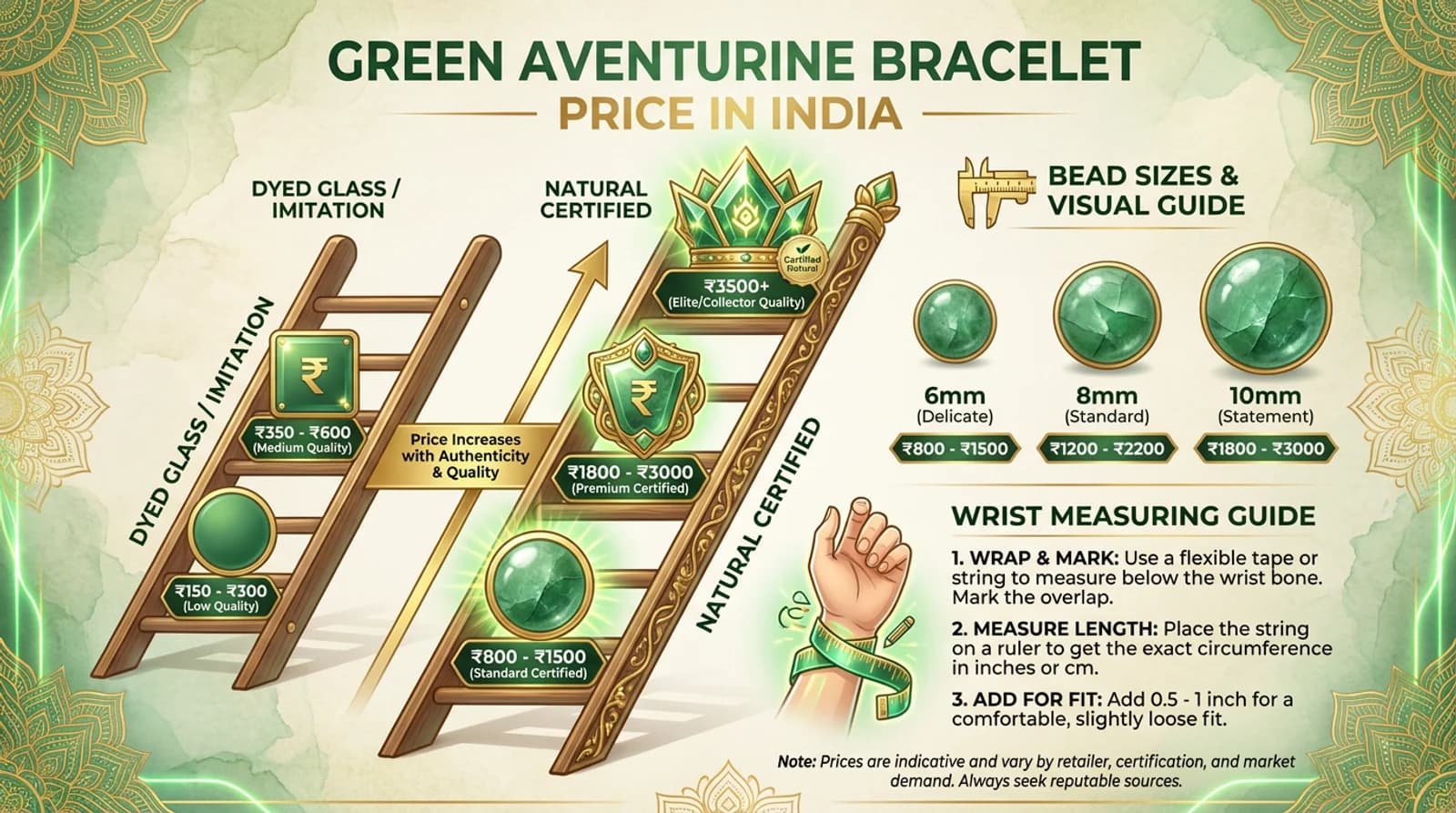
Green Aventurine Bracelet Price in India: The Honest Range
In India, a green aventurine bracelet typically costs between ₹300 and ₹1,900. The wide range is normal: a thin, uncertified 6mm strand sits near the bottom, while a certified, AAA-grade, astrologer-energised 10mm bracelet with a viewable lab certificate sits near the top. Most genuine, lab-checked pieces land between ₹600 and ₹1,200. Anything under ₹200 is usually dyed glass or green quartzite, not natural aventurine — so a very low price is a warning, not a bargain.
| Typical market range | ₹300 – ₹1,900 |
| Most certified pieces | ₹600 – ₹1,200 |
| Suspiciously cheap | Under ₹200 (often dyed glass) |
| Payment in India | COD and online both common |
| Returns to expect | 7-day return on genuine sellers |
Price reflects material and trust, not magic. Green aventurine is valued in Vedic and crystal tradition as the Stone of Luck & Opportunity, but those abundance and confidence benefits are belief- and tradition-based, not clinically proven. A bracelet is never a substitute for medical, financial or professional advice — so pay for verifiable things: real stone, accurate bead size, and a real certificate.
What Actually Drives the Price
Five things move a green aventurine bracelet's price. Understanding them lets you tell a fair ₹900 bracelet from an overpriced one — and from a cheap fake. Bead size and weight, stone grade, whether it is natural versus dyed, certification, and energising each add cost in a predictable way.
- 1Bead size & weight
Bigger beads (10mm) use more material than 6mm, so the same wrist costs more in larger sizes.
- 2Stone grade (A to AAA)
Even colour and visible aventurescence (shimmer) cost more than dull, patchy or chalky beads.
- 3Natural vs dyed
Genuine fuchsite-flecked quartzite costs more than dyed glass or dyed quartzite mimics sold as aventurine.
- 4Lab certification
A third-party Jaipur lab certificate per piece adds a real, verifiable cost — and real trust.
- 5Astrologer energising
Optional ritual cleansing/energising adds a small premium; it is tradition-based, not a proven function.
None of these levers promise results. They explain price honestly. You are paying more for a heavier, even-coloured, verifiably natural, certified bead — not for a guarantee of luck.
Bead Size Pricing: 6mm vs 8mm vs 10mm
Bead diameter is the first thing that changes the price and the look. 6mm is delicate and stackable, 8mm is the popular everyday size (and the most-searched), and 10mm is bold with the most visible shimmer. Larger beads use more stone, so expect to pay more as the size goes up — for the same grade and certification.
| Bead size | Look & feel | Typical price (certified) | Best for |
|---|---|---|---|
| 6mm | Dainty, light, easy to stack | ₹400 – ₹800 | Slim wrists, layering, daily wear |
| 8mm | Balanced, most popular | ₹600 – ₹1,200 | First bracelet, gifting, everyday |
| 10mm | Bold, strongest shimmer | ₹900 – ₹1,900 | Statement wear, larger wrists |
Ranges assume natural, lab-certified beads. If a 10mm "aventurine" bracelet is cheaper than a certified 6mm, treat it as a red flag — it is likely dyed glass, which is moulded cheaply and often shows tiny bubbles.
What AAA Grade and Certification Add
Two invisible factors quietly set price: grade and proof. Grade describes the bead's colour evenness and aventurescence; certification is the paperwork that proves the stone is natural aventurine and not a dyed mimic. At DivineTatva each bracelet ships with a viewable third-party Jaipur lab certificate — not a self-printed "100% certified" sticker.
| A grade | Paler or patchy colour, faint shimmer — entry price |
| AA grade | Good even green, clear shimmer — mid price |
| AAA grade | Rich even colour, strong aventurescence — top price |
| Uncertified | Cheaper, but no proof of natural stone |
| Lab-certified | Per-piece Jaipur certificate you can view |
| Energised | Optional astrologer cleansing; small added cost |
A certificate confirms material facts — natural quartzite, hardness, the fuchsite shimmer — not metaphysical results. It is the single most useful thing you can pay for, because it protects you from the most common scam: dyed glass sold at natural-stone prices. Honest sellers let you see the certificate before you buy.
Fair-Price Checklist Before You Buy
Use this quick checklist to decide whether a green aventurine bracelet is fairly priced. If a seller clears most of these, the price is reasonable for what you get. If the price is rock-bottom and the checklist fails, you are likely buying dyed glass dressed up as the Stone of Opportunity.
- 1Confirm the bead size
6, 8 or 10mm should be stated, not just "free size" — size drives price.
- 2Ask to see the certificate
A viewable per-piece Jaipur lab certificate beats any printed "100% certified" badge.
- 3Check the shimmer
Natural aventurine shows a soft, scattered aventurescence; dyed glass looks flat or has bubbles.
- 4Compare like with like
Match size, grade and certification before judging two prices.
- 5Look for COD & 7-day return
Genuine Indian sellers offer COD and a real return window so you can inspect at home.
- 6Distrust the ultra-cheap
Under ₹200 for "natural certified aventurine" is usually too good to be true.
A fair price buys honesty, not promises. We never claim proven luck or money returns — only that the stone is real, the size is accurate, and the certificate is yours to check.
Sizing: Get the Right Fit the First Time
Most green aventurine bracelets are strung on stretchable elastic, so they flex over a range of wrists — but the right bead count still matters for comfort and look. Measure your wrist snugly with a strip of paper or a tape, note the centimetres, and add a little ease so the bracelet sits comfortably without straining the cord.
| Wrist size | Suggested fit | 8mm bead count (approx) |
|---|---|---|
| 14–15 cm | Small | 17–18 beads |
| 16–17 cm | Medium | 19–21 beads |
| 18–19 cm | Large | 22–24 beads |
Bead count rises with both wrist size and smaller beads, which is why a 6mm bracelet uses more beads than a 10mm one for the same wrist. In tradition, many wear it on the left wrist — the receiving side — to invite abundance, though this is custom, not a rule. Keep the elastic happy: keep your green aventurine bracelet dry — remove it before bathing, swimming, workouts or applying perfume and lotion, and never soak the elastic-strung beads in water or salt water. Cleanse gently with smudge or sound and recharge in moonlight to protect both the shimmer and the cord.
Value vs Jade and Dyed Glass
Green aventurine is often compared to jade because both are green and prized for prosperity in tradition — but they are different stones at very different prices. Jade (jadeite or nephrite) is rarer, denser and far costlier; aventurine is an affordable green quartzite with a signature shimmer jade does not have. Knowing the difference stops you overpaying — or being sold dyed glass as either.
| Feature | Green aventurine | Jade | Dyed glass mimic |
|---|---|---|---|
| Material | Quartzite + fuchsite | Jadeite/nephrite | Coloured glass |
| Signature look | Soft shimmer (aventurescence) | Smooth, waxy, no sparkle | Flat colour, may have bubbles |
| India price (bracelet) | ₹300 – ₹1,900 | Much higher | Very low (₹100–₹250) |
| Feel/temperature | Cool, stone-like | Cool, dense | Warms fast in hand |
For most buyers, a certified green aventurine bracelet is the sensible-value choice: real stone, real shimmer, real paperwork, at an accessible price. You get the Stone of Opportunity's traditional meaning honestly — as belief and ritual, not a proven outcome — without paying jade prices or risking a glass fake.
Frequently asked
Last reviewed: 17 May 2026 · Verified by the DivineTatva expert panel
What is the price of a green aventurine bracelet in India?
Expect roughly ₹300 to ₹1,900. Most genuine, lab-certified bracelets fall between ₹600 and ₹1,200, depending on bead size (6/8/10mm), grade and whether it is energised. Prices under ₹200 are usually dyed glass or plain green quartzite rather than natural aventurine, so a very low price is a warning sign, not a deal.
Why is the 8mm green aventurine bracelet more popular?
8mm is the balanced, everyday size — bold enough to show the soft aventurescence shimmer, light enough for daily wear and gifting. It is also the most-searched size. A certified natural 8mm bracelet typically costs ₹600–₹1,200 in India, sitting between the daintier 6mm and the statement 10mm in both price and presence.
Does a certificate really change the price?
Yes, and it is worth it. A per-piece third-party Jaipur lab certificate adds a small, real cost but proves the stone is natural aventurine — not dyed glass sold at stone prices. We show a viewable certificate rather than a self-printed "100% certified" badge. It verifies material facts only, not any luck or money outcome.
How can I tell if a cheap green aventurine bracelet is fake?
Look for flat, too-even colour, tiny trapped bubbles, and a stone that warms quickly in your hand — all signs of dyed glass. Genuine aventurine shows a soft scattered shimmer (aventurescence) and stays cool. Ultra-low prices for "certified natural" stone, and no viewable certificate, are the clearest red flags.
Is green aventurine worth it compared to jade?
For value, usually yes. Jade is rarer, denser and far more expensive, while green aventurine offers an affordable green stone with a shimmer jade lacks. Both carry prosperity meaning in tradition, but those benefits are belief-based, not clinically proven. A certified aventurine bracelet gives real stone and real paperwork without jade-level prices.
Does paying more get me better results?
No. A higher price buys verifiable things — larger or higher-grade beads, natural certified stone, optional energising — not guaranteed luck, money or health. Green aventurine's benefits come from Vedic and crystal tradition and personal belief; many users report calm or focus consistent with intention and ritual. It is never a substitute for medical, financial or professional advice.
Can I pay cash on delivery and return it?
With genuine Indian sellers, yes. We offer COD and a 7-day return window so you can inspect the bracelet and its certificate at home before committing. A seller who refuses COD or any returns, while charging natural-stone prices, is worth a second look before you pay.
Reviewed by the DivineTatva expert panel
Written and reviewed by DivineTatva's consulting Vedic astrologer. Every piece is lab-certified and energised in our Jaipur atelier. Last updated 31 March 2026.