Which Hand to Wear Hanuman Chalisa Kada: Right Wrist Tradition Explained
The Hanuman Chalisa Kada is worn on the right wrist by both men and women in devotional tradition — the right being the active, projecting hand for outward protection and strength. This contrasts with crystal bracelets worn on the left. Sankalp (intention) ultimately matters more than physical placement.
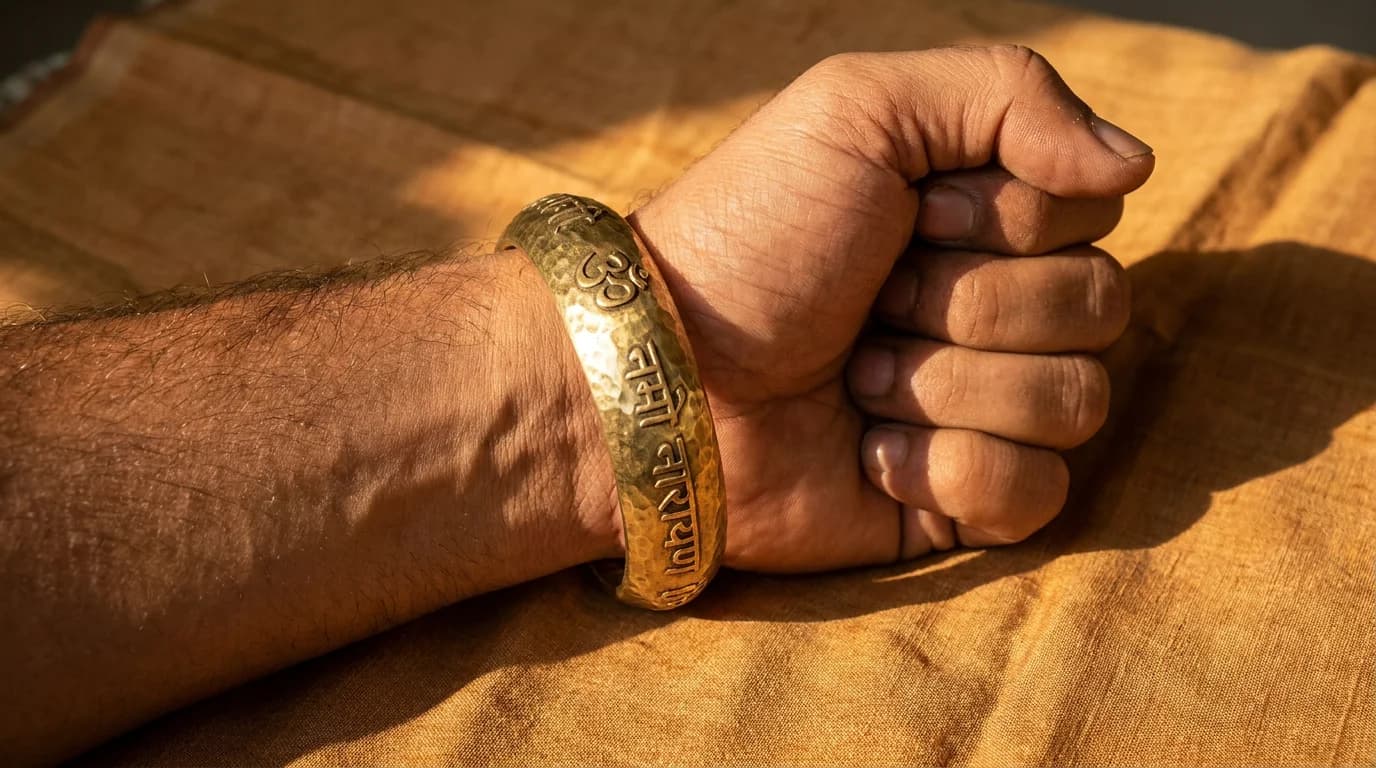
Right Wrist for Hanuman Chalisa Kada: The Traditional Answer
The Hanuman Chalisa Kada is traditionally worn on the right wrist — for both men and women. The right hand is the active, giving, projecting hand in Hindu ritual: you offer flowers with the right hand, receive prasad with the right hand, and swear oaths with the right hand. Wearing a protection and strength deity's kada on the right wrist means you are projecting that energy outward into your environment and actions — not passively receiving it. This is consistent with Hanuman's nature: he is active protection, outward courage, and dynamic strength.
Men and Women: The Right Wrist Rule Applies to Both
Unlike some astrological conventions that prescribe different hands for men and women (e.g., some gemstone traditions say right for men, left for women), the Hanuman Chalisa Kada follows a single tradition: right wrist for all. Hanuman bhakti does not make gender distinctions. Women who wear a crystal bracelet on the left and wish to add a Hanuman kada can comfortably wear the kada on their right wrist, creating a balanced devotional combination: receiving energy on the left, projecting protection on the right.
Why Right = Active and Left = Receiving in Vedic Tradition
In Vedic and yogic tradition, the left (ida) side of the body is associated with lunar, receptive, inward energy, while the right (pingala) side is associated with solar, active, outward energy. Crystal bracelets like rose quartz or amethyst are typically worn on the left to 'receive' their energetic properties inward. Protection and strength items — Hanuman kada, iron kada (for Shani), copper kada — are worn on the right to project their quality outward into the world. This is not a rigid universal rule, but it is the dominant convention in North Indian devotional jewellery tradition.
Hanuman Kada vs Crystal Bracelet: Why the Hand Differs
| Aspect | Hanuman Chalisa Kada | Crystal Bracelet (e.g., Tiger Eye, Pyrite) |
|---|---|---|
| Recommended wrist | Right wrist | Left wrist (traditionally) |
| Energy direction | Projecting outward — active protection | Receiving inward — absorbing energy |
| Vedic association | Pingala nadi (solar, active) | Ida nadi (lunar, receptive) |
| Material | Brass or copper | Gemstone / crystal beads |
| Purpose | Devotion, protection, courage, Mangal remedy | Energy alignment, intention, healing |
| Can both be worn together? | Yes — Hanuman pada right, crystal left | Yes — complementary |
| Gender rule | Right wrist for all | Left wrist for all (by convention) |
Sankalp Matters More Than Which Hand: The Honest View
Classical Jyotisha and bhakti teachers consistently emphasise that sankalp — the mental intention set at the moment of wearing — carries more weight than the precise physical placement. If you wear your Hanuman Chalisa Kada on the left wrist because the right is unavailable (watch, work tools, injury, personal comfort), but you set a clear sankalp of protection and devotion, the tradition considers this fully valid. The Hanuman Chalisa itself does not specify a wrist. The right-wrist convention is a strong traditional guideline, not a rigid rule. Follow it when practical; trust your sankalp when it isn't.
Which Hand? Quick Reference for All Cases
| Men (general devotion) | Right wrist |
| Women (general devotion) | Right wrist |
| Women already wearing crystal on left | Right wrist for Hanuman — crystal on left is fine |
| Children | Right wrist; whichever fits better for small wrists |
| Left-handed people | Right wrist still traditional; left is acceptable with clear sankalp |
| If right wrist is occupied (watch/tools) | Left wrist with sankalp is valid |
| First wearing: best day | Tuesday (Mangalvar) morning |
| First wearing: best time | After bath, after Hanuman Chalisa recitation |
Frequently asked
Last reviewed: 17 May 2026 · Verified by the DivineTatva expert panel
Can I wear the Hanuman Chalisa Kada on my left hand?
Yes, if the right wrist is not practical for you. The tradition recommends the right wrist for active protection and strength energy, but the sankalp (intention) you set when wearing matters most. Many devotees wear it on the left without issue, particularly if they also wear other items on the right wrist.
Should women wear the Hanuman Chalisa Kada on the same hand as men?
Yes — right wrist for both. Unlike some gemstone traditions that differ by gender, Hanuman bhakti tradition does not make this distinction. Women wear the Hanuman Chalisa Kada on the right wrist, the same as men.
I already wear a crystal bracelet on my left wrist. Can I add a Hanuman kada?
Yes, and this is a popular combination. Wear the crystal bracelet on the left (receiving) and the Hanuman Chalisa Kada on the right (projecting protection). The two traditions complement each other well.
Does it matter which wrist for Mangal dosha specifically?
For Mangal dosha remedy, the right wrist is preferred — Mars (Mangal) energy is active/projecting, consistent with the right wrist. Wearing a copper Hanuman kada on the right wrist on Tuesdays is the most specific form of this remedy.
What if I wear a watch on my right wrist?
Move the watch to the left wrist while wearing the kada, or wear the kada slightly higher on the right wrist. If neither is comfortable, wearing the kada on the left wrist with clear sankalp is acceptable.
Reviewed by the DivineTatva expert panel
Written and reviewed by DivineTatva's consulting Vedic astrologer. Every piece is lab-certified and energised in our Jaipur atelier. Last updated 20 June 2026.