Which Hand to Wear Moonstone Labradorite Bracelet: Full Guide
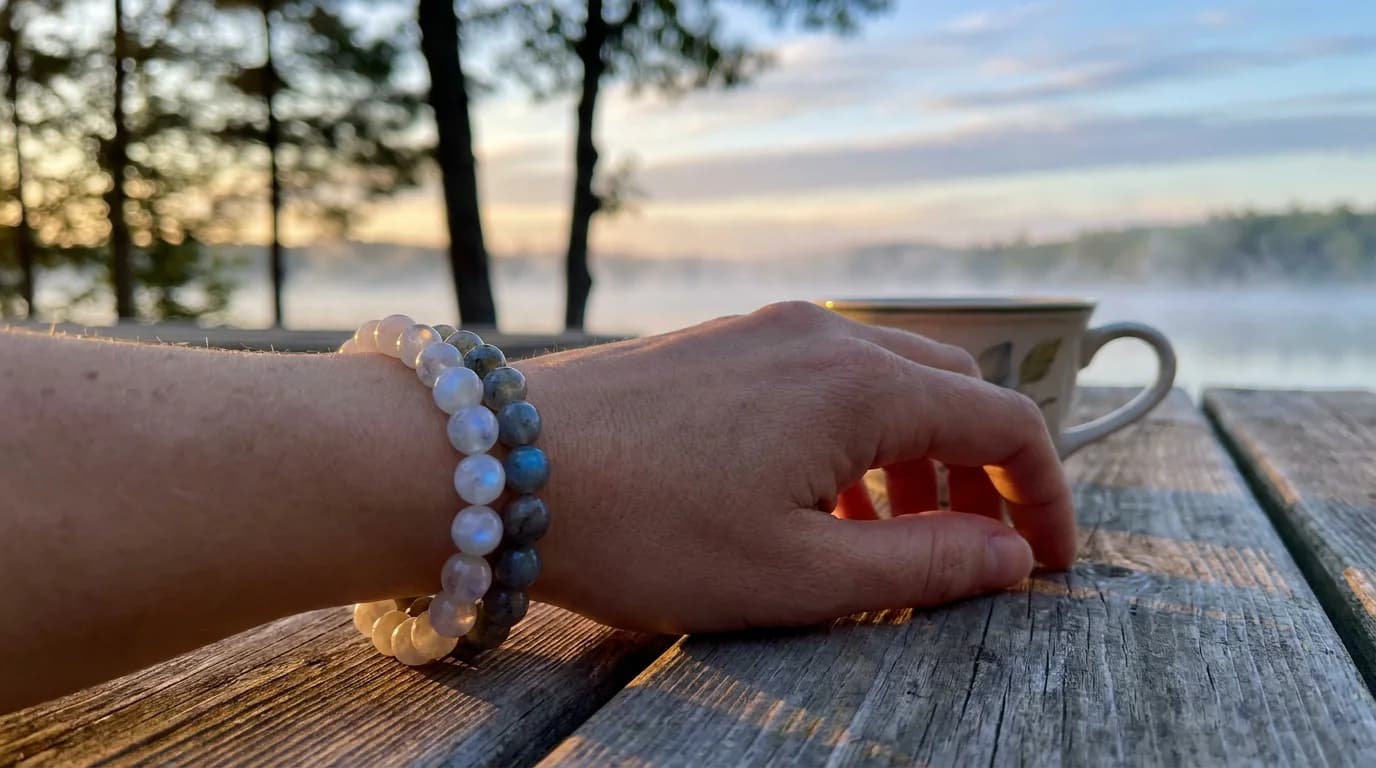
Wear your Moonstone Labradorite Bracelet on the left wrist. In Vedic crystal tradition, the left hand is the receiving side — it absorbs energy from crystals into your body. Both moonstone (Chandra energy) and labradorite (receptive transformation) are feminine, receptive stones that work best on the receiving side. The right wrist is for projecting energy outward.
Always Wear on the Left Wrist
The Moonstone Labradorite Bracelet should be worn on the left wrist. In Vedic crystal and Ayurvedic tradition, the left hand is the yin (receptive) side of the body — it receives energy from external sources including crystals. The right hand is the yang (projecting) side — it radiates your own energy outward. Crystals you want to absorb and benefit from belong on the left wrist.
Why Moonstone and Labradorite Are Left-Wrist Stones
Both moonstone and labradorite are classified as receptive, feminine-energy stones in crystal tradition. Moonstone channels Chandra (Moon) — the planet of the receptive, emotional, intuitive mind. Labradorite works by opening the aura to receive psychic clarity and transformation. Neither stone's primary benefit is outward projection; both work by bringing energy in. The left wrist is therefore the correct placement for both.
When to Wear on the Right Wrist
| Left wrist | Daily wear — absorb Chandra and Rahu energies for personal benefit |
| Right wrist | During full moon meditation when you want to project lunar energy outward to your environment |
| Right wrist | During energy healing sessions where you want to channel protective energy to another person |
| Either wrist | If you have a physical limitation — sankalp (intention) matters more than strict hand rules |
| Switch | Try left for 3 weeks before deciding — most people notice the difference vs right |
Crystal Bracelet Hand Rules at a Glance
| Crystal Type | Recommended Wrist | Reason |
|---|---|---|
| Moonstone | Left | Receptive Chandra energy — absorb |
| Labradorite | Left | Aura protection — absorb inward |
| Black tourmaline | Left | Shield absorbs from your body outward |
| Clear quartz | Left for healing, Right for projecting intention | Dual-purpose amplifier |
| Tiger Eye | Right | Active projecting stone — willpower outward |
| Red jasper | Right | Yang grounding energy — project outward |
| Hanuman kada (metal) | Right | Devotional projecting energy — right wrist traditional |
How to Wear It the First Time — Day, Mantra and Sankalp
The hand matters, but so does the first wearing. In Vedic tradition, Monday (Somvar — Chandra's day) morning during Shukla Paksha (the waxing moon fortnight) is the prescribed time to begin wearing any Moon-associated stone. The waxing moon amplifies the energy of new beginnings; starting a Moon bracelet during Krishna Paksha (waning moon) is considered less auspicious, though not harmful.
- 1Purify the night before
Rest the bracelet on a clean white cloth overnight, ideally on a windowsill where it can receive moonlight. Do not soak moonstone or labradorite in salt water — both are feldspars (Mohs 6–6.5) and repeated salt exposure dulls the adularescence and labradorescence.
- 2Monday morning, after bathing
Sit facing east or north. Hold the bracelet in both palms at the heart centre. The joined-palm position matters: both the receiving (left) and projecting (right) sides of the body make contact with the stones before wearing.
- 3Recite the Chandra mantra 11 or 108 times
Om Chandraya Namah is the simple form. The beej mantra — Om Shram Shrim Shraum Sah Chandraya Namah — is used in stricter traditions. Either is correct; consistency matters more than which one you choose.
- 4Set a specific sankalp
A vague intention ('good energy') gives the ritual nothing to anchor. A specific one works better: 'my mind stays calm under pressure' or 'I trust my intuition in decisions.' State it once, clearly, then slide the bracelet onto the left wrist.
Stacking With Other Bracelets — What Works on the Same Wrist
Because moonstone-labradorite is a receptive combination, it stacks well with other receptive stones on the left wrist and poorly with projecting stones. Mixing receptive and projecting stones on the same wrist creates what crystal tradition calls energy cross-talk — the stones are not damaged, but the wearer gets neither effect cleanly.
| Pairing | Same wrist? | Why |
|---|---|---|
| Rose quartz | ✅ Yes — left | Both receptive; heart + mind is a classic emotional-balance stack |
| Amethyst | ✅ Yes — left | Both Moon-calming; popular for sleep and anxiety stacks |
| Black tourmaline | ✅ Yes — left | Protection + intuition; tourmaline shields while moonstone opens |
| Tiger eye | ❌ No — wear on right | Projecting Surya stone; conflicts with receptive Chandra energy |
| Pyrite / citrine | ❌ No — wear on right | Active wealth-projection stones belong on the giving side |
| Metal watch | ⚠️ Caution | Constant rubbing scratches feldspar (Mohs 6–6.5); wear watch on right |
Wearing by Moon Phase — the Traditional Cycle
Moonstone is one of the few stones with a traditional wearing cycle tied to the lunar month. The practice: wear daily from new moon through full moon (Shukla Paksha, the waxing fortnight), recharge the bracelet under the full moon overnight on Purnima, then either continue wearing or rest the stone during the waning fortnight if you find its effect too stimulating. Most daily wearers skip the rest period entirely — it is optional, prescribed mainly for people who are highly Moon-sensitive (strong Chandra placement or Kark lagna).
| Amavasya (new moon) | Good day to set or renew your sankalp |
| Shukla Paksha (waxing) | Primary wearing period — energy builds with the moon |
| Purnima (full moon) | Recharge overnight in direct moonlight — the monthly maintenance ritual |
| Krishna Paksha (waning) | Continue wearing, or rest the stone if you feel overstimulated |
| Grahan (eclipse) | Traditional practice: remove and wash with clean water after the eclipse ends |
Frequently asked
Last reviewed: 17 May 2026 · Verified by the DivineTatva expert panel
What happens if I wear moonstone on the right hand?
The stone will still be present and may have subtle effects, but you won't receive its energy as efficiently. The right wrist is for outward projection; wearing a receptive stone there means you're projecting its energy away from you rather than absorbing it. There are no negative consequences — just reduced benefit.
Can I wear moonstone labradorite on both wrists?
You can wear different bracelets on both wrists. Wearing the same dual-stone bracelet on both wrists simultaneously is unusual and not recommended in Vedic tradition — stick to the left wrist for this combination.
My left hand is my dominant hand — does that change anything?
No. The left/right rule in crystal tradition refers to the body's yin/yang sides (regardless of dominant hand) based on traditional energy anatomy. Left-handed people should still wear receptive stones on the left wrist.
Is there a specific time of day to put the bracelet on?
Monday morning after bathing is auspicious — Chandra's day. Hold the bracelet in both palms, set your intention clearly, then slide onto the left wrist.
Do the rules differ between moonstone alone and moonstone with labradorite?
No — both stones are receptive. The same left-wrist rule applies whether you wear moonstone alone, labradorite alone, or the combination bracelet.
Can I wear the bracelet while sleeping or bathing?
Remove it for both. During sleep, the elastic cord stretches against the pillow and mattress — the most common cause of breakage. During bathing, soap film dulls the adularescence and repeated soaking weakens the cord. Keep it on the bedside table at night; many wearers find this placement still supports sleep in the traditional view.
Does the left-hand rule also apply to moonstone rings and pendants?
Rings: yes — Vedic tradition prescribes moonstone rings on the left hand's little finger (Kanishthika, the Mercury-Moon finger) or ring finger. Pendants: the rule doesn't apply — a pendant rests at the heart centre, which is neutral, and works for both receiving and projecting purposes.
Reviewed by the DivineTatva expert panel
Written and reviewed by DivineTatva's consulting Vedic astrologer. Every piece is lab-certified and energised in our Jaipur atelier. Last updated 18 June 2026.