How to Use Navagraha Candles: Step-by-Step Ritual Guide
To use Navagraha candles correctly, choose the planet's designated day, prepare a clean puja space, place the candle on a heat-resistant plate with the planet's image, chant the Beej mantra 11 or 108 times, light the candle, meditate for 15–60 minutes, then extinguish with a snuffer — never by blowing.
What You Need Before You Start
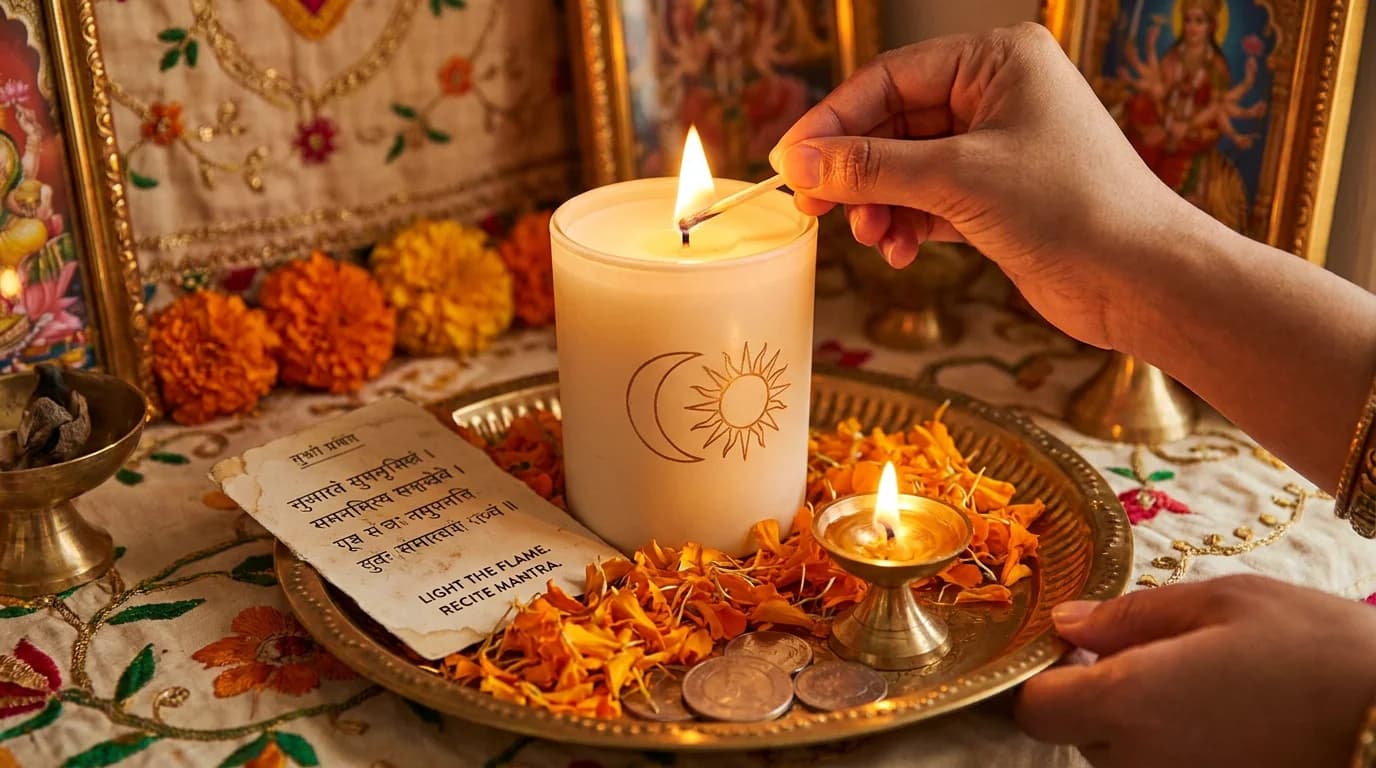
Using a Navagraha candle correctly means preparing your space and materials before lighting anything. The ritual's effectiveness in focusing your intention depends largely on this preparation phase. You will need: the relevant Navagraha candle from the set, a heat-resistant metal or ceramic plate, a clean cloth in the planet's colour (optional but traditional), the planet's image or yantra, a rudraksha or tulsi mala for counting mantras, a candle snuffer, and a quiet, undisturbed space for 30–60 minutes.
Step-by-Step Navagraha Candle Ritual
- 1Choose the correct planet and day
Identify the planet you are working with this session and confirm you are performing the ritual on that planet's designated day (see table below). Starting on the wrong day is one of the most common beginner errors.
- 2Clean your puja space thoroughly
Wipe your altar or table with a damp cloth. Remove clutter. Light a stick of dhoop or incense to purify the space — sandalwood for Surya, mogra for Chandra, and guggul for Shani are traditional choices.
- 3Lay the cloth and set the plate
Place a clean cotton cloth — ideally the planet's colour — on the surface. Set a heat-resistant brass, copper, or ceramic plate at the centre. Ensure there are no flammable materials within 30 cm.
- 4Place the planet's image or yantra
Set the relevant planet's printed image, idol, or yantra behind the candle. You may also place the planet's associated gemstone (or a picture of it) beside the candle as an additional focal point.
- 5Trim the wick to 6 mm
Before every use, trim the wick to 6 mm. A long, untrimmed wick produces a large, unstable flame and excess soot. Trimming ensures a clean, controlled burn.
- 6Chant the Beej mantra 11 or 108 times
Hold your mala and chant the planet's Beej mantra before lighting the candle. 11 repetitions is the minimum; 108 is traditional. Maintain a steady, unhurried pace. Focus entirely on the mantra and your intention.
- 7Light the candle and meditate
Light the candle using a matchstick or wooden lighter. Sit quietly, gazing softly at the flame. Hold your intention clearly in mind. Stay present for at least 15 minutes; up to 60 minutes is ideal. Do not leave the burning candle unattended.
- 8Close the ritual and extinguish the flame
After your meditation, offer a brief mental prayer of gratitude to the planet. Extinguish the flame with a candle snuffer — never blow it out with your breath, as this is considered disrespectful to the divine fire (Agni).
- 9Store the candle safely
Allow the wax to fully cool and solidify before moving the candle. Store upright in a cool dry place away from direct sunlight to prevent warping. Burn for no more than 2 hours at a stretch across future sessions.
Beej Mantras for All 9 Planets
Each planet's Beej mantra is inscribed on the candle itself, but here is the full pronunciation reference. Chant clearly, without rushing. The mantra's sonic vibration is considered as important as its meaning in Vedic tradition.
| Planet | Beej Mantra |
| Surya (Sun) | Om Hraam Hreem Hraum Sah Suryaya Namah |
| Chandra (Moon) | Om Shraam Shreem Shraum Sah Chandraya Namah |
| Mangal (Mars) | Om Kraam Kreem Kraum Sah Bhaumaya Namah |
| Budha (Mercury) | Om Braam Breem Braum Sah Budhaya Namah |
| Brihaspati (Jupiter) | Om Graam Greem Graum Sah Gurave Namah |
| Shukra (Venus) | Om Draam Dreem Draum Sah Shukraya Namah |
| Shani (Saturn) | Om Praam Preem Praum Sah Shanaischaraya Namah |
| Rahu (North Node) | Om Bhraam Bhreem Bhraum Sah Rahave Namah |
| Ketu (South Node) | Om Sraam Sreem Sraum Sah Ketave Namah |
Planet × Day × Mantra × Intention Table
| Planet | Candle Colour | Day | Beej Mantra | Intention |
|---|---|---|---|---|
| Surya | Red | Sunday | Om Hraam Hreem Hraum Sah Suryaya Namah | Confidence, vitality, authority |
| Chandra | White | Monday | Om Shraam Shreem Shraum Sah Chandraya Namah | Emotional peace, intuition |
| Mangal | Dark Red | Tuesday | Om Kraam Kreem Kraum Sah Bhaumaya Namah | Courage, energy, discipline |
| Budha | Green | Wednesday | Om Braam Breem Braum Sah Budhaya Namah | Intellect, communication, business |
| Brihaspati | Yellow | Thursday | Om Graam Greem Graum Sah Gurave Namah | Wisdom, prosperity, children |
| Shukra | White/Pink | Friday | Om Draam Dreem Draum Sah Shukraya Namah | Love, beauty, relationships |
| Shani | Black/Dark Blue | Saturday | Om Praam Preem Praum Sah Shanaischaraya Namah | Karma, discipline, endurance |
| Rahu | Dark Blue | Saturday night | Om Bhraam Bhreem Bhraum Sah Rahave Namah | Ambition, foreign success |
| Ketu | Smoky Grey | Saturday/Muhurta | Om Sraam Sreem Sraum Sah Ketave Namah | Spiritual liberation, past karma |
Common Mistakes When Using Navagraha Candles
- 1Lighting on the wrong day
Each planet has a designated day. Lighting a Shani candle on a Wednesday instead of Saturday reduces the symbolic alignment of the ritual.
- 2Blowing out the flame
Always use a snuffer. Blowing disrupts the ritual closure and, practically speaking, can scatter hot wax.
- 3Burning for more than 2 hours
Candles should not burn for more than 2 hours at a stretch. Overburning risks a destabilised wax pool, excessive heat, and potential fire hazard.
- 4Leaving the candle unattended
Never leave a burning candle unattended. The ritual should be a period of focused presence — if you must leave the room, extinguish the flame first.
- 5Skipping the wick trim
An untrimmed wick produces a large, sooty flame. Trim to 6 mm before every session for a clean, controlled burn.
Frequently asked
Last reviewed: 17 May 2026 · Verified by the DivineTatva expert panel
Do I need to light all nine candles in one sitting?
No. The standard practice is to light one candle on its designated planet day. A full nine-candle Navagraha Puja is typically done on special occasions or under a priest's guidance.
Can I use a lighter instead of a matchstick?
Yes. There is no strict rule on the ignition source. A wooden matchstick is traditional, but a clean lighter works equally well for home practice.
What if I don't know the Beej mantra pronunciation?
The mantra is inscribed on each candle and included on the ritual instruction card. Start by reading the mantra slowly and clearly; pronunciation improves with repetition. Many practitioners also use recorded mantra audio as a guide.
Can I relight a partially burned candle?
Yes. Trim the wick to 6 mm, allow the previous session's wax to solidify completely, then relight on the next appropriate day. Do not burn for more than 2 hours per session.
Is a specific time of day required?
Sunrise to mid-morning is traditional for most planets. Shani and Rahu are exceptions — Shani is lit at dusk on Saturday, and Rahu during Rahu Kaal on Saturday night. The ritual instruction card specifies the best time for each planet.
Can I play mantra music in the background during the ritual?
Yes. Many practitioners play the relevant planet's mantra as background audio, especially if they find it difficult to chant alone. Ensure the recording is an authentic version of the correct Beej mantra.
What should I do after the candle is fully used up?
Dispose of the remaining wax respectfully — wrapping it in a clean cloth and placing it near a tree or river is a traditional practice. Do not throw ritual items loose in general waste.
Reviewed by the DivineTatva expert panel
Written and reviewed by DivineTatva's consulting Vedic astrologer. Every piece is lab-certified and energised in our Jaipur atelier. Last updated 17 June 2026.