Pyrite Anklet Side Effects: Rust, Skin Reaction & Energy Sensitivity
Pyrite anklets have real, manageable side effects rooted in the stone's iron-sulfide chemistry and, for sensitive wearers, its energetic intensity. This guide covers each effect honestly — what causes it, whether it is harmful, and what to do.
Are Pyrite Anklets Safe to Wear?
Pyrite anklets are safe for most people as physical ornaments. They are not toxic, not radioactive, and do not pose medical risks when worn on intact skin. The side effects associated with pyrite anklets fall into two categories: practical chemical side effects from the stone's iron-sulfide chemistry (primarily moisture-triggered oxidation and temporary skin staining), and experiential energetic side effects reported within crystal healing frameworks (primarily heightened sensitivity in new wearers). Neither category is dangerous; both are manageable with the right care.
Rust & Blackening: Iron Sulfide Oxidation
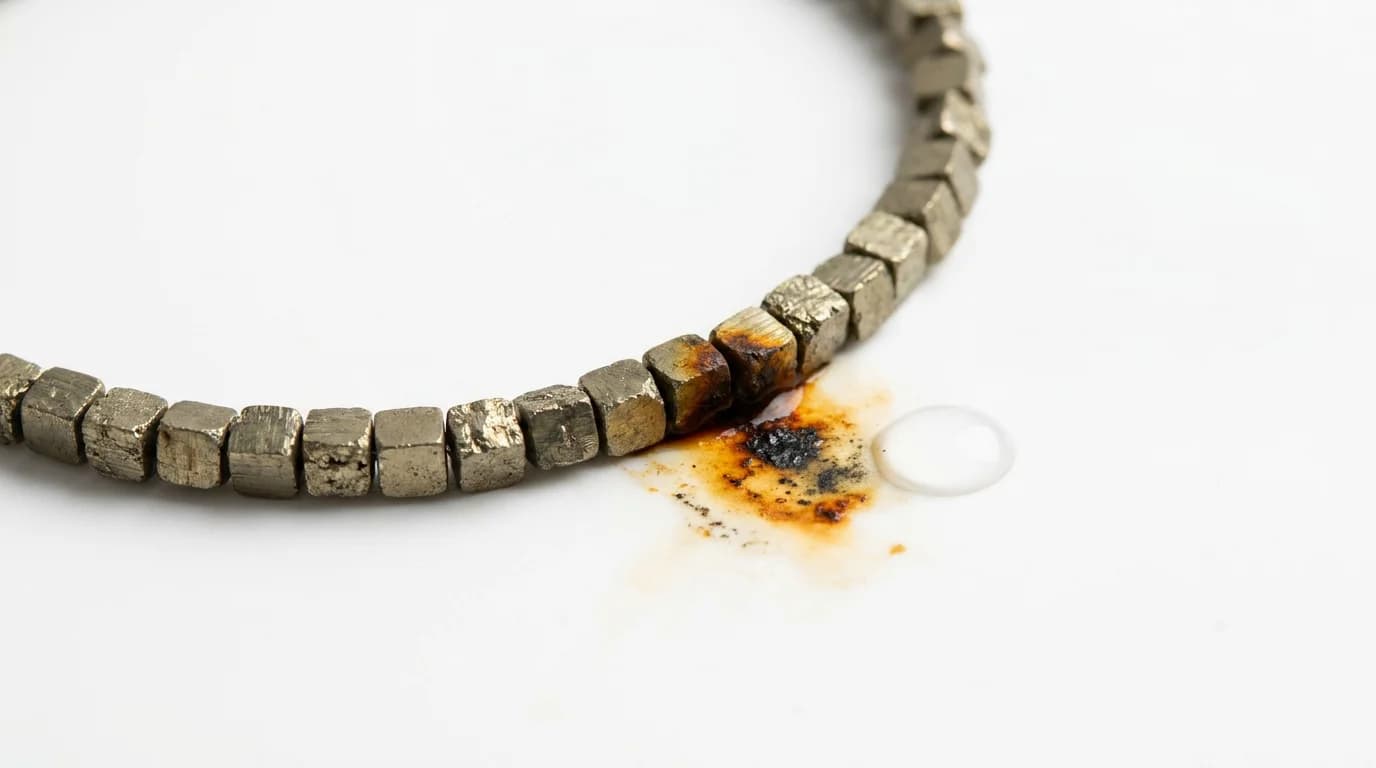
The most common and significant practical side effect of pyrite anklets is blackening and rust formation triggered by moisture exposure. Pyrite (FeS₂) reacts with water and atmospheric oxygen through a cascade of chemical reactions that produce iron hydroxides, iron sulfates, and ultimately iron oxide (rust) — identical chemistry to why iron nails rust, but accelerated by the sulfur component. Sweat from the ankle is the primary trigger; bath water, rain, and perfume spray are secondary causes.
| Chemical process | FeS₂ + O₂ + H₂O → FeSO₄ → Fe(OH)₃ → iron oxide (rust) + sulfuric acid traces |
| Trigger | Any moisture — sweat, water, humidity above ~60% |
| Speed | Visible blackening can begin within one 30-minute workout |
| Is it reversible? | Surface blackening can be partially polished off with dry chamois; deep rust is irreversible |
| Is it harmful? | No — iron oxide on skin is not toxic; it stains temporarily |
| Prevention | Remove before all exercise, bathing, swimming, cooking, or outdoor heat activity |
Skin Staining: Green or Brown Tinge on Ankle
When pyrite oxidises in contact with sweat, the iron compounds produced can temporarily stain the skin a yellow-brown, brown, or faintly greenish colour — particularly noticeable on light skin. This is cosmetically undesirable but not medically harmful. The stain is iron oxide (the same as rust staining on clothing), not a toxic compound. It washes off with soap and water; a gentle nail brush helps for skin creases.
If you notice green staining specifically, this may indicate the presence of copper-bearing minerals as inclusions in the pyrite, or that your piece contains some chalcopyrite. Green staining is similarly non-toxic and washes off, but persistent green colouration suggests the stone may not be pure FeS₂ pyrite.
Energy Sensitivity in the First 2 Weeks
Within the crystal healing framework, new wearers sometimes report heightened sensitivity in the first one to two weeks of wearing pyrite: vivid or unusual dreams, increased alertness that borders on restlessness, or a sense of heightened emotional or perceptual awareness. Practitioners attribute this to the stone's Mars-Sun activation energy engaging the root and solar plexus chakras, which can feel stimulating before the body acclimates.
| Reported experience | Vivid dreams, mild restlessness, heightened emotional awareness |
| Who experiences it? | More commonly reported by highly sensitive individuals and first-time crystal wearers |
| Is it harmful? | No — described as a calibration period, not a damage effect |
| Duration | Typically 1–2 weeks before settling into background awareness |
| Management | Wear for 2–3 hours per day initially, increasing gradually; remove before sleep if vivid dreams disrupt rest |
| Science perspective | Consistent with heightened attention and expectation effects documented in placebo research — not mystical, and not harmful |
Physical Ankle Discomfort
Pyrite beads are denser than most other crystal beads — 8mm pyrite beads are noticeably heavier than 8mm glass or resin. In hot weather, ankles swell slightly, and a fixed-circumference anklet may become tight. Measure carefully, buy the correct size with the extension chain, and remove the anklet if it feels constrictive. Never force an anklet over the ankle bone — threading can snap and bead scatter is a hazard.
Prevention: The Golden Rules
Wipe with a soft dry cloth only — never soak or expose to water, sweat, or perfume spray. Pyrite (iron sulfide) oxidises rapidly in moisture, turning black and forming rust. Remove before bathing, swimming, exercising, or sleeping. Polish gently with a dry chamois cloth to restore natural golden lustre. Recharge on a selenite plate monthly.
- 1Remove before any water exposure
This is the single most important rule — bathing, swimming, handwashing, rain, cooking steam.
- 2Remove before exercise
Sweat is moisture. Even air-conditioned gym sessions produce ankle sweat sufficient to begin oxidation.
- 3Store in a dry, sealed pouch
Bathroom storage = ambient humidity. Keep in a bedroom drawer with a silica gel sachet.
- 4Wipe after every wear session
A 10-second wipe with a soft dry cloth removes surface perspiration before it can react.
- 5Polish with chamois if lustre dulls
Light surface dulling from ambient humidity can be partially restored with gentle dry chamois polishing.
Frequently asked
Last reviewed: 17 May 2026 · Verified by the DivineTatva expert panel
My pyrite anklet turned black overnight. Is it ruined?
Deep overnight blackening suggests significant moisture exposure — sweat from wearing during sleep is the most common cause. Surface blackening in the early stages can be partially polished off with a dry chamois cloth. Deep, flaking rust is difficult to reverse. Going forward, remove the anklet before sleeping and store dry. The piece retains its mineral properties even if visually affected.
Is the green stain from a pyrite anklet harmful to skin?
No. Green staining from pyrite oxidation is iron or copper-iron compound residue — cosmetically undesirable but not medically harmful. Wash off with soap and water. If the staining is persistent or you experience itching or rash (very rare, indicates metal sensitivity rather than pyrite toxicity), stop wearing and consult a doctor.
Can pyrite anklet cause headaches or anxiety?
A small subset of crystal-sensitive individuals report headaches or heightened anxiety during the first days of wearing pyrite, consistent with the activation sensitivity effect described above. If this occurs, reduce wearing time to 1–2 hours daily and see if it resolves over a week. If it persists or worsens, the stone may simply not suit your constitution — there is no shame in choosing a different crystal.
Can I wear a pyrite anklet if I have sensitive skin?
Yes, with care. Pyrite itself is not a common skin allergen. The threading material (typically nylon, elastic, or wire) and any metal findings (clasps, rings) may be more likely to cause sensitivity than the stone. Check that findings are nickel-free or sterling silver. If you have a diagnosed metal allergy, patch-test by resting the anklet on the inside of your wrist for 30 minutes before ankle wear.
Is it safe to wear pyrite anklet during pregnancy?
There is no scientific evidence that wearing a pyrite anklet poses any physical risk during pregnancy. In crystal healing practice, some teachers advise consulting a practitioner before introducing strongly Mars-energy stones during pregnancy, as intensity energies are viewed with caution during that sensitive period. This is a traditional advisory, not a medical one. Consult your healthcare provider for any medical concerns.
Reviewed by the DivineTatva expert panel
Written and reviewed by DivineTatva's consulting Vedic astrologer. Every piece is lab-certified and energised in our Jaipur atelier. Last updated 6 June 2026.