Om & Elemental Rudraksha Bracelets: Gold-Plated vs Thread, Pyrite Combos & Who They Suit
An Om rudraksha bracelet is a wrist strand of natural Rudraksha seeds (Elaeocarpus ganitrus) paired with an Om or Panchtatva elemental charm, finished in gold-plated metal caps or a traditional mauli thread. Tradition links the beads to Lord Shiva, calm and protection; what we certify is species, mukhi count and origin.
What an Om rudraksha bracelet actually is
An Om rudraksha bracelet is a wrist strand of natural Rudraksha seeds — the dried fruit-stones of the Elaeocarpus ganitrus tree — strung with an Om (ॐ) or Panchtatva elemental charm, finished either in gold-plated metal caps or a traditional mauli thread. Each bead carries natural mukhi line-faces, most often 5 mukhi. Tradition links it to Lord Shiva, calm and protection.
Here is the honest part. Peer-reviewed proof of supernatural benefits is lacking. What is documented is the grounding ritual of mindful wearing and the comfort of routine — many wearers report steadier focus, calm and a sense of protection consistent with intention, ritual and placebo. We never over-promise: a Rudraksha bracelet is not a substitute for medical, financial or professional advice. What we can certify is authenticity, mukhi count and origin via lab and X-ray testing.
| Bead | Natural Rudraksha seed (Elaeocarpus ganitrus) |
| Mukhi (faces) | Commonly 5 mukhi; natural line-faces visible |
| Origin we certify | Nepali or Indonesian, stated on certificate |
| Charm options | Om (ॐ) or Panchtatva elemental motif |
| Finish options | Gold-plated metal caps or mauli thread |
| Common add-on | Pyrite beads for a wealth-intent combo |
| Tradition | Associated with Lord Shiva, calm, focus, protection |
| Evidence | No clinical proof; benefits from belief, ritual & routine |
Om, Panchtatva elemental & pyrite combinations
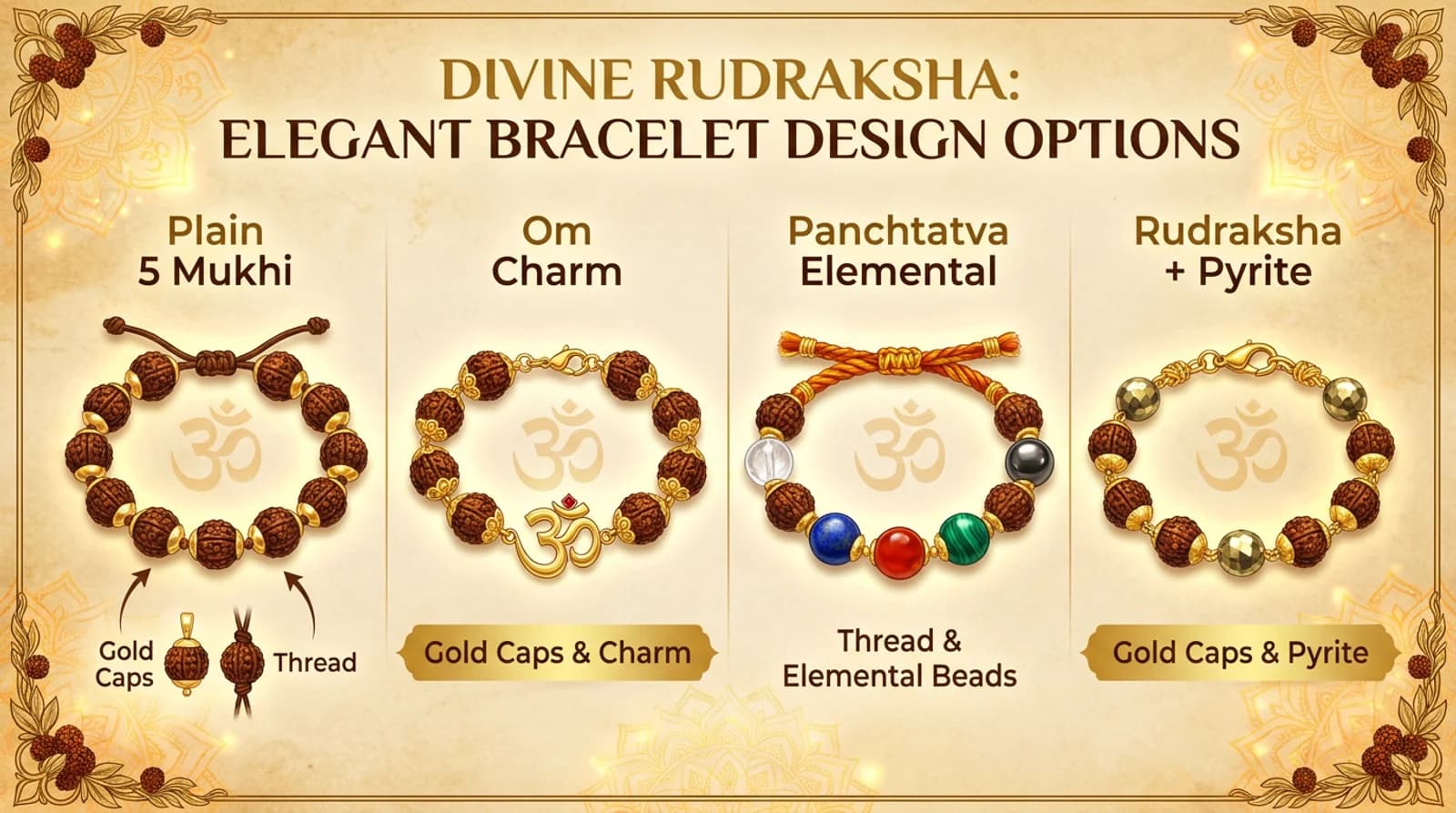
Beyond the plain bead strand, three modern designs dominate. The Om bracelet adds a single Om charm as the focal point. The Panchtatva (five-element) design spaces small elemental motifs — earth, water, fire, air, space — around the wrist. The pyrite combo alternates golden pyrite beads with Rudraksha for a wealth-and-grounding intention. None of these change what a bead can do; they change the look and the intention you set.
| Design | What it adds | Traditional intention | Best paired with |
|---|---|---|---|
| Plain 5 mukhi | Just natural Rudraksha beads | Calm, focus, all-rounder | Thread or gold caps |
| Om charm | Single Om (ॐ) focal motif | Shiva devotion, centering | Gold-plated or thread |
| Panchtatva elemental | Five small element motifs | Balance of the five elements | Thread, minimalist look |
| Rudraksha + pyrite | Golden pyrite accent beads | Wealth intent + grounding | Gold caps, statement look |
A note on pyrite: it is a soft, iron-sulphide mineral that tarnishes if it gets damp. Treat any pyrite or gold-plating as the delicate part of the bracelet — it stays beautiful only if it stays completely dry. The Rudraksha beads themselves are far hardier.
Gold-plated caps vs traditional mauli thread
The same beads behave very differently depending on the finish. Gold-plated metal caps give a polished, jewellery-grade look that suits offices and gifting, but the plating must be kept bone-dry to last. A mauli (red-and-yellow thread) base is lighter, fully traditional, easy to re-string at home, and far more forgiving of daily wear — though the thread will fray over months and need replacing.
| Factor | Gold-plated caps | Mauli thread |
|---|---|---|
| Look | Polished, modern, jewellery-like | Traditional, understated |
| Weight | Slightly heavier | Very light |
| Water tolerance | Keep completely dry | Beads dry; thread can be re-strung |
| Durability | Plating can wear with moisture | Thread frays, easily replaced |
| Maintenance | Wipe dry; never soak | Re-knot or re-thread as needed |
| Best for | Gifting, office, statement wear | Daily wear, puja, budget pick |
If you sweat a lot, work outdoors or forget to remove jewellery, thread is the practical choice. If you want a gift-ready piece and will treat it carefully, gold-plated caps look the part. Neither finish changes the certified authenticity of the beads inside.
Which design suits men, women and first-timers
Rudraksha has no gender, rashi or chakra restriction in tradition — anyone can wear it, including men, women, students and elders. The choice is really about size, look and lifestyle, not eligibility. Below is a simple way to match a design to the wearer.
| Wearer / need | Suggested design | Why |
|---|---|---|
| Men, everyday | Plain 5 mukhi or pyrite, thread | Rugged, low-maintenance, calm focus |
| Women, dressier | Gold-plated Om or elemental | Jewellery-grade, gift-ready finish |
| First-time wearer | Plain 5 mukhi thread | Simplest, hardiest, easiest care |
| Wealth intention | Rudraksha + pyrite | Grounding bead with golden accent |
| Shiva devotee | Om charm bracelet | Om motif centres the practice |
| Daily-sweat / outdoor | Thread, no pyrite/plating | Nothing delicate to keep dry |
There are no harmful side effects of wearing Rudraksha for most people. A few wearers find a new bracelet feels tight or warm at first — that is fit and skin sensitivity, not a spiritual signal. If you have a known nickel allergy, favour a thread base over metal caps. None of this is medical advice; see a professional for any skin concern.
Real vs fake — and why the certificate matters
The biggest fear with any Rudraksha bracelet is buying a fake — polished betel nut, moulded resin or carved seeds passed off as natural. A few honest at-home checks help, but they are indicative, not conclusive. Only lab and X-ray testing can confirm species, mukhi count and origin, which is exactly what your free QR-verifiable certificate states.
- 1Look at the mukhi lines
Genuine faces (mukhi) run cleanly from hole to hole and are slightly irregular. Painted-on or perfectly identical lines suggest a fake.
- 2Check the surface
Natural beads have uneven thorny ridges and tiny natural pits. Glassy, seamed or mould-line surfaces point to resin.
- 3Inspect the bore hole
Look for natural fibre inside the drilled hole, not smooth plastic walls.
- 4Trust the X-ray, not folklore
The water-sink and copper-coin spin tests are unreliable. A lab/X-ray certificate confirming Elaeocarpus ganitrus, mukhi count and Nepali vs Indonesian origin is the real proof.
| Certificate type | Free, QR-verifiable lab/X-ray report |
| States species | Elaeocarpus ganitrus, confirmed |
| States mukhi | Exact face count (e.g. 5 mukhi) |
| States origin | Nepali or Indonesian, named honestly |
| Why it matters | Answers the real-vs-fake fear with proof, not a slogan |
Which hand, how to cleanse, and daily care
In Indian tradition the left wrist is the receiving side, so most people wear a Rudraksha bracelet on the left; the right is fine if that suits you better. You can wear it daily — there is no rule against it. To start, hold a simple intention or chant “Om Namah Shivaya” a few times; this is ritual and mindfulness, not a guarantee of results.
- 1Cleanse gently
Wipe with a soft dry cloth. For a traditional energising, leave it overnight near a diya or in morning sunlight — keep it away from water if it has pyrite or plating.
- 2Set an intention
On first wear, set a calm intention or chant a mantra. The benefit is the focus, not magic.
- 3Wear on the left
Left wrist = receiving in tradition; switch to right if more comfortable.
- 4Remove before water
Take it off before bathing, swimming or heavy sweat.
Care, verbatim: Keep your Rudraksha bracelet dry: remove it before bathing, swimming or heavy sweat, and avoid soap, perfume and chlorinated water. Oil the beads with a little sandalwood or coconut oil occasionally, keep any gold-plating and pyrite completely dry, and store in a soft cloth pouch.
Rudraksha bracelet price in India — what is fair
We reject inflated-MRP theatre — no “Rs 99,900, 60% off” anchoring. A genuine, lab-certified 5 mukhi Nepali bracelet sits in a sensible band; design, finish and origin move the price, not marketing drama. Prices below are indicative ranges in INR, with COD available across India and the certificate included free.
| Plain 5 mukhi, thread | Entry, most affordable |
| Om charm, thread | Slightly above plain |
| Panchtatva elemental | Mid-range, design-led |
| Gold-plated Om / caps | Higher — plating & finish |
| Rudraksha + pyrite | Mid to higher — extra beads |
| Origin effect | Certified Nepali typically priced above Indonesian |
| Always included | Free QR lab certificate, COD, Jaipur-made |
What you are really paying for is certified authenticity and honest origin — not a fake discount. If a price looks too good against a wild MRP, that is the anchor trick, not a bargain. Stable, fair pricing is part of how we earn trust.
Frequently asked
Last reviewed: 17 May 2026 · Verified by the DivineTatva expert panel
Is an Om rudraksha bracelet only for Shiva devotees?
No. The Om (ॐ) charm carries devotional and centering symbolism linked to Lord Shiva, but anyone can wear the bracelet regardless of faith, rashi or chakra. Many wear it simply for the calm, grounding ritual of mindful wearing. Treat the Om as a focal point for intention, not a requirement. Benefits come from tradition, belief and routine, not from clinical proof.
Does the gold plating or pyrite have spiritual power?
No — they are aesthetic and intention-setting, not certified to do anything. Gold-plated caps give a jewellery-grade look; pyrite is a golden mineral paired with Rudraksha for a wealth-and-grounding intention. The certified element is the Rudraksha bead’s species, mukhi count and origin. Keep both plating and pyrite completely dry, as moisture tarnishes them quickly.
Which hand should I wear my rudraksha bracelet on?
Tradition treats the left wrist as the receiving side, so most people wear it on the left. The right wrist is perfectly acceptable if it feels more comfortable or you are right-hand dominant and want to protect the beads. There is no strict rule, and switching hands does not reduce authenticity. Wear it where you will keep it on consistently.
Can I wear a rudraksha bracelet daily?
Yes. There is no tradition against daily wear, and most people keep it on continuously. Just remove it before bathing, swimming or heavy sweat, and keep it away from soap, perfume and chlorinated water. Oil the beads occasionally and keep any gold-plating or pyrite completely dry. Daily wear mainly helps because it makes the grounding ritual a steady habit.
How do I know my bracelet is real and not fake?
Home checks help — look for slightly irregular natural mukhi lines, a thorny pitted surface and natural fibre in the bore hole — but they are indicative only. Water-sink and coin-spin tests are unreliable. The conclusive proof is a lab/X-ray certificate confirming Elaeocarpus ganitrus species, exact mukhi count and Nepali vs Indonesian origin. Ours is free and QR-verifiable.
Are there any side effects of wearing rudraksha?
For most people, none. A new bracelet may feel tight or warm at first — that is fit and skin sensitivity, not a spiritual sign. If you have a nickel allergy, choose a mauli thread base over metal caps. Rudraksha is not a substitute for medical, financial or professional advice; consult a professional for any genuine skin or health concern.
Nepali or Indonesian rudraksha — which should I buy?
Both are genuine Rudraksha. Nepali beads are usually larger with deeper, well-defined mukhi lines and command a higher price; Indonesian beads are smaller, smoother and more affordable. Neither is fake — the difference is size, finish and cost. What matters most is that the origin is stated honestly on the certificate, which is exactly what ours does.
Reviewed by the DivineTatva expert panel
Written and reviewed by DivineTatva's consulting Vedic astrologer. Every piece is lab-certified and energised in our Jaipur atelier. Last updated 24 May 2026.