Which Hand to Wear a Rudraksha Bracelet On: Left or Right (Honest Answer)
A rudraksha bracelet is a wrist strand of natural Rudraksha seeds (Elaeocarpus ganitrus), often paired with Om or Panchtatva charms. Tradition favours the right wrist for wearing and giving, the left for receiving — but honestly, comfort and protecting the beads from damage matter far more than which hand you choose.
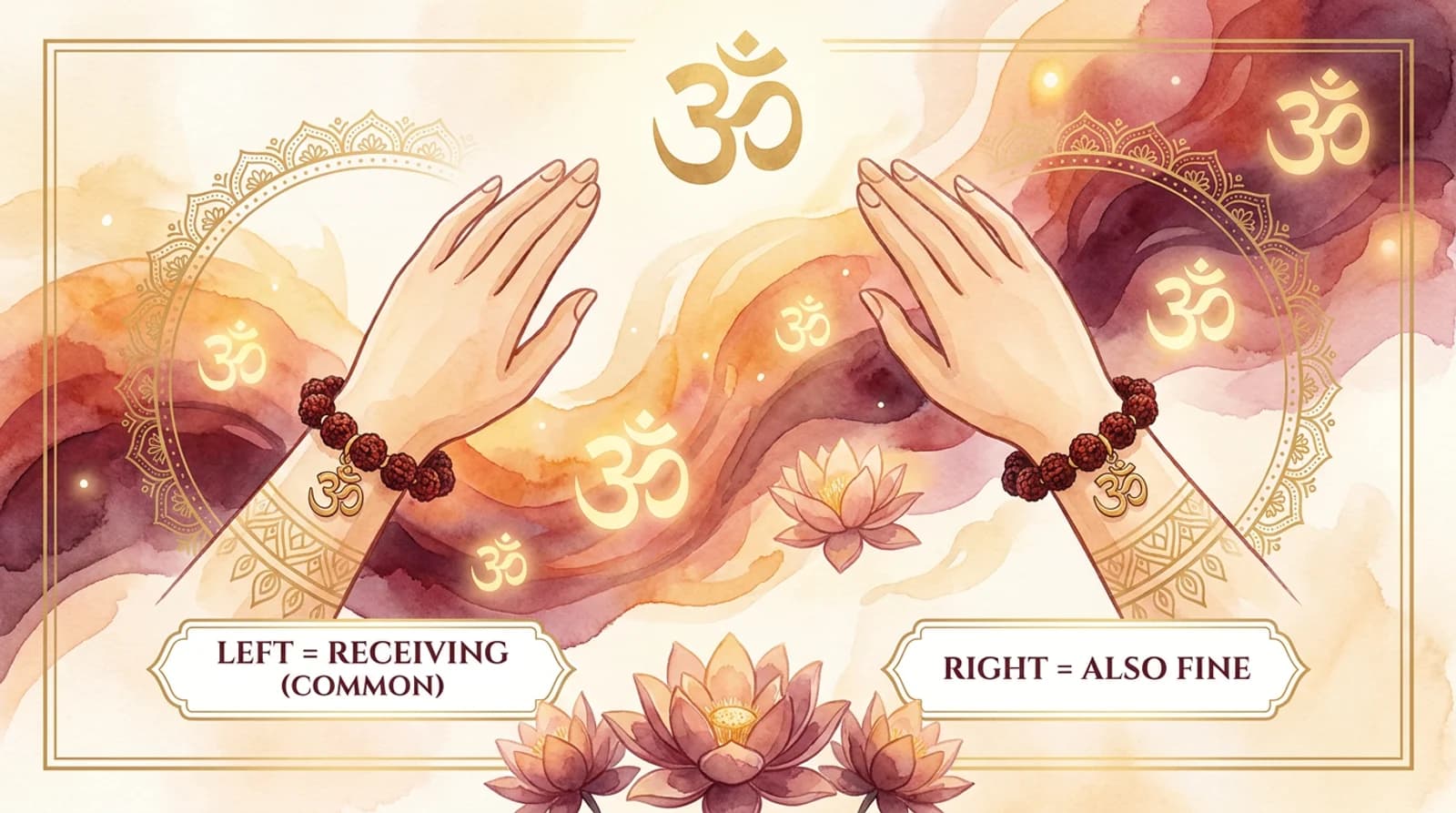
Which Hand Should You Wear a Rudraksha Bracelet On?
Wear a rudraksha bracelet on your right wrist if you follow tradition: the right hand is linked with giving, action and projecting energy, while the left is the receiving side. Honestly, though, there is no peer-reviewed proof that the hand changes any effect — comfort and protecting the beads from damage matter more than left versus right.
If you write, type or work mostly with your dominant hand, wearing the bracelet there means more knocks, sweat and soap exposure — which damages natural beads faster. Many people simply wear it on the non-dominant hand for that practical reason. Both choices are valid; choose the wrist you will actually keep it on daily.
| Traditional default | Right wrist (giving / projecting) |
| Receiving intent | Left wrist |
| Evidence for hand choice | None — belief and ritual, not clinical proof |
| Most practical pick | Non-dominant wrist (less wear and tear) |
| What truly matters | Daily consistency, dryness, authenticity |
What Tradition Says About Left vs Right
In Vedic and yogic tradition, the right side of the body is associated with the Pingala nadi — the active, outward, solar channel — so a rudraksha worn on the right wrist is said to support focus, drive and the projecting of intention. Rudraksha itself is linked to Lord Shiva and to a calm, grounded mind.
The left wrist is tied to the Ida nadi, the receiving, cooling, lunar channel. Some practitioners prefer the left when the goal is to absorb calm or protection (buri nazar) rather than project energy. Neither rule is rigid — these are interpretive guidelines from belief and practice, not commandments, and teachers genuinely differ.
| Wrist | Tradition links it to | Often chosen for |
|---|---|---|
| Right | Pingala / active, giving side | Focus, drive, projecting intention, daily default |
| Left | Ida / receiving, calming side | Absorbing calm, protection, meditation |
A common middle path: wear it on the right for everyday grounding and shift to the left during meditation or sleep. Treat these as flexible customs, not strict requirements — the tradition is consistent on reverence for the bead, not on a single mandatory hand.
The Honest Evidence: Why Comfort Beats Side
Here is the straight answer most sellers skip: there is no peer-reviewed scientific evidence that wearing rudraksha on one hand versus the other produces a measurable physical effect. The benefits people report — calm, focus, a sense of protection — are consistent with the grounding ritual of mindful wearing, the comfort of routine, and intention or placebo, not with the choice of wrist.
What the wrist choice does measurably affect is the bracelet's lifespan. Natural Rudraksha is an organic seed; it cracks, darkens and frays when battered against keyboards, gym weights, soap, perfume and chlorinated water. Your dominant hand meets all of these more often. So the practical case for the non-dominant wrist is real, even if the metaphysical case is belief-based.
| Proven benefit | Ritual of mindful, consistent wearing |
| Belief-based benefit | Calm, focus, protection per Vedic tradition |
| Clinical proof of hand effect | None |
| Real, measurable factor | Wear, sweat and chemical exposure on dominant hand |
| Important note | Not a substitute for medical, financial or professional advice |
Our position: choose the wrist that lets you wear the bracelet daily and keep it dry and intact. Consistency and authenticity do far more for your experience than agonising over left or right.
Men, Women and Who Can Wear It
A rudraksha bracelet suits men and women of any age — tradition places no gender bar on Rudraksha. A 5 mukhi (panchmukhi) bead is the universal choice: it is the most common mukhi, linked to Shiva and calm, and is considered safe for everyone regardless of rashi, which is why most certified bracelets use it. There is no rule restricting Rudraksha to a particular sign or community.
| Wearer | Typical pick | Notes |
|---|---|---|
| Men | 5 mukhi thread or gold-plated Om | Bolder beads, Om or pyrite-wealth combos popular |
| Women | 5 mukhi with Panchtatva or Om charm | Slimmer beads, elemental designs, often left wrist for calm |
| Children / elderly | Single or few-bead thread bracelet | Light, comfortable; supervise small children |
| Daily wearers | Certified 5 mukhi, secure clasp | Choose non-dominant wrist to reduce wear |
Old custom suggests removing any bead bracelet during a funeral or while consuming non-vegetarian food and alcohol if you follow a strict observance; this is personal belief, not a health rule. Pregnant women and anyone with a specific medical or spiritual question should consult a qualified practitioner — Rudraksha is a tradition, not a treatment.
How to Wear a Rudraksha Bracelet Correctly
- 1Pick your wrist
Right for traditional giving energy, or your non-dominant wrist for less wear. Either is fine — pick what you will keep on daily.
- 2Check the fit
It should sit snug but slide a little; a loose bracelet bangs against surfaces and frays the thread faster.
- 3Cleanse before first wear
Wipe with a soft dry cloth. For a fresh start, hold it under intention or a short Om Namah Shivaya recitation — a ritual, not a chemical clean.
- 4Set an intention
Many wearers pause for a calm breath and a simple intention. This is the grounding step the evidence actually supports.
- 5Wear consistently
Keep it on through the day; remove only for bathing, swimming, workouts and sleep if it gets caught.
For Om and Panchtatva designs, note the charm orientation you prefer and keep gold-plated caps facing outward so they show. None of these steps require a priest, though some people like to have the bracelet astrologer-energised before first wear — again, a tradition you can choose, not a requirement.
Can You Wear It Daily? Care and Cleansing
Yes, you can wear a rudraksha bracelet daily — that consistency is the point. The only side effects to watch are practical: natural beads damaged by water and chemicals, or a too-tight bracelet leaving a mark. There are no documented medical side effects from simply wearing certified Rudraksha against the skin.
Care verbatim: Keep your Rudraksha bracelet dry: remove it before bathing, swimming or heavy sweat, and avoid soap, perfume and chlorinated water. Oil the beads with a little sandalwood or coconut oil occasionally, keep any gold-plating and pyrite completely dry, and store in a soft cloth pouch.
| Daily wear | Yes — keep it dry and snug |
| Remove for | Bathing, swimming, heavy sweat, gym |
| Cleanse / refresh | Wipe dry; occasional sandalwood or coconut oil |
| Avoid | Soap, perfume, chlorinated water on beads |
| Gold-plating & pyrite | Must stay completely dry |
| Storage | Soft cloth pouch, away from moisture |
To energetically cleanse, many wearers leave it out under moonlight, smudge with incense, or recite a short mantra weekly. This is a comfort ritual, not a disinfectant — for physical cleaning, a dry wipe and occasional oiling are all natural Rudraksha needs.
Authenticity: How to Know It Is Real
The left-versus-right question matters far less than whether your bead is genuine. Fakes are often moulded resin or betel-nut carvings with painted mukhi lines. Real Nepali Rudraksha shows natural, irregular mukhi faces, sinks in water without floating oddly, and reveals a continuous internal seed structure under X-ray — the test we certify.
| Check | Real Rudraksha | Common fake |
|---|---|---|
| Mukhi lines | Natural, slightly uneven, continuous | Painted, too perfect or carved |
| Surface | Organic grain, real thorny texture | Smooth, moulded seam lines |
| X-ray / lab | Verifiable seed compartments | Hollow or uniform resin |
| Proof on purchase | QR-verifiable lab certificate | Vague 100% certified claim, no document |
Every DivineTatva rudraksha bracelet ships with a free, QR-verifiable lab certificate stating species, mukhi count and origin (Nepali or Indonesian — we state it, not hide it). Jaipur-made, transparent INR pricing and COD mean you verify authenticity before agonising over which wrist. That is the honest order of priorities: real first, ritual second.
Frequently asked
Last reviewed: 17 May 2026 · Verified by the DivineTatva expert panel
Which hand should I wear a rudraksha bracelet on, left or right?
Tradition favours the right wrist, linked to giving and projecting energy, with the left reserved for receiving calm. Honestly, there is no scientific proof the hand changes any effect. Many people choose the non-dominant wrist simply to protect the natural beads from sweat, soap and knocks. Both are valid — pick the wrist you will wear daily and keep dry.
Can men and women both wear a rudraksha bracelet?
Yes. Rudraksha has no gender restriction in tradition. A 5 mukhi (panchmukhi) bead suits everyone regardless of rashi, which is why it is the universal choice. Men often prefer bolder Om or pyrite-wealth designs, women slimmer elemental or Panchtatva styles, but anyone of any age can wear one. Children and elderly wearers do well with a light single-bead thread bracelet.
Can I wear a rudraksha bracelet daily?
Yes, daily wear is ideal — consistency is the grounding ritual that gives the bracelet its real, documented value. Just keep it dry: remove it before bathing, swimming, the gym or heavy sweat, and avoid soap, perfume and chlorinated water. There are no documented medical side effects from wearing certified Rudraksha; the only real risk is damaging natural beads with water and chemicals.
Does it matter which hand for the benefits to work?
From an honest evidence view, no. There is no peer-reviewed proof that hand choice changes any outcome. Reported benefits like calm and focus come from mindful, consistent wearing, intention and routine — not the wrist. Tradition offers right-for-giving and left-for-receiving as guidance, so follow it if it gives you meaning, but treat it as belief, not a clinical rule.
How do I cleanse a rudraksha bracelet?
For physical care, wipe with a soft dry cloth and oil the beads occasionally with a little sandalwood or coconut oil; never use soap or water on natural Rudraksha. For energetic cleansing, many wearers leave it under moonlight, pass it through incense, or recite a short mantra weekly. Keep any gold-plating and pyrite completely dry, and store in a cloth pouch.
How do I know my rudraksha bracelet is original?
Real Nepali Rudraksha shows natural, slightly uneven mukhi lines and an organic, thorny texture, while fakes are smooth resin or carved betel nut with painted faces. The reliable proof is an X-ray or lab test confirming species and mukhi count. Every DivineTatva bracelet includes a free, QR-verifiable certificate stating species, mukhi count and origin — so you verify before you wear.
Are there any side effects of wearing a rudraksha bracelet?
No documented medical side effects come from wearing certified Rudraksha against the skin. The practical issues are a too-tight bracelet leaving a mark, or natural beads cracking from water, soap and chemical exposure. Rudraksha is a spiritual tradition, not a treatment, and it is not a substitute for medical, financial or professional advice. If you have a specific concern, consult a qualified practitioner.
Reviewed by the DivineTatva expert panel
Written and reviewed by DivineTatva's consulting Vedic astrologer. Every piece is lab-certified and energised in our Jaipur atelier. Last updated 23 May 2026.