Rudraksha Bracelet: Lab-Certified Nepali Beads, Om & Elemental Designs, Price & How to Wear (India 2026 Buyer's Guide)
A rudraksha bracelet is a wrist strand of natural Elaeocarpus ganitrus seeds, each marked by "mukhi" line-faces (usually 5), often paired with an Om or Panchtatva charm in gold-plated caps or thread. Tradition links it to Shiva, calm and protection; what we can certify is species, mukhi count and origin by lab testing.
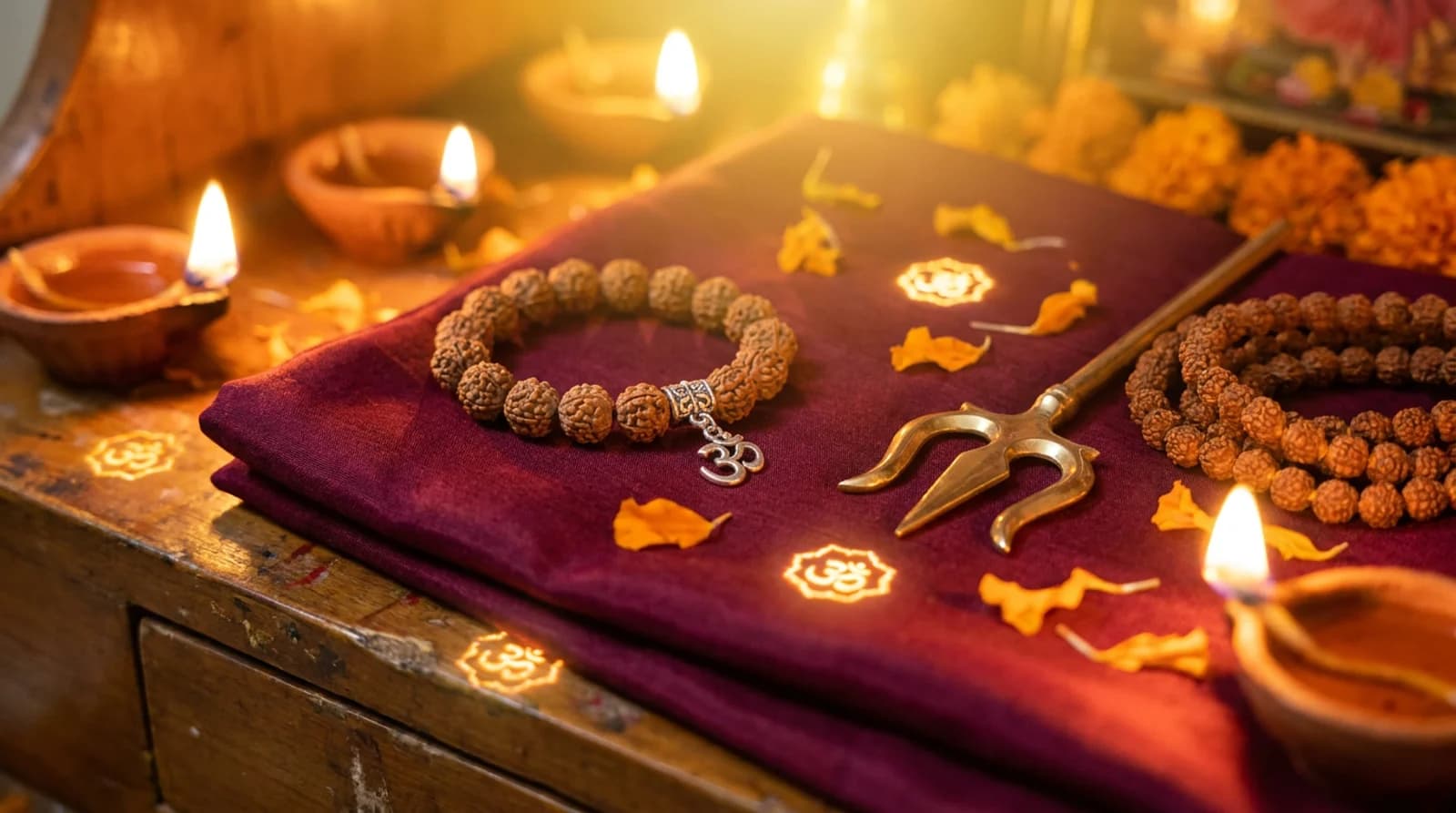
What a Rudraksha Bracelet Actually Is (in 60 Seconds)
A rudraksha bracelet is a wrist strand of natural rudraksha beads — the dried fruit-stones (seeds) of the Elaeocarpus ganitrus tree — usually strung with an Om or Panchtatva (five-element) charm in either gold-plated metal caps or a traditional red thread (mauli) base. Each bead shows natural ridged line-faces called mukhi, most commonly five (panchmukhi). In India, a genuine certified bracelet typically runs roughly Rs 499–3,500 depending on origin, design and accents.
Belief vs evidence in one line: tradition links rudraksha to Lord Shiva, calm, focus and protection, but there is no peer-reviewed proof of supernatural effects — what a lab certificate can genuinely confirm is species, mukhi count, origin and that the bead is untreated. It is a spiritual and wellness accessory, not a substitute for medical, financial or professional advice.
| What it is | Natural Elaeocarpus ganitrus seed beads on a wrist strand |
| Common bead | 5 mukhi (panchmukhi) — five natural line-faces |
| Designs | Plain, Om charm, Panchtatva/elemental, rudraksha + pyrite |
| Base styles | Gold-plated capped beads or thread/mauli |
| Origin | Nepali (larger, premium) or Indonesian/Java (smaller) |
| Typical INR price | Rs 499–3,500 (certified) |
| What we certify | Species, mukhi count, origin, untreated |
| What we don't claim | No medical, financial or guaranteed metaphysical results |
Tradition Says vs Evidence Shows vs What We Certify
Most sellers blur faith and fact. We separate them. The table below takes each commonly claimed benefit and states plainly what is traditional belief, what the scientific evidence actually shows, and what our lab certificate genuinely guarantees. This is the part no incumbent on the search results page will give you — and it is exactly why you can trust the rest.
| Claim | Tradition says | Evidence shows | What we certify |
|---|---|---|---|
| Calm / stress relief | Rudraksha pacifies the mind and invokes Shiva's stillness | No clinical proof; users report calm consistent with mindful ritual, routine and placebo | Nothing about mood — only that the bead is genuine and untreated |
| Focus / clarity | Aids concentration and meditation | No peer-reviewed cognitive proof; a tactile anchor can support attention habits | Species + mukhi count, so you get the bead tradition prescribes |
| Protection / buri nazar | Shields the wearer from negative energy and evil eye | Cultural belief; no measurable mechanism | Authenticity and origin — not any protective power |
| Blood pressure / heart | Said to steady BP and calm the heart | Not clinically established; do not replace medication | We make no health claim; only authenticity |
| Energy / vibration | Carries Shiva's vibration | Unproven by physics or biology | X-ray-verified internal structure and untreated surface |
In short: the spiritual benefits belong to faith and personal experience. The genuinely verifiable part — and the only thing we put our name and certificate behind — is that the bead is a real, correctly counted, correctly sourced, untreated rudraksha.
Benefits of a Rudraksha Bracelet — Tradition Tagged vs the One Real Benefit
Here are the benefits people search for, each labelled honestly. We will not pretend a seed cures disease or guarantees wealth. But there is one benefit that is genuinely real and worth the purchase on its own: a mindful daily anchor.
| Calm & emotional balance | Tradition + belief — supported by the ritual of mindful wearing, not by clinical trials |
| Concentration in study/work | Tradition — a wrist cue can prompt focus habits; no proven cognitive effect |
| Protection from negative energy / buri nazar | Tradition + cultural belief only |
| Connection to Shiva & devotion | Faith — meaningful if it is meaningful to you |
| Confidence & grounding | Partly real — wearing a chosen object you value can steady you (psychological) |
| Tactile grounding ritual | Genuinely real — turning the beads is a portable, screen-free reset |
The real, defensible benefit: a rudraksha bracelet is a daily mindfulness anchor. Touching or rolling the beads while you breathe is a small, repeatable grounding ritual — the same mechanism behind worry beads and prayer strands across cultures. That value is independent of any metaphysical claim, and it is the honest reason most people keep wearing one.
What it is not: it is not a treatment for anxiety, blood pressure, infertility or any medical condition, and it will not fix money problems. Wear it as a spiritual or wellness companion alongside — never instead of — proper medical, financial or professional care.
Types & Designs Explained: Mukhi, Om, Panchtatva, Pyrite & Origin
"Mukhi" means the number of natural line-faces (clefts) running down a bead. The mukhi count, the charm, the base material and the bead origin together decide what suits you and what you pay. Here is the plain-English map.
| Design | What it is | Traditionally suits | Honest note |
|---|---|---|---|
| 5 mukhi (panchmukhi) | Most common bead, five line-faces, linked to Shiva/Jupiter | Everyone, beginners, daily wear | Best value, easy to certify, abundant — no scarcity premium needed |
| 6 / 7 mukhi | Rarer counts tied to specific energies/planets | Those following a specific astrological intent | Higher price; insist on certification — fakes are carved to fake counts |
| Om charm | Rudraksha beads with an Om symbol in metal | Devotional wearers, gifting | Decorative + symbolic; adds metal that must stay dry if plated |
| Panchtatva / elemental | Five-element (earth, water, fire, air, space) grid of beads/colours | Those wanting a 'balance the elements' theme | The balancing claim is traditional, not proven; design is genuine |
| Rudraksha + pyrite | Rudraksha paired with golden pyrite stone | Those seeking the 'wealth/abundance' association | Pyrite is a belief-based wealth stone; keep pyrite fully dry to avoid tarnish |
| Gold-plated capped | Beads held in gold-coloured metal caps | Premium, modern look, gifting | Plating can irritate sensitive skin and must never get wet |
| Thread / mauli | Beads on red sacred thread, no metal | Purists, daily/rough wear, low budget | Most affordable; thread frays over time and is restrung |
Nepali vs Indonesian (Java) origin: Nepali beads are generally larger, with deeper, well-defined mukhi lines and are considered premium; Indonesian/Java beads are smaller and more affordable. Neither is "fake" — both are real rudraksha — but they differ in size, price and finish, which is why we print the origin on every certificate instead of hiding it. Size matters mainly for comfort and look: pick a bead size that sits flat on your wrist without digging in.
Is Your Rudraksha Real? The Honest Real-vs-Fake Test Guide
This is the single biggest fear buyers have — and most fakes are betel-nut, wood, plastic or resin beads with carved or glued-on fake mukhi lines. Here are the at-home checks, including the popular test that does NOT actually work, plus the only method that settles it for certain.
- 1Mukhi-line test
Real mukhi lines are natural, continuous clefts running pole to pole, slightly irregular. Faked lines look too even, are scratched on, or stop short. Under magnification real lines follow the bead's contour; carved ones cut across it.
- 2Surface & fibre check
Genuine rudraksha has uneven contours, fine surface fibres and tiny natural pits. A perfectly smooth, identical-twin set of beads is a red flag for moulded resin.
- 3Water / sink test (myth — handle with care)
The old claim that real rudraksha always sinks and fake always floats is NOT reliable. Density varies, and soaking can damage beads or wash off natural oils. Treat sink/float as folklore, not proof.
- 4Copper-coin spin test
Another popular trick (beads rotating between coins) is anecdotal and easily faked — do not rely on it for a purchase decision.
- 5X-ray / lab test (the real answer)
X-ray imaging reveals the internal seed compartments and confirms the true mukhi count and that the bead is a genuine, untreated Elaeocarpus seed. This is the only method that cannot be faked by surface carving.
Every DivineTatva rudraksha bracelet ships with a free, QR-verifiable lab certificate stating species, mukhi count, origin (Nepali/Indonesian) and that the bead is untreated. Scan the QR to confirm the report matches your exact piece. That is how we close the trust gap that Nepal, US and generic Haridwar sellers leave wide open with vague "100% certified" labels and no checkable proof.
Who Should Wear a Rudraksha Bracelet (Men, Women, Children, Anyone)
Short answer: anyone can wear a rudraksha bracelet. There is no religious, gender or caste barrier in the living tradition — men, women, children, beginners and people of any faith wear it. It is worn as devotion, as a calming habit, or simply as meaningful jewellery.
| Men | Yes — popular as a daily or meditation bracelet; thread or capped designs both suit |
| Women | Yes — Om and elemental designs are widely worn; no traditional restriction |
| Children | Yes, with supervision — choose a secure thread fit and avoid loose metal charms for very young kids |
| Beginners | Start with a certified 5 mukhi; it is the all-purpose, low-cost entry point |
| Any faith | Yes — wear it as wellness or jewellery; devotion is optional, not required |
Common-sense notes, not rules: if you are pregnant, have a metal allergy, or have a medical implant or skin condition, prefer a pure thread (no plated metal) design and check with your doctor before wearing anything new against the skin for long periods. Traditional menstruation or "purity" restrictions are belief-based customs, not requirements — follow them only if they hold personal meaning for you. A rudraksha bracelet is a companion to your wellbeing, never a replacement for medical care.
Side Effects, Rules & Restrictions — What's Real and What's Belief
A natural rudraksha bead itself has no known harmful side effects when worn. The genuine cautions are practical — about metal plating and moisture — not mystical. We label the traditional "rules" clearly as belief so you can decide what matters to you.
| Point | Real / practical | Belief / optional |
|---|---|---|
| Skin reaction to plating | Some people react to gold-plated metal caps — choose thread if you have sensitive skin | — |
| Keeping it dry | Real — moisture damages plating, pyrite and thread, and washes oils from beads | — |
| Heavy sweat / swimming | Real — remove during workouts, swimming and bathing to extend its life | — |
| Eating non-veg / alcohol while wearing | — | Traditional restriction; belief, not a requirement |
| Removing during sleep | — | Some traditions advise it; comfort and wear-and-tear are the only real reasons |
| Lending it to others | — | Belief that energy transfers; not measurable |
Bottom line: the only side effects worth managing are possible skin sensitivity to plating and damage from water and sweat. The dietary and lifestyle "rules" are cultural customs — honour them if they are meaningful to you, but skipping them does not make the bracelet "stop working," because its real benefit is the mindful ritual, not a switch that turns off.
Which Hand or Wrist Should You Wear It On?
Traditional view: the rudraksha bracelet is commonly worn on the right wrist, the right side being associated in many customs with action and giving. Some wearers prefer the left, the receiving side. So which is correct?
| Traditional default | Right wrist is the most commonly cited choice |
| Alternative view | Left = receiving side; also accepted |
| Honest answer | It does not measurably matter — no evidence favours either side |
| What actually matters | Comfort and your non-dominant hand |
| Practical tip | Wear on the non-dominant wrist to reduce knocks and wear-and-tear |
The honest answer: there is no measurable difference between left and right. If a tradition you follow specifies the right wrist, wearing it there adds personal meaning — and that is reason enough. Practically, wearing it on your non-dominant wrist (left for most people) keeps it comfortable and protects the beads, thread and plating from daily knocks. Choose meaning or choose comfort; both are valid.
How to Cleanse, Energise & Activate It (Step-by-Step, Optional)
"Activation" is a devotional ritual, not a functional switch — your bracelet works as a mindful anchor whether or not you perform it. If the ritual is meaningful to you, here is a simple, non-dogmatic version. Skip any step freely.
- 1Gentle clean
Wipe the beads with a soft, dry or barely-damp cloth. Do not soak. Keep any gold-plating and pyrite completely dry.
- 2Brief sunlight or moonlight
Rest the bracelet in mild morning sunlight or moonlight for a short while if you wish. Avoid harsh midday heat, which can dry beads and dull plating.
- 3Set an intention
Hold it, take a few slow breaths, and quietly set your intention — calm, focus, gratitude. This is the genuinely useful part: it's mindfulness.
- 4Optional mantra
Devotees may chant "Om Namah Shivaya" a few times. Optional, and devotional in purpose.
- 5Wear it
Put it on. Re-cleanse with a dry cloth whenever you feel like resetting; there is no mandatory schedule.
Prefer a traditional puja? We offer an optional, paid astrologer-energisation / puja add-on at checkout — offered without pressure. We will say it plainly: this is a devotional service for those who value it, not a performance upgrade. The bead's authenticity (which we certify) and your daily ritual (which you create) are what genuinely matter.
Daily Wear & Care: Sleeping, Bathing, Oiling & Lifespan
Yes, you can wear a rudraksha bracelet daily — that daily contact is the whole point of the ritual. The key to a long life is keeping it dry and away from chemicals. Here is the exact care routine to follow.
Keep your Rudraksha bracelet dry: remove it before bathing, swimming or heavy sweat, and avoid soap, perfume and chlorinated water. Oil the beads with a little sandalwood or coconut oil occasionally, keep any gold-plating and pyrite completely dry, and store in a soft cloth pouch.
| Wear daily? | Yes — daily wear is fine and encouraged |
| Sleeping | Optional; remove if it's uncomfortable or to avoid snagging the thread |
| Bathing / swimming | No — remove first; water harms beads, plating and pyrite |
| Avoid | Soap, perfume, deodorant, chlorinated/sea water, harsh heat |
| Oiling | Occasionally with a little sandalwood or coconut oil to nourish beads |
| Storage | Soft cloth pouch, away from moisture |
| Lifespan | Thread: restring as needed; beads last years with dry care; plating lasts longest when never wet |
A natural bead, kept dry and occasionally oiled, can last many years. Thread will eventually fray and can simply be restrung. Gold-plating is the most delicate element — every drop of water shortens its life, so if your routine is wet or sweaty, a thread design is the smarter long-term buy.
Price & Sizing in India: Honest Bands, Size Chart & COD
Why do prices range from under Rs 1,000 to a few thousand? It comes down to origin, design and accents — not theatre. We price fairly and stably, with no inflated MRP-and-fake-discount games.
| Price band (INR) | Typically gets you | Notes |
|---|---|---|
| Rs 499–999 | Thread/mauli 5 mukhi, smaller Indonesian or simple Nepali beads | Honest entry point; great for daily/rough wear |
| Rs 1,000–2,000 | Larger Nepali 5 mukhi, Om charm or capped designs | Premium beads or added metalwork |
| Rs 2,000–3,500+ | Gold-plated, Panchtatva/elemental, rudraksha + pyrite combos | Plating, multiple stones and finer beads drive cost |
What drives the price: bead origin and size (Nepali larger/premium), mukhi rarity (5 mukhi is affordable; rare counts cost more), metal and plating, additional stones like pyrite, and certification. We reject the "Rs 99,900 MRP / 60% off" and "Rs 1,999 to Rs 499" anchoring that some sellers use — our price is simply the fair price.
| Measure at home | Wrap a strip of paper or thread around your wrist, mark the overlap, measure against a ruler in cm |
| Small (S) | Approx 14–15.5 cm wrist |
| Medium (M) | Approx 15.5–17.5 cm wrist |
| Large (L) | Approx 17.5–19.5 cm wrist |
| Fit tip | Add about 1–1.5 cm to your measurement for a comfortable, non-tight fit |
| Payment | COD available across India |
| Returns | Easy returns on unworn, certified pieces with intact QR tag |
If you're between sizes, size up slightly — a bracelet that sits a touch loose is more comfortable and puts less strain on the thread. COD across India and a clear return window mean you can verify the certificate in hand before you commit.
The DivineTatva Difference: Jaipur-Made, Lab-Certified, COD
We built this page to answer "real vs fake" better than any Nepal, US or generic Haridwar seller — by proving it, not just claiming it. Here is what sets a DivineTatva rudraksha bracelet apart.
| Free lab certificate | QR-verifiable, stating species, mukhi count, origin and untreated status |
| Honest disclaimer | We publish a clear tradition-vs-evidence note — most competitors never do |
| Jaipur-made | Crafted in Jaipur with India-first service and support |
| Transparent INR pricing | Fair, stable prices — no inflated MRP or fake-discount theatre |
| Origin stated | Nepali vs Indonesian printed on the certificate, not hidden |
| COD across India | Pay on delivery; verify the certificate in hand |
| Full schema stack | Product + Offer (INR) + Review + FAQ structured data on every SKU |
Our certified PDPs cover the modern designs incumbents often skip or sell uncertified abroad — gold-plated Om, Panchtatva/elemental grids and rudraksha-pyrite wealth combos. And instead of scattering "which hand," "real vs fake," "how to cleanse" and "who can wear" across thin pages, we consolidate them here in one authoritative hub, then link you straight to the exact certified piece. Browse the shoppable INR PDPs to see the certificate, price and fit for your wrist.
Rudraksha Bracelet FAQs
The highest-intent questions buyers ask, answered honestly. For deeper dives, see the linked cluster guides on real-vs-fake, which-hand and benefits.
Frequently asked
Last reviewed: 17 May 2026 · Verified by the DivineTatva expert panel
What does a rudraksha bracelet actually do?
Traditionally it is linked to Lord Shiva and to calm, focus and protection. Honestly, there is no peer-reviewed proof of supernatural effects. Its real, defensible benefit is acting as a mindful daily anchor — a tactile grounding ritual that can support calm the way worry beads do. We certify only its authenticity, not any health or metaphysical outcome. It is not a substitute for medical, financial or professional advice.
How do I know if my rudraksha bracelet is real or fake?
At home, check the mukhi lines (natural, continuous, slightly irregular), the surface (fibres, uneven contours, tiny pits) and beware perfectly identical beads. Ignore the water sink/float test — it is unreliable folklore and can damage beads. The only certain method is X-ray/lab testing, which reveals internal seed compartments and true mukhi count. Every DivineTatva bracelet includes a free QR-verifiable lab certificate.
Which hand should I wear a rudraksha bracelet on?
Tradition most often suggests the right wrist, though the left (receiving side) is also accepted. Honestly, it does not measurably matter — no evidence favours either side. If your tradition specifies the right, wearing it there adds meaning. Practically, the non-dominant wrist (left for most people) is most comfortable and protects the beads, thread and plating from daily knocks.
Can men and women both wear a rudraksha bracelet?
Yes. There is no gender, caste or religious barrier in the living tradition — men, women, children and people of any faith all wear it. Beginners should start with a certified 5 mukhi bead, the affordable all-purpose choice. If you have sensitive skin, a metal allergy or are pregnant, prefer a pure thread design over gold-plated metal and check with your doctor about prolonged skin contact.
How much does a genuine rudraksha bracelet cost in India?
A certified piece typically runs Rs 499–3,500. Around Rs 499–999 gets a thread 5 mukhi; Rs 1,000–2,000 gets larger Nepali beads, an Om charm or capped designs; Rs 2,000–3,500+ covers gold-plated, Panchtatva/elemental and rudraksha-pyrite combos. Price is driven by origin, bead size, mukhi rarity, metal and stones. We price fairly with no inflated MRP or fake-discount anchoring.
What is a 5 mukhi (panchmukhi) rudraksha bracelet?
Mukhi means the number of natural line-faces on a bead. A 5 mukhi (panchmukhi) bead has five clefts and is the most common rudraksha, traditionally linked to Shiva and Jupiter. It is the recommended all-purpose, beginner-friendly choice — abundant, affordable and easy to certify. Rarer counts like 6 or 7 mukhi cost more and demand careful certification because fakes are carved to imitate higher counts.
Can I wear my rudraksha bracelet daily, while bathing or sleeping?
Daily wear is fine and encouraged — it's the point of the ritual. But remove it before bathing, swimming or heavy sweat, and avoid soap, perfume and chlorinated water, which damage beads, plating and pyrite. Sleeping in it is optional; remove it if it snags the thread or feels uncomfortable. Oil the beads occasionally with sandalwood or coconut oil and store in a soft cloth pouch.
Are there side effects or rules for wearing rudraksha?
The bead itself has no known harmful side effects. The genuine cautions are practical: some people react to gold-plated metal (choose thread if sensitive), and moisture damages plating, pyrite and thread. Traditional rules about diet, menstruation or removing it at night are cultural beliefs, not requirements — follow them only if meaningful to you. Skipping them does not make the bracelet stop working.
How do I cleanse and energise a rudraksha bracelet?
Wipe it with a soft dry cloth (never soak), optionally rest it briefly in mild sunlight or moonlight, set a calm intention with a few slow breaths, and chant a mantra if you wish. Activation is devotional, not functional — the bracelet works as a mindful anchor either way. We also offer an optional, no-pressure paid puja/energisation add-on for those who value the traditional ritual.
What's the difference between Nepali and Indonesian rudraksha?
Both are genuine rudraksha. Nepali beads are generally larger, with deeper, well-defined mukhi lines, and are considered premium and pricier. Indonesian/Java beads are smaller and more affordable. Neither is fake. We print the exact origin on every lab certificate rather than hiding it, so you know precisely what you are buying and why it is priced the way it is.
Does a rudraksha bracelet really lower blood pressure or cure illness?
No. Tradition associates rudraksha with calming the heart and mind, but this is not clinically established, and a bracelet cannot treat blood pressure, anxiety or any medical condition. Wear it as a spiritual or wellness companion alongside — never instead of — proper medical care. We make no health claims; we certify only that the bead is genuine, correctly counted and untreated.
What does the DivineTatva lab certificate actually prove?
It confirms the verifiable facts: species (Elaeocarpus ganitrus), mukhi count, origin (Nepali or Indonesian) and that the bead is untreated. It is free and QR-verifiable, so you can scan and confirm the report matches your exact piece. It makes no claim about spiritual or health benefits — it closes the real-vs-fake trust gap, which is the thing buyers most need proven.
Is a thread or gold-plated rudraksha bracelet better?
Thread (mauli) is the most affordable, purist and durable for rough or sweaty daily wear — it can simply be restrung when it frays. Gold-plated capped designs look premium and modern but are the most delicate: plating must never get wet and may irritate sensitive skin. If your routine is active or wet, choose thread; if you want a refined look and can keep it dry, choose gold-plated.
Reviewed by the DivineTatva expert panel
Written and reviewed by DivineTatva's consulting Vedic astrologer. Every piece is lab-certified and energised in our Jaipur atelier. Last updated 23 May 2026.
- Real vs Fake Rudraksha Bracelet
- Which Hand to Wear a Rudraksha Bracelet On
- Do Rudraksha Bracelet Benefits Actually Work? Tradition vs Evidence
- Shop the certified rudraksha bracelet
- How to Cleanse, Energise & Activate a Rudraksha Bracelet (Step-by-Step, No Dogma)
- Nepali vs Indonesian Rudraksha Bracelet
- Om & Elemental Rudraksha Bracelets