Rudraksha Mala Care & Rules: Oiling, Storage & What to Avoid
Rudraksha seeds are organic material — without proper care, they dry out, crack, and lose lustre within months. Weekly oiling with til (sesame) or almond oil, correct storage in a cloth pouch, and avoiding soap and water exposure keep a Rudraksha Mala alive for decades. Here is the full protocol.
Why Rudraksha Mala Care Is Non-Negotiable
A Rudraksha bead is a dried organic seed — Elaeocarpus ganitrus. Like any organic material, it responds to its environment. Exposure to water, soap, chemicals, or extreme dryness causes the outer shell to crack, the natural oils in the bead to deplete, and the mukhis (face lines) to break down. A well-cared-for Rudraksha Mala passed down across generations is a common sight in devoted Shaivite families. A neglected one lasts 2–3 years before beads begin cracking and the string frays. The difference is weekly oiling and correct storage.
The Weekly Oiling Ritual: How, When & Which Oil
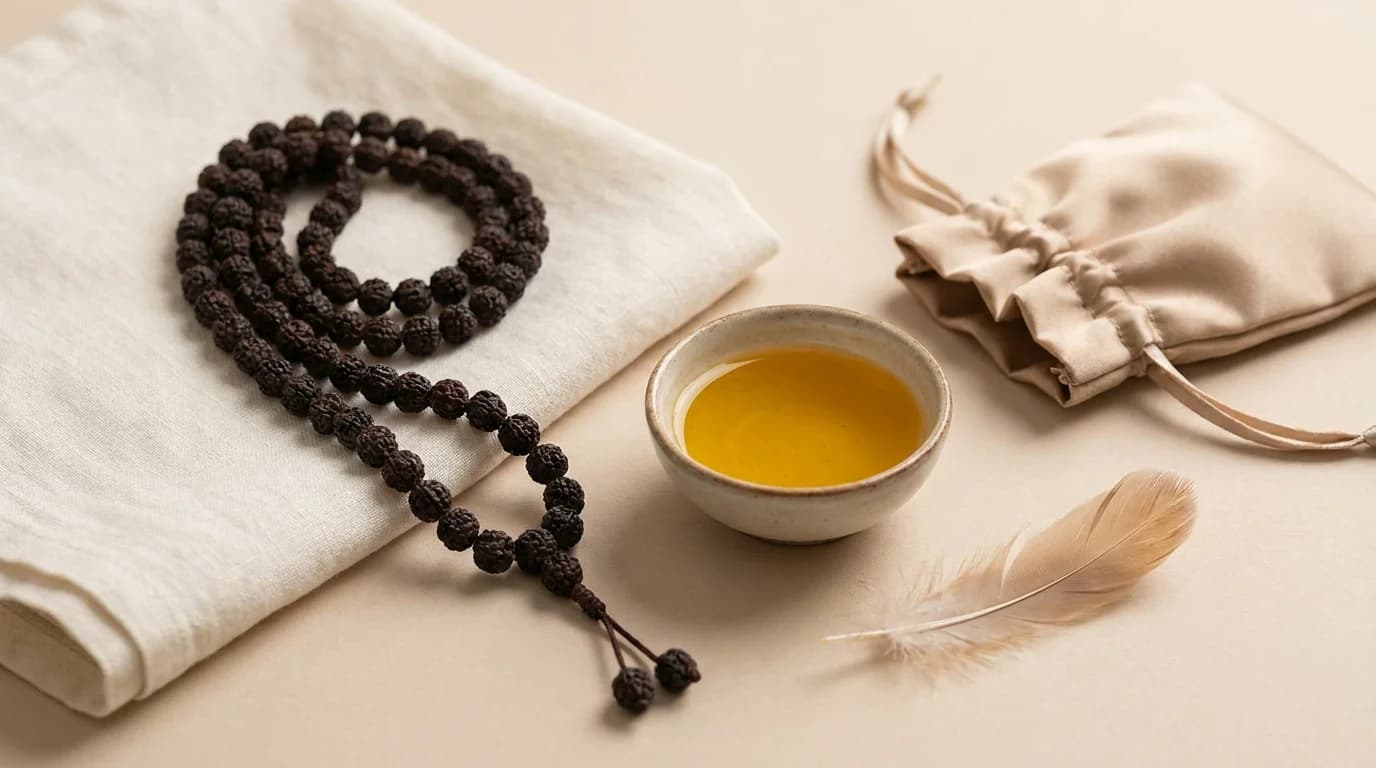
DivineTatva care note (verbatim): "Apply one drop of pure til (sesame) or almond oil to the mala beads once a week — rub gently between palms to distribute. Remove before bathing, swimming, or sleeping (unless spiritually instructed to wear continuously). Do not use soap, detergent, or chemical cleaners. Store in the red or yellow cloth pouch provided when not in use. Recite Aum Namah Shivaya during oiling for energetic renewal."
- 1Choose the right oil
Pure til (sesame) oil is the traditional choice — it is light, penetrates the wood, and has a long tradition in Ayurvedic bead care. Sweet almond oil is equally effective and less aromatic. Use cold-pressed, unrefined versions if available.
- 2Amount: one drop only
One drop placed on your palm is sufficient for a full 108-bead mala. Over-oiling leaves the beads sticky, attracts dust, and can darken the string.
- 3Application method
Place the mala across your palms with the oil drop. Close palms gently and rub in a slow circular motion for 30–45 seconds. Every bead should receive a light coating from the oil on your palms.
- 4Recite during oiling
Recite Aum Namah Shivaya quietly while oiling — this makes the weekly maintenance a brief spiritual act rather than a chore, and per tradition, renews the energisation of the mala.
- 5Air dry before storing
After oiling, lay the mala on a clean cloth for 5 minutes before placing in the pouch. This prevents the oil from transferring to the pouch lining.
| Best oil | Pure til (sesame) or cold-pressed sweet almond oil |
| Oils to avoid | Coconut oil (too thick, clogs pores of bead), mineral oil, scented/synthetic oils |
| Frequency | Once per week for regular wearers; every 2 weeks if stored and rarely worn |
| Recitation during oiling | Aum Namah Shivaya — traditional energetic renewal practice |
How to Store Your Rudraksha Mala
When not in use, store the mala in the red or yellow cotton or silk pouch provided with your DivineTatva order. Red and yellow are traditional colours of auspiciousness in Shaivite practice. The pouch protects the mala from dust, prevents tangling, and keeps the beads from knocking against hard surfaces.
| Pouch colour | Red or yellow — traditional; cotton or silk |
| Storage surface | Clean shelf, altar, or wooden box — never on the floor |
| Ideal storage location | Puja altar or dedicated drawer — not mixed with non-spiritual items |
| Temperature | Room temperature, away from direct sunlight for prolonged periods (UV can fade bead colour) |
| Humidity | Low humidity preferred — avoid bathroom shelf or humid kitchen |
What to Never Do With Your Rudraksha Mala
- 1Soap and detergent
Soap strips the natural oils from the bead surface, leaving it dry and prone to cracking. Even mild soap is damaging over time.
- 2Chemical cleaners
Any alcohol-based, acid-based, or bleach-based cleaner will damage the seed surface and can dissolve the string coating.
- 3Salt water and chlorinated pools
Salt crystallises on the bead surface as water evaporates, physically damaging the exterior. Chlorine in pool water is chemically harsh on organic material.
- 4Synthetic perfume sprayed directly
Alcohol and synthetic compounds in perfume can dry the bead surface. If you wish to wear perfume, spray first and let it dry before putting on your mala.
- 5Leaving on the floor
A universal rule across all traditions — placing a sacred object on the floor is considered deeply disrespectful. Always store at height.
- 6Sharing your personal mala
Per tradition, a personal sadhana mala becomes attuned to your energy over time. Allowing others to wear it is widely discouraged across lineages.
Rudraksha Rules: Universal Do's & Don'ts vs Lineage-Specific
| Rule | Universal or Lineage-Specific? | Our Honest View |
|---|---|---|
| Oil weekly with til/almond oil | Universal — physical care | Do this without question; purely practical |
| Store in pouch off the floor | Universal | Do this — sign of respect and good preservation |
| Do not cross Sumeru during jaap | Universal — all traditions | Do this — core protocol of mala jaap |
| Remove before bathing/swimming | Universal — practical | Do this — water damages string and bead |
| Remove before sleeping | Recommended, not absolute | Recommended — prevents tangling and breakage |
| Remove before non-veg meals | Lineage-specific — not universal | Follow your own tradition; no universal scripture mandate for Panchmukhi |
| Remove for menstruation | Lineage-specific — disputed | Personal choice; many Shakta traditions encourage continuous wearing |
| Recite mantra daily | Recommended for full benefit — not a hard rule | Best practice; wearing without mantra still considered auspicious |
When to Replace or Re-String Your Rudraksha Mala
A well-cared-for Rudraksha Mala can last 10–20 years or more before the beads themselves require replacement. The string typically needs re-stringing every 2–4 years depending on wear frequency and exposure. Signs your mala needs attention:
- 1String fraying or discolouration
Re-string immediately — do not wait for it to break. A broken mala during jaap is considered inauspicious in most traditions.
- 2Beads moving loosely on string
The knot or thread holding beads in place has weakened. Re-string before a bead breaks free.
- 3Surface cracks appearing
Micro-surface cracks from dryness are normal and cosmetic — increase oiling frequency. Deep cracks exposing the interior seed are more serious.
- 4Bead structurally broken
A bead cracked in half should be retired respectfully. Tradition suggests burying it in clean soil or releasing it into a river — not throwing in trash.
Frequently asked
Last reviewed: 17 May 2026 · Verified by the DivineTatva expert panel
Can I wash my Rudraksha Mala with water?
Avoid water where possible. If the mala is very dirty, wipe with a dry or barely damp cloth only. Never soak in water, wash with soap, or place under running water. The til or almond oil routine is sufficient to keep beads clean and lustrous.
How often should I oil my Rudraksha Mala?
Once a week for malas worn daily. Once every two weeks for malas stored and used occasionally. Use one drop of pure til (sesame) or almond oil — rub between palms with the mala for 30 seconds. Recite Aum Namah Shivaya during the process.
Can I sleep with my Rudraksha Mala on?
Most traditions recommend removing the mala before sleep to prevent tangling and breakage. Some traditions allow continuous wearing by instruction of a Guru. If you choose to wear it while sleeping, store it in the pouch when not on your body at any other time to compensate.
My Rudraksha Mala string has turned dark — is it damaged?
String darkening is normal with oil and wear over time. It does not indicate damage. Assess the structural integrity of the string — if it is still strong with no fraying, continue using. If it is weakening, re-string even if the colour change alone is not a concern.
How do I clean a Rudraksha Mala that has become dusty?
Wipe gently with a dry soft cloth (silk or cotton). For more thorough cleaning, use a small dry brush (like a soft toothbrush) to remove dust from the mukhi grooves. Follow immediately with your weekly oiling routine. Never use water or any liquid cleaner.
Reviewed by the DivineTatva expert panel
Written and reviewed by DivineTatva's consulting Vedic astrologer. Every piece is lab-certified and energised in our Jaipur atelier. Last updated 15 June 2026.