Which Hand to Wear Evil Eye Bracelet? Left or Right Wrist for Nazar Protection
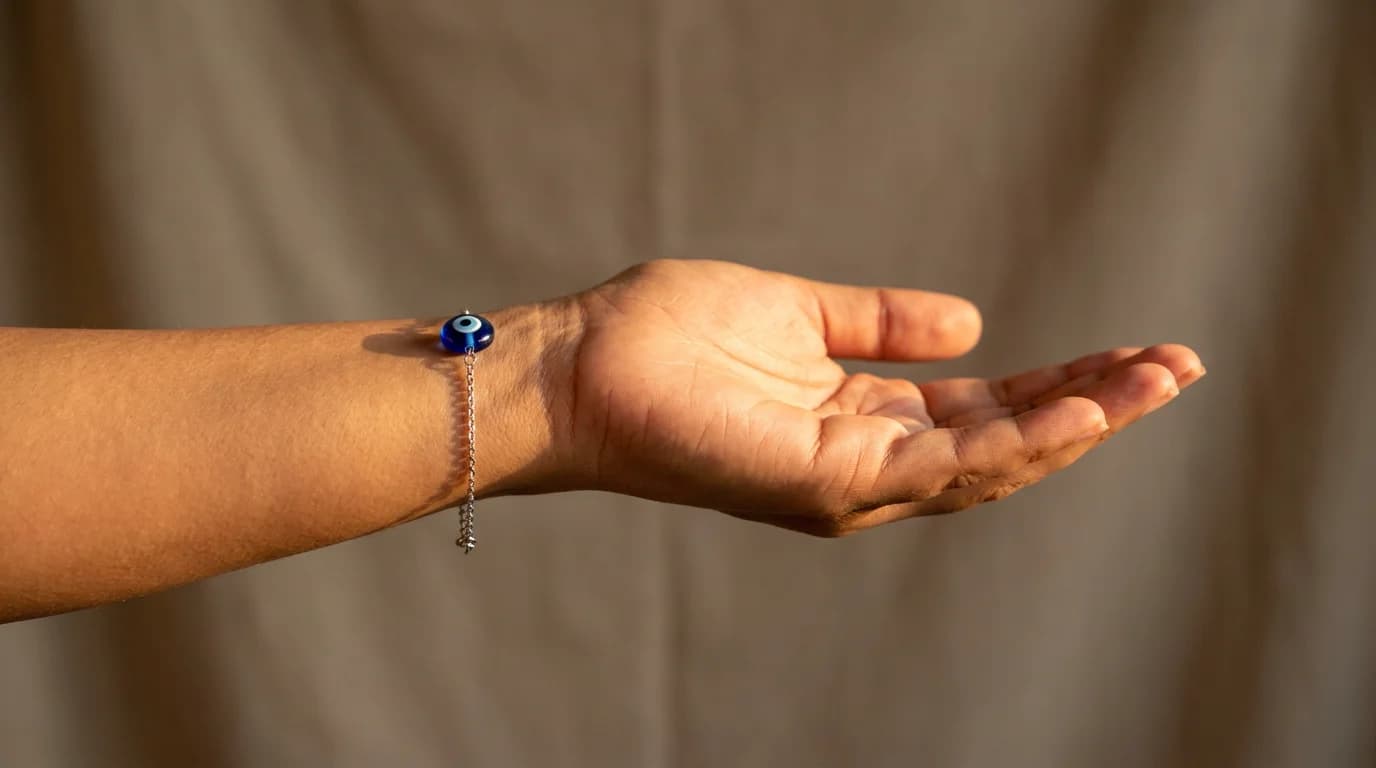
Wear your evil eye bracelet on the left wrist. In Indian nazar kavach tradition, the left hand is the receiving hand — the side through which energy enters the body. Positioning the bracelet here places the nazar kavach directly in the path of incoming buri nazar, giving it the best chance to deflect or absorb the malevolent gaze before it settles on you.
Why the Left Wrist Is the Traditional Choice
The left wrist is the traditional and recommended placement for an evil eye bracelet in Indian nazar kavach practice. The reason is rooted in the ancient Indian and yogic understanding of energy flow in the body: the left side is associated with the Ida nadi (moon channel) — a receptive, inward-flowing energy pathway. The left hand is therefore considered the receiving hand, the side through which incoming energy — both positive and negative — enters the body and the energy field.
By wearing the nazar kavach on the left wrist, you place the protective charm directly in the path of incoming energy. The blue glass eye faces outward, intercepting the buri nazar before it can enter your energy field. Think of it as positioning a shield on the side that faces the incoming force — the left wrist as a dedicated protective entry point.
This principle is consistent with wearing other protective bracelets on the left wrist in Indian tradition — black tourmaline, obsidian and onyx are also typically worn on the left for the same receiving-hand reason. If you already wear a protective crystal bracelet on your left wrist, the evil eye bracelet can stack alongside it.
When People Wear It on the Right Wrist
The right wrist is associated with the Pingala nadi (sun channel) — active, outward-projecting energy. Wearing an evil eye on the right wrist is therefore interpreted as projecting protective energy outward — guarding others rather than yourself. Some practitioners wear their evil eye bracelet on the right wrist when they wish to extend protective energy to their family, business or creative work — pushing protective intention outward rather than receiving it inward.
There is no traditional restriction on wearing it on the right — this is a guidance, not a rule. The most important factor is wearing it consistently and with conscious intention. A bracelet you actually wear every day on your right wrist is more effective (by any measure — ritual or psychological) than one you theoretically place on your left but then leave in a drawer.
Which Wrist for Children and Gifted Bracelets
For children, the left wrist is standard — children are considered particularly receptive to buri nazar (their energy fields are less established), so placing the kavach on the receiving hand makes traditional sense. For infants, parents often choose the left wrist or left ankle — both are acceptable.
For gifted evil eye bracelets, a common folk practice holds that the recipient should wear the bracelet on whichever wrist the giver specifies — the giver's intention is considered part of the bracelet's protective energy. If no instruction is given, default to the left wrist. The giver should ideally not ask to see the bracelet back or inspect it after gifting, as the regional folk belief holds that absorbed nazar energy should not transfer back to the giver.
Practical Exceptions — When Left Is Not Possible
If you work with your left hand as the dominant hand (left-handed) and find bracelets on that wrist impractical or uncomfortable, wear the bracelet on your right wrist with a clear sankalp (intention) that it is functioning as your nazar kavach. Intention is the active ingredient in any ritual object — the wrist is the traditional vehicle, not the only valid one.
If your workplace has restrictions on jewellery on one arm (machinery safety, sterile environments), wear it on whichever wrist is permissible. Never compromise physical safety for a ritual guideline. In such cases, many practitioners keep a small evil eye charm in their pocket, bag or on their desk as a secondary kavach.
Left vs Right Wrist — Full Comparison
| Wrist | Energy channel | Tradition role | Best for | Who uses it |
|---|---|---|---|---|
| Left (recommended) | Ida nadi — receptive, inward | Receiving protection; deflecting incoming buri nazar | Personal nazar protection, daily wear | Adults, children, pregnant women, all rashis |
| Right | Pingala nadi — active, outward | Projecting protective energy outward for others | Protecting family, business, creative work | Practitioners who intend to extend protection to others |
| Either | Intention overrides anatomy | Wherever you will wear it consistently | Left-handed individuals, workplace restrictions | Practical cases; intention is the key variable |
| Ideal start day | Tuesday or Friday for new bracelet activation |
| Stacking | Evil eye can be stacked with other protective bracelets on the left wrist |
| Dominant hand | Left-handed? Wear on right — comfort and intention matter more than exact placement |
| Gifted bracelet | Wear on whichever wrist the gifter specifies; left by default if unspecified |
| Children | Always left wrist or left ankle per traditional practice |
Frequently asked
Last reviewed: 17 May 2026 · Verified by the DivineTatva expert panel
Should I wear my evil eye bracelet on the left or right wrist?
Wear it on the left wrist. In Indian nazar kavach tradition, the left hand is the receiving hand — the side through which incoming energy (including buri nazar) enters the body. Placing the evil eye bracelet on the left wrist positions the protective charm to intercept incoming negative energy. If the left wrist is not practical, wear it on the right with a clear protective intention.
Is there any science behind wearing the evil eye on the left wrist?
No scientific evidence supports the concept of the left hand as an 'energy receiving' side in the physiological sense. The left-wrist tradition comes from Indian and yogic energy anatomy (Ida nadi) and folk practice. The practical benefit of the tradition is that it gives you a consistent, deliberate ritual act — putting the bracelet on your left wrist daily reinforces your protective intention in a measurable psychological way.
Can I wear evil eye bracelet on my right hand?
Yes, there is no prohibition. Some practitioners consciously wear the evil eye bracelet on the right hand when they want to project protective energy outward — for family members, a business, or a creative project they want to guard. For personal nazar deflection, the left wrist is more traditional. If you are right-handed and find the left wrist inconvenient, the right wrist with conscious intention works.
Which hand should a child wear an evil eye bracelet on?
The left wrist is traditional for children too. Children are considered highly receptive to buri nazar because they attract admiring gazes and cannot verbally deflect attention. The left wrist places the kavach on the receiving side. For very young infants, a left-wrist or left-ankle placement is used — ensure the bracelet fits properly and has no small loose parts that pose a choking risk.
Can I wear an evil eye bracelet on both wrists?
Yes, there is no tradition restriction on wearing evil eye on both wrists. Some people wear a blue evil eye on the left for incoming protection and a black evil eye on the right for projecting strong protective energy outward. Keep both in your awareness — ritual objects benefit from regular conscious attention, not just passive wear.
Does it matter which wrist a gifted evil eye bracelet goes on?
Tradition holds that the recipient should wear a gifted nazar kavach on whichever wrist the gifter specifies — the gifter's intention is part of the bracelet's protective energy. If the gifter does not specify, wear it on the left wrist by default. After wearing, the folk practice is that the giver should not inspect or handle the bracelet again, as absorbed negative energy should not transfer back.
Reviewed by the DivineTatva expert panel
Written and reviewed by DivineTatva's consulting Vedic astrologer. Every piece is lab-certified and energised in our Jaipur atelier. Last updated 2 June 2026.