7 Chakra Bracelet Stones: Colours, Meaning and the Correct Order
A 7 chakra bracelet carries seven natural stones, one per chakra, set in a fixed root-to-crown colour order: Red Jasper (root, red), Carnelian (sacral, orange), Citrine (solar plexus, yellow), Green Aventurine (heart, green), Sodalite (throat, blue), Lapis Lazuli (third eye, indigo) and Amethyst (crown, violet). Each colour maps to one energy centre, mirroring the rainbow spectrum from the base of the spine to the top of the head.
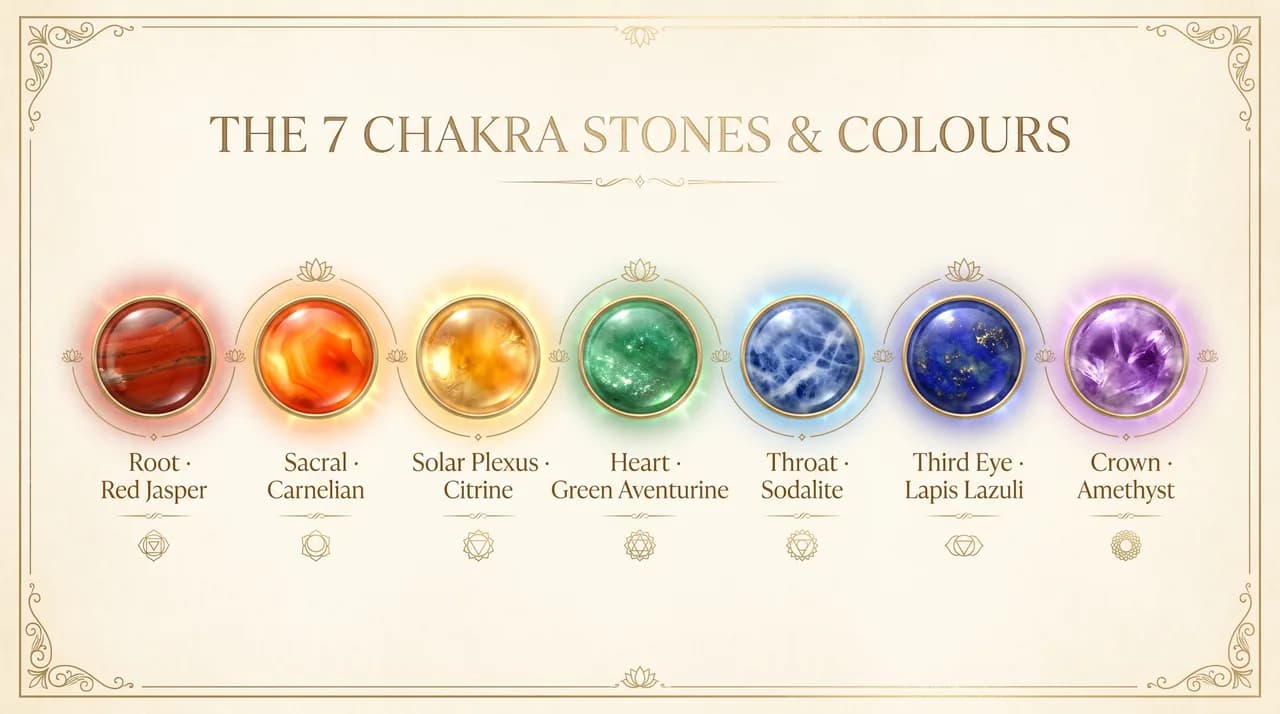
The complete 7 chakra stone table
Every authentic 7 chakra bracelet follows one logic: seven chakras, seven colours, seven stones, arranged from root to crown. Read in sequence, the beads form a miniature rainbow that mirrors the body's energy map from the base of the spine to the top of the head. This single table is the reference the rest of this guide expands on.
| Chakra | Sanskrit | Colour | Stone | Location | Association |
|---|---|---|---|---|---|
| Root | Muladhara | Red | Red Jasper | Base of spine | Grounding, stability, security |
| Sacral | Svadhisthana | Orange | Carnelian | Lower abdomen | Creativity, emotion, drive |
| Solar Plexus | Manipura | Yellow | Citrine | Upper abdomen | Confidence, willpower, focus |
| Heart | Anahata | Green | Green Aventurine | Centre of chest | Love, compassion, balance |
| Throat | Vishuddha | Blue | Sodalite | Throat | Communication, truth, expression |
| Third Eye | Ajna | Indigo | Lapis Lazuli | Between the brows | Intuition, insight, clarity |
| Crown | Sahasrara | Violet | Amethyst | Top of the head | Awareness, calm, connection |
DivineTatva strings these in true colour order using AA-grade natural stone, lab-certified and energised through Pran Pratishta in Jaipur. The bracelet supports your own effort and intention; it is a tradition-led wellness aid, not a medical treatment.
Why the colour order never changes
The seven chakra colours follow the visible light spectrum, red through violet, the same order you see in a rainbow. In yoga and tantra tradition, the root chakra sits lowest and densest (red, the longest wavelength) and the crown sits highest and finest (violet, the shortest). Because the colours are fixed to fixed energy centres, the bead sequence on a genuine bracelet is fixed too. A bracelet with beads in random colour order is decorative, not a true chakra bracelet.
| Spectrum logic | Red (root) to violet (crown) mirrors rainbow wavelengths, low and grounding to high and subtle. |
| One colour, one centre | Each hue is tied to a single chakra, so the order cannot be rearranged. |
| Indigo, not a second blue | Throat is true blue (sodalite); third eye is deeper indigo (lapis) so the two read as distinct. |
| A quick check | Lay the bracelet flat: red, orange, yellow, green, blue, indigo, violet should run in clean sequence. |
Seven stones, seven mini-profiles
Each stone is chosen because its natural colour matches its chakra. Below is the meaning and feel traditionally given to each, alongside what the natural mineral actually looks like in the hand.
- 1Red Jasper — Root
Opaque brick-to-brownish red, often with subtle mottling. Linked with grounding, steadiness and a sense of security. A dense, earthy stone that anchors the sequence.
- 2Carnelian — Sacral
Translucent to semi-translucent orange, sometimes banded with paler and deeper zones. Associated with creativity, motivation and warmth. Glows softly when held to light.
- 3Citrine — Solar Plexus
Pale to honey yellow, usually transparent to translucent. Tied to confidence, willpower and focus. Natural citrine is gently golden, not a harsh neon yellow.
- 4Green Aventurine — Heart
Soft medium green, often with a faint shimmer (aventurescence) from tiny mineral flecks. The heart stone of balance, compassion and calm.
- 5Sodalite — Throat
Rich royal blue marbled with white veining. Connected to clear communication and honest expression. Its mottled white streaks are a natural fingerprint.
- 6Lapis Lazuli — Third Eye
Deep indigo blue with golden pyrite flecks and occasional white calcite. Associated with intuition, insight and inner clarity. The pyrite sparkle is a sign of the real stone.
- 7Amethyst — Crown
Translucent purple ranging from pale lilac to deep violet, sometimes colour-zoned. Linked with calm, awareness and rest. Often the most prized bead on the strand.
Common stone substitutions
Some sets swap a stone or two while keeping the colour order identical. These are legitimate variations, not errors, as long as the colour still lands on the correct chakra. The most common swaps are at the throat and crown.
| Chakra | Standard stone | Common substitute | Why it is swapped |
|---|---|---|---|
| Throat | Sodalite | Turquoise or Blue Howlite | Lighter, brighter blue; turquoise prized for its classic hue, howlite for a budget-friendly sky blue |
| Crown | Amethyst | Clear Quartz | Clear quartz reads as the universal crown stone and resists fading better than amethyst |
| Solar Plexus | Citrine | Tiger's Eye or Yellow Aventurine | Used when a warmer golden-brown or opaque yellow is preferred |
| Root | Red Jasper | Garnet or Red Agate | Alternative reds for a deeper or glassier finish |
What never changes is the sequence of colours from root to crown. If a seller offers an unusual stone, check it still sits at the right colour position. DivineTatva states the exact stones on each product page so you always know what you are buying.
What genuine natural stones look like
Natural stone is never perfectly uniform. Glass and dyed imitations tend to be flawlessly even in colour, identically patterned bead to bead, and often unnaturally bright. Genuine beads show small, honest differences. Use these signs as a quick field test.
- 1Natural variation
Real beads differ slightly in tone, veining and inclusions. Identical, flawless beads suggest glass or plastic.
- 2Telltale markers
Pyrite flecks in lapis, white veining in sodalite, soft shimmer in aventurine, colour-zoning in amethyst. These are signs of the real mineral.
- 3Weight and temperature
Natural stone feels cool to the touch and has a reassuring heft; plastic feels warm and light.
- 4Colour realism
Genuine citrine is gentle gold, amethyst is true violet. Garish, candy-bright beads often mean heavy dye.
- 5Certification
Ask for lab certification of natural stone grade. DivineTatva supplies AA-grade, lab-certified stones with an authenticity guarantee.
Keeping the colours true
Colour fade is the main way a chakra bracelet loses its character. Two stones are especially sensitive: amethyst (violet) and citrine (yellow) both lighten under prolonged sunlight. Care is simple and dry.
| Cleanse dry | Use dry rice, a selenite plate, or sage or incense smudge. Brief moonlight is also gentle and safe. |
| Avoid sunlight | Prolonged direct sun fades amethyst and citrine. Charge in moonlight instead of a sunny windowsill. |
| Avoid salt water | Salt water can damage softer beads and degrade the elastic. Skip the salt-bath method. |
| Wear on the left | For calm and balance, wear on the left wrist, the receiving hand. The right wrist projects energy outward. |
| Honest expectation | Crystals carry no clinical proof of healing. Treat the bracelet as tradition plus intention and mindfulness that supports your effort, not a medical treatment. |
Frequently asked
Last reviewed: 17 May 2026 · Verified by the DivineTatva expert panel
What are the 7 chakra stones in order?
From root to crown: Red Jasper (root, red), Carnelian (sacral, orange), Citrine (solar plexus, yellow), Green Aventurine (heart, green), Sodalite (throat, blue), Lapis Lazuli (third eye, indigo) and Amethyst (crown, violet). The order follows the rainbow spectrum from the base of the spine to the top of the head and never changes.
What do the 7 chakra colours mean?
Each colour maps to one energy centre: red for grounding and security, orange for creativity, yellow for confidence and willpower, green for love and balance, blue for communication, indigo for intuition, and violet for awareness and calm. Together they form the chakra rainbow used in yoga and meditation traditions.
Can the stones on a chakra bracelet be in a different order?
No. The colour order is fixed because each colour is tied to a specific chakra. A genuine 7 chakra bracelet always runs red, orange, yellow, green, blue, indigo, violet. Stones in random order are decorative rather than a true chakra bracelet.
Which stones can be substituted on a chakra bracelet?
Common valid swaps keep the colour but change the stone: turquoise or blue howlite for sodalite at the throat, and clear quartz for amethyst at the crown. Some sets use tiger's eye for citrine or garnet for red jasper. The colour position must stay correct.
Why does my amethyst or citrine look faded?
Both stones lighten under prolonged sunlight. Avoid leaving the bracelet on a sunny windowsill. Cleanse and charge with dry methods such as dry rice, a selenite plate, smudging, or brief moonlight to keep the violet and yellow vivid.
How can I tell if my chakra stones are real?
Natural stones show slight variation in tone and inclusions, feel cool and weighty, and carry telltale markers like pyrite flecks in lapis or white veining in sodalite. Flawless, identical, candy-bright beads suggest glass or dye. Lab certification confirms natural grade.
Is lapis lazuli or sodalite the blue stone?
Both appear, at different chakras. Sodalite is the true blue throat stone, marbled with white. Lapis lazuli is the deeper indigo third-eye stone, flecked with golden pyrite. Having both lets the bracelet show distinct blue and indigo bands.
Which wrist should I wear a 7 chakra bracelet on?
For calm and balance, wear it on the left wrist, the receiving hand. The right wrist is the projecting hand and sends energy outward. Most people choose the left for everyday grounding and meditation.
Do chakra stones actually heal you?
There is no clinical proof that crystals heal. They are best understood as a tradition that pairs colour and intention with mindfulness. A chakra bracelet can support your own effort and focus, but it is not a substitute for medical treatment.
Reviewed by the DivineTatva expert panel
Written and reviewed by DivineTatva's consulting Vedic astrologer. Every piece is lab-certified and energised in our Jaipur atelier. Last updated 20 April 2026.