Black Obsidian Bracelet Price in India 2026: What's Fair, What's Fake & Why Cheap Means Glass
A black obsidian bracelet is a strand of natural volcanic-glass beads, often paired with iron-rich hematite, worn in Vedic and feng-shui tradition for grounding and protection. A fair India price reflects real stone, bead size and a per-piece lab certificate — not a Rs.500 "70% off" molded-glass copy.
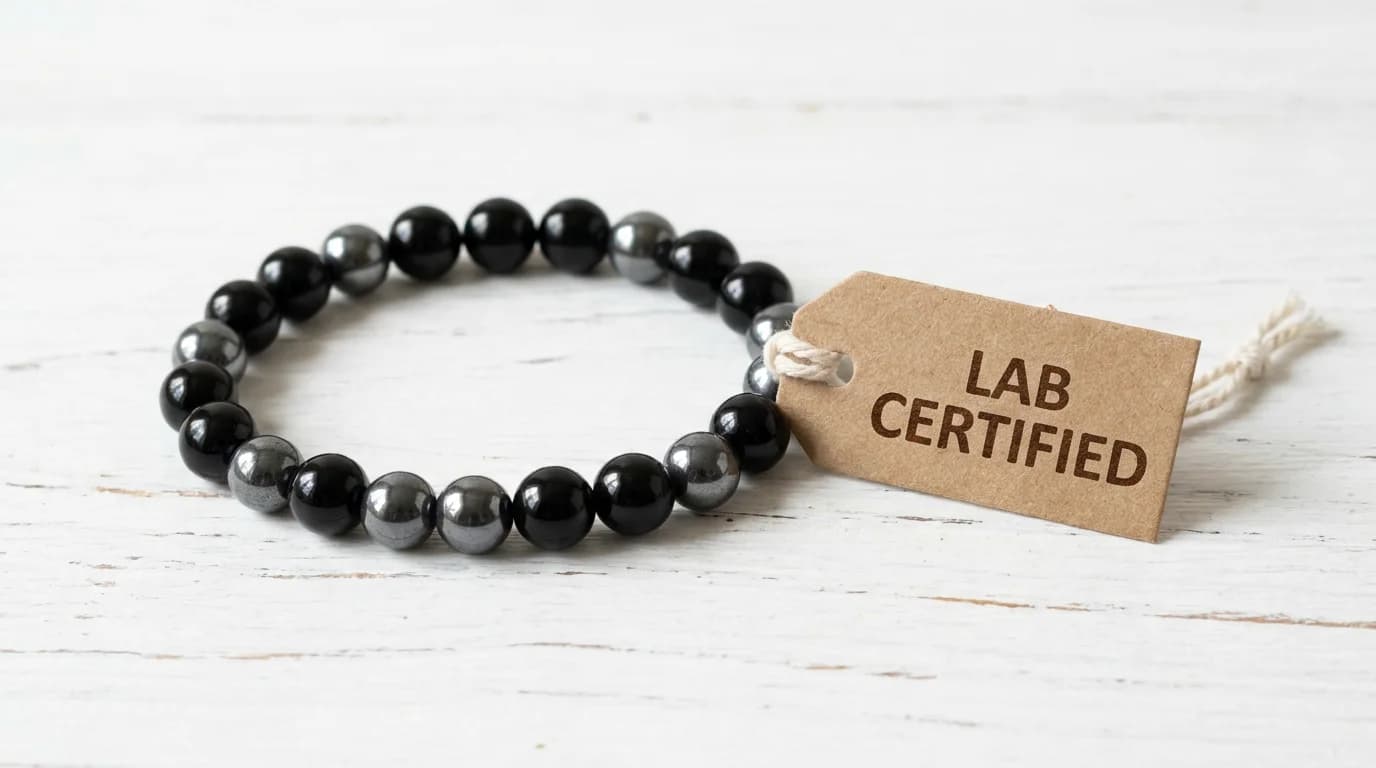
What is a black obsidian bracelet (and the hematite pairing)?
A black obsidian bracelet is a strand of beads cut from natural obsidian — a glossy volcanic glass formed when lava cools too fast to crystallise. It is often paired with hematite, a heavy iron-oxide stone that tugs a magnet. In Vedic and feng-shui tradition the duo is worn for grounding, shielding from negative energy and buri nazar, and steadying an overactive mind.
Be clear on what is belief and what is verifiable. The protective and grounding benefits come from tradition, ritual and intention — many wearers report feeling calmer or more focused, consistent with placebo and mindful habit, but there is no clinical proof and a bracelet is not a substitute for medical, financial or professional advice. What is testable is the material: real obsidian shows a curved, glassy (conchoidal) fracture and feels cool, while genuine hematite is dense and weakly magnetic. Price, honestly, should track that verifiable material — not the marketing.
| Obsidian | Natural volcanic glass; conchoidal fracture; cool to touch |
| Hematite | Iron-oxide stone; heavy for its size; weakly magnetic |
| Worn for (belief) | Grounding, protection, buri nazar, calming the mind |
| Tradition links | Hematite to Shani/Saturn and Mangal; root-chakra stability |
| Evidence status | Traditional and belief practice; no clinical proof |
| Verifiable | Material authenticity via fracture, weight and magnet test |
What a black obsidian bracelet should cost in India in 2026
There is no single "correct" price, but there is a fair band. For a genuine, natural black obsidian bracelet with honest bead size and a real per-piece certificate, expect roughly Rs.900 to Rs.2,500 depending on bead diameter, finish and whether hematite is included. Anything advertised at Rs.300–600 as "original, 70% off" is almost always reconstituted or molded glass dressed up as gemstone.
Bead size is the single biggest honest cost driver: larger 10mm beads use more material and cost more than 8mm. Certification, careful drilling and quality elastic add a little; a marketing markup and a fake "slashed" MRP add a lot. Below is a realistic India range, not a promise — treat it as a sanity check before you pay.
| 8mm natural, certified | Rs.900 – Rs.1,500 |
| 10mm natural, certified | Rs.1,400 – Rs.2,500 |
| With hematite spacers | Add roughly Rs.150 – Rs.400 |
| Suspiciously cheap | Below ~Rs.700 for "original" |
| COD in India | Commonly free or Rs.0–50 handling |
| Per-piece lab certificate | Should be included, not extra |
Our own certified black obsidian bracelet sits inside this fair band on purpose. We do not run erosive 70%-off theatre, because a real stone with a real certificate does not need a fake MRP to look like a deal.
Why a Rs.500 "70% off original" bracelet is usually molded glass
Obsidian is technically a glass already, which is exactly why fakes are so easy and so common. Sellers mold ordinary black or recycled glass into perfectly round, bubble-free, mirror-shiny beads, print "100% original, lab certified" with no certificate to show, and inflate an MRP so a Rs.500 price reads as a 70% saving. The discount is the bait; the glass is the product.
Real natural obsidian is rarely flawless. Held to light it can show faint wisps, a slightly uneven sheen, occasional tiny natural inclusions, and that telltale conchoidal fracture on any chip. Mass-molded glass looks too perfect, often has trapped round air bubbles, and warms quickly in the hand. The pricing tells you almost as much as the stone.
| Signal | Likely real obsidian | Likely molded glass |
|---|---|---|
| Price for "original" | Rs.900+ | Rs.300–600 with huge "discount" |
| Appearance | Slight depth, faint natural wisps | Flawless, mirror-perfect |
| Bubbles | Rare, irregular if any | Round trapped air bubbles |
| Temperature | Cool, warms slowly | Warms fast in hand |
| Fracture on chip | Curved, glassy (conchoidal) | Sharp or crumbly, inconsistent |
| Certificate | Per-piece lab cert shown | "Certified" claim, no document |
What you're actually paying for in a fair price
When a price is fair rather than cheap, your money is buying material and proof, not a discount illusion. The biggest real costs are the stone volume (bead size), genuine hematite if included, and the testing that produces a per-piece lab certificate. Clean drilling, durable elastic, honest sizing and reliable COD logistics in India round it out.
- 1Real material
Natural obsidian and genuine magnetic hematite — the core cost. Larger beads mean more stone and a higher honest price.
- 2Per-piece lab certificate
Independent testing and documentation for your exact bracelet, shown on-page — not a generic badge. This is the difference between a claim and proof.
- 3Correct bead size
Stated 8mm or 10mm, not vaguely "free size only." You should know diameter and approximate bead count before buying.
- 4Build and sizing
Quality elastic, clean drill holes, and a real wrist-measurement guide so the fit lasts and matches your wrist.
- 5India logistics
Transparent INR pricing, COD, free or low-cost shipping and a clear returns path — costs a fair seller absorbs honestly.
- 6What you should NOT pay for
A fake slashed MRP, "limited stock" pressure, or unverifiable energising claims used to justify the price.
On benefits: any grounding, protection or calm is offered in the spirit of tradition and personal ritual, not as a guaranteed or medical outcome. A fair price reflects honest material and proof — never a promise to cure, fix finances or change your fate.
Test it yourself: obsidian fracture and the hematite magnet test
You do not have to take any seller's word, ours included. Two quick checks separate fair-priced real stone from overpriced fakes. These test the material honestly; they say nothing about metaphysical effect, which remains a matter of belief.
- 1Temperature check
Hold the beads. Real obsidian feels noticeably cool and warms slowly; molded glass warms fast and feels lighter than you expect.
- 2Look-through and bubble check
Against bright light, real obsidian shows subtle depth and faint natural variation. Perfectly clear beads with round trapped bubbles point to glass.
- 3Conchoidal fracture
On any pre-existing chip, genuine obsidian breaks in smooth curved, shell-like (conchoidal) shapes — not sharp crystalline angles or crumbs.
- 4Hematite magnet test
Bring a small magnet near the grey metallic hematite beads. Genuine hematite gives a gentle but clear tug. No reaction at all suggests painted or imitation beads.
- 5Weight in hand
Hematite is dense and feels surprisingly heavy for its size. A suspiciously light "hematite" bracelet is a red flag.
The honest catch: strongly magnetic "hematite" that snaps hard to a magnet is often magnetised hematine (a synthetic), while natural hematite tugs only weakly. We cover this fully in our magnet-test guide. Pair these tests with a per-piece lab certificate and you are no longer guessing about either price or authenticity.
The smart-buyer checklist for India
Before you pay, run this quick checklist. It protects you from both overpaying and from cheap molded-glass fakes, and it works whether you are buying for yourself or as a protection gift.
- 1Sanity-check the price
Genuine certified pieces sit roughly Rs.900–2,500. Treat "original, 70% off, Rs.500" as glass until proven otherwise.
- 2Demand a per-piece certificate
Ask to see the actual lab certificate image, not a generic "100% certified" badge with no document.
- 3Confirm bead size
Look for stated 8mm or 10mm and an approximate bead count — avoid "free size only" vagueness.
- 4Check sizing guidance
A real wrist-measurement guide signals a seller who cares about fit, not just a one-size strand.
- 5Verify India trust signals
Transparent INR pricing, COD, clear shipping and an honest returns policy.
- 6Read the care terms
Hematite can rust if soaked. A seller who tells you to keep it dry is being straight with you.
| Fair price band | Rs.900 – Rs.2,500 (size dependent) |
| Certificate | Per-piece lab document, shown on-page |
| Bead size | Stated 8mm or 10mm, with bead count |
| Which hand (tradition) | Left wrist to receive grounding energy |
| Care | Keep dry; cleanse monthly; avoid chemicals |
| Payment | COD available across India |
Care, verbatim: Keep this bracelet dry — hematite contains iron and can develop surface rust if soaked, so avoid wearing it in the shower or pool and never cleanse it in salt water; wipe with a soft dry cloth and cleanse with moonlight, sage or selenite instead.
Frequently asked
Last reviewed: 17 May 2026 · Verified by the DivineTatva expert panel
What is the real price of an original black obsidian bracelet in India?
For a genuine, natural black obsidian bracelet with honest bead size and a per-piece lab certificate, expect roughly Rs.900 to Rs.2,500 in 2026. The main cost drivers are bead diameter (10mm costs more than 8mm), whether hematite is included, and real testing. Anything sold as "original" below about Rs.700, especially with a giant "70% off" MRP, is usually molded glass rather than natural stone.
Why are some black obsidian bracelets only Rs.300–500?
Because they are typically molded or recycled glass, not natural obsidian. Since obsidian is itself a volcanic glass, ordinary glass is easy to shape into flawless, shiny beads and pass off as gemstone. Sellers inflate an MRP so a low price looks like a big discount. The slashed price is bait. Genuine certified pieces simply cost more because real material and per-piece testing cost more.
How do I tell if my black obsidian bracelet is real?
Use three quick checks. Real obsidian feels cool and warms slowly, shows subtle natural depth rather than mirror perfection, and breaks in smooth curved (conchoidal) shapes on any chip. Molded glass warms fast, often has round trapped bubbles, and looks too perfect. For the hematite beads, a magnet should give a gentle tug. A per-piece lab certificate confirms what these tests suggest.
Is my hematite real? Will it pass the magnet test?
Genuine natural hematite is dense, heavy for its size, and weakly magnetic, so a small magnet gives a gentle tug, not a hard snap. No reaction at all suggests painted or imitation beads. Confusingly, a very strong magnetic pull usually means magnetised hematine, a synthetic. So weak attraction plus real weight is the honest signal of natural hematite; see our dedicated magnet-test guide for detail.
Does a black obsidian and hematite bracelet actually work?
In Vedic and feng-shui tradition the combination is worn for grounding, protection and calming the mind, and many wearers report feeling steadier or more focused. That experience is consistent with intention, ritual and placebo, and there is no clinical proof of a medical or supernatural effect. We frame it honestly as belief and tradition, not cure. It is not a substitute for medical, financial or professional advice.
Which hand should I wear a black obsidian bracelet on?
In common practice the left wrist is the receiving side, so a grounding and protective stone like black obsidian is usually worn on the left to draw in calming, shielding energy. There is no rule that makes this medically or scientifically necessary; it is a tradition. Wear it on whichever wrist is comfortable and stays clear of water, since hematite can rust if soaked.
Do you provide a lab certificate, and is COD available?
Yes. Each bracelet ships with a per-piece lab certificate for your exact piece, and we show a sample certificate and the testing details on-page rather than relying on an unverifiable "100% certified" badge. Cash on delivery is available across India with transparent INR pricing, free or low-cost shipping and a clear returns path, so you can verify authenticity with confidence before fully committing.
Reviewed by the DivineTatva expert panel
Written and reviewed by DivineTatva's consulting Vedic astrologer. Every piece is lab-certified and energised in our Jaipur atelier. Last updated 5 April 2026.