Karungali Bracelet: Benefits, How to Check It Is Original, Which Hand and Price
A karungali bracelet is a band of beads cut from the dense black heartwood of Indian ebony (Diospyros ebenum). In South Indian tradition it is worn for protection, focus and Shani (Saturn) remedies, by men and women alike. An original one is black all the way through, heavy for wood, does not leave dye on a wet cloth and usually sinks in water. Wear it on the right wrist by custom, keep it dry, and expect to pay roughly ₹500–₹1,500 for genuine 8mm beads.
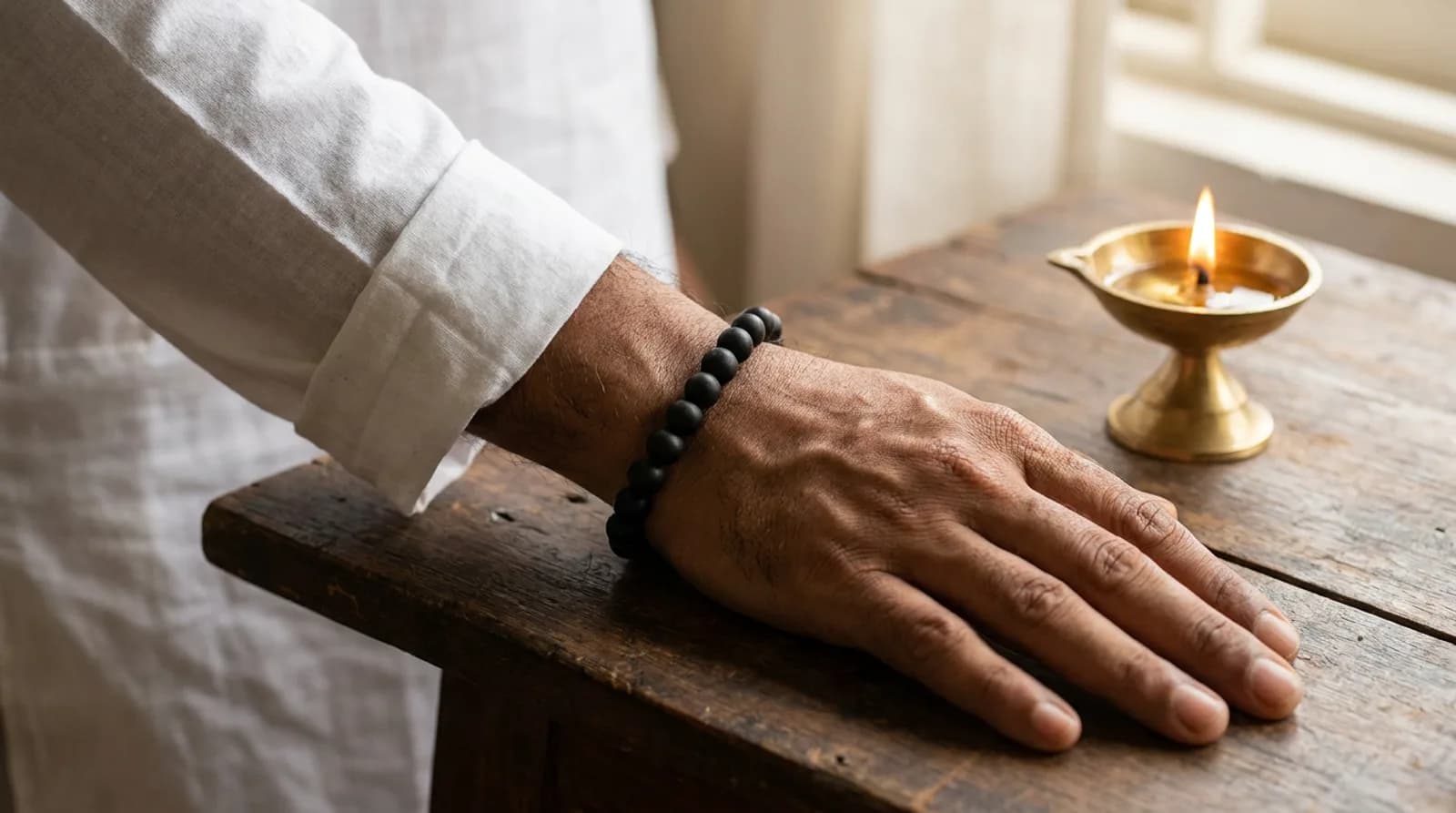
Karungali bracelet at a glance
| Material | Heartwood of Indian ebony (Diospyros ebenum), called karungali in Tamil |
| Worn for (tradition) | Protection, focus, Shani (Saturn) remedies, removing negativity |
| Who can wear | Men and women; no age restriction in tradition |
| Wrist | Right wrist is most common in South India; left is also worn |
| Bead size | 8mm everyday; 6mm slim; 10–12mm bold |
| Fair price (genuine) | Roughly ₹500–₹1,500 for an 8mm stretch bracelet |
What a karungali bracelet is worn for
- 1Protection from negativity
Karungali has long been used in South Indian temples, and the wood is believed to absorb negative energy and drishti (evil eye).
- 2Shani (Saturn) remedy
People going through Sade Sati or a difficult Saturn period often wear karungali as a remedy, sometimes with a mantra on Saturdays.
- 3Focus and discipline
Its plain, dark, heavy beads are worn as a daily cue for steadiness — popular with students and professionals.
- 4Mars (Sevvai) and courage
Some families also link karungali with Mars and courage; associations vary by region and astrologer.
- 5A wood, not a stone
Karungali is light compared with gemstones and does not tarnish, so many people wear it every day.
These are traditional beliefs. There is no scientific evidence that ebony wood changes luck or health; people value it as a spiritual practice and a daily reminder.
Original vs fake karungali: 5 checks
- 1Black all the way through
Real ebony heartwood is naturally black or very dark brown throughout. A chipped or drilled bead that shows pale wood inside has been dyed.
- 2The wet-cloth test
Rub a bead with a damp white cloth. Genuine karungali leaves no black stain; dyed wood or painted beads usually do.
- 3Weight and the water test
Ebony heartwood is denser than water, so a genuine bead usually sinks or sinks slowly. Light beads that float are rarely ebony. Dry it straight afterwards.
- 4Fine grain, not paint
Look closely: real wood shows fine grain and a soft natural lustre, not a glossy painted or lacquered shell.
- 5Price and paperwork
Real heartwood costs money. Very cheap bracelets are usually dyed wood. A density or wood-identity report from the seller is a good sign.
Which hand, for men and women
In Tamil Nadu and most South Indian families, karungali is worn on the right wrist. Many people in North India prefer the left wrist, the 'receiving' side. Both are fine — consistency matters more than the side. Saturday is the customary day to start, and many people chant 'Om Sham Shanicharaya Namah' or 'Om Namah Shivaya' while putting it on. Women can wear karungali exactly as men do; most traditions have no special restriction, and family custom decides practices such as removing it during periods.
Bead size and styles
| Style | Good for | DivineTatva price |
|---|---|---|
| 8mm stretch bracelet | Daily wear, men and women | ₹690 |
| 18-bead wrist mala | Wrist japa and daily wear | ₹890 |
| 27-bead hand mala | Quick meditation counts | ₹790 |
| Om bracelet with 925 silver guru bead | A dressier look | ₹1,199 |
| Karungali + rudraksha combo mala | Shani and Shiva tradition together | ₹3,490 |
How to care for a karungali bracelet
| Water | Remove before bathing and swimming; wipe dry if it gets wet |
| Oil | A drop of sesame or coconut oil rubbed in once a month keeps the wood from drying and cracking |
| Storage | Keep it in a cloth pouch, away from perfume and direct heat |
| Cord | Stretch cords loosen with time — restring every 12–18 months |
Frequently asked
Last reviewed: 17 May 2026 · Verified by the DivineTatva expert panel
What are the benefits of a karungali bracelet?
In South Indian tradition it is worn for protection from negative energy and evil eye, as a Shani (Saturn) remedy, and for focus and discipline. These are traditional beliefs, not proven effects.
Which hand should I wear a karungali bracelet on?
The right wrist is most common in South India; the left wrist is also worn. Saturday is the customary day to start.
Can women wear a karungali bracelet?
Yes. Women wear karungali the same way men do. Some families have their own customs, for example about periods, which are a personal choice.
How can I check if my karungali bracelet is original?
Real karungali is black all the way through, leaves no stain on a damp white cloth, feels heavy for wood and usually sinks in water. Pale wood inside a drilled bead means it has been dyed.
What is the price of an original karungali bracelet?
Roughly ₹500 to ₹1,500 for genuine 8mm heartwood beads. The DivineTatva 8mm karungali bracelet is ₹690 with Cash on Delivery.
Can I wear karungali and rudraksha together?
Yes. Many people wear both — karungali for Shani and rudraksha for Shiva — and combo malas combine them.
Can a karungali bracelet get wet?
Occasional splashes are fine, but remove it before bathing or swimming and wipe it dry. Regular soaking dries out and cracks the wood.
Reviewed by the DivineTatva expert panel
Written and reviewed by DivineTatva's consulting Vedic astrologer. Every piece is lab-certified and energised in our Jaipur atelier. Last updated 11 October 2026.