Karungali Mala & Bracelet (Ebony Wood): Lab-Certified Original, Benefits, Real-vs-Fake Test & Price in India
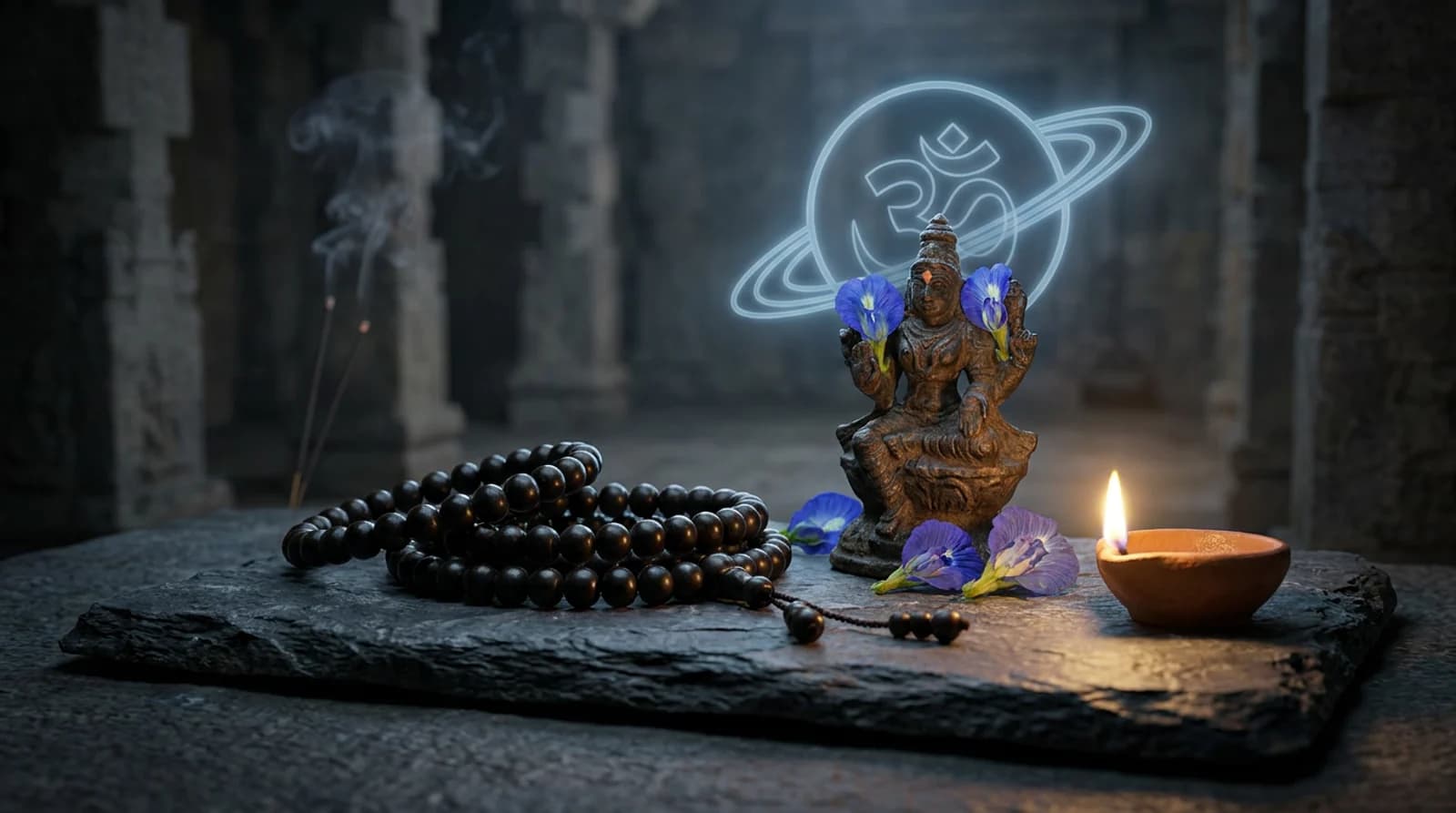
Karungali mala is a japa mala of dense black ebony heartwood (Tamil karungali, Diospyros ebenum), strung as 108+1 beads or worn as a 6-10mm stretch bracelet. Tradition links it to Shani (Saturn) and Shiva for grounding and nazar protection; materially it is real ebony that sinks in water and never bleeds dye.
- Quick Answer: What Karungali Is
- What Is Karungali / Ebony Wood
- Belief vs Evidence
- Benefits of Karungali Mala
- Real-vs-Fake: Test Yours at Home
- Lab Certification Explained
- Who Should Wear It
- Side Effects & Myths
- Does It Actually Work?
- Which Hand & Japa Technique
- Cleanse, Energise & Start Wearing
- Price, Sizing & Buying in India
- Care & Maintenance
- The DivineTatva Difference
What Is a Karungali Mala? (Definition)
A karungali mala is a prayer and meditation mala made from karungali — the Tamil name for ebony heartwood (Diospyros ebenum), a dense, naturally black wood. It comes as a traditional 108+1 bead japa mala or as a 6/8/10mm stretch bracelet. In English, karungali simply means ebony wood. It is wood, not a gemstone, and genuine pieces sink in water and never bleed dye.
| English meaning | Ebony wood (karungali = Tamil) |
| Botanical name | Diospyros ebenum |
| Formats | 108+1 bead mala, 6/8/10mm bracelet, combo |
| Material | Dense black ebony heartwood (not gemstone) |
| Tradition | Shani (Saturn) & Shiva remedy; grounding, nazar protection |
| Quick authenticity test | Sinks in water, no dye on damp white cloth, cool to touch |
| Price band (India) | Bracelet around Rs 399-1,200; mala around Rs 1,200-3,500 |
| At DivineTatva | Jaipur lab-certified, batch number, COD across India |
Honest note: benefits below come from Vedic and astrological tradition and personal experience, not clinical proof. We share what is materially verifiable separately from what is belief, and never promise guaranteed outcomes. A mala is not a substitute for medical, financial or professional advice.
What Is Karungali / Ebony Wood?
Karungali is the dark heartwood of the ebony tree, Diospyros ebenum, native to South India and Sri Lanka. In Tamil, karu means black and the word broadly names the prized black ebony timber. It is sourced from forest belts including the Theni (Teni) region of Tamil Nadu. Because it is wood rather than crystal or stone, it is light, warm-feeling over time, and worked on a lathe into smooth beads.
Only the inner heartwood is true black karungali; the outer sapwood is paler and softer. Authentic beads are dense enough to sink, carry a faint natural woody smell, and show fine grain rather than a uniform painted black. This is why dyed or pressed-powder fakes are common — they imitate the colour but not the density or grain.
| Format | Beads / size | Best for | Typical use |
|---|---|---|---|
| Japa mala | 108 + 1 Sumeru bead | Mantra counting, daily sadhana | Shiva/Shani japa, meditation seat |
| Bracelet | 6mm / 8mm / 10mm | Everyday wear, gifting | Grounding reminder, nazar protection |
| Combo | Mala + 8mm bracelet | Practice + daily wear | Home altar plus on-the-go |
Bead size is mostly about feel and wrist fit: 6mm is slim and subtle, 8mm is the popular all-day size, and 10mm reads bolder. The mala's extra 109th bead is the Sumeru (guru) bead, which marks where a round of 108 ends.
Belief vs Evidence: What's Verifiable, What's Tradition
This is the most important table on the page. We keep what you can physically check separate from what is spiritual belief, so you can buy with clear eyes. The left column is testable at home. The right column is sincere tradition we respect but cannot prove.
| Claim | Materially verifiable | Traditional belief (not proven) |
|---|---|---|
| Dense ebony heartwood | Yes — fine grain, real weight | — |
| Sinks in water | Yes — genuine karungali sinks | — |
| No dye bleed on damp white cloth | Yes — real wood transfers no colour | — |
| Cool, then warm to the touch | Yes — characteristic of dense wood | — |
| Faint woody (not chemical) smell | Yes — observable | — |
| Relief during Shani / Saturn periods | — | Belief / astrology |
| Grounding and calmer focus | — | Tradition + personal experience |
| Protection from nazar / negativity | — | Belief / ritual |
| Connection to Lord Shiva | — | Devotional tradition |
In short: authenticity of the wood is provable; spiritual outcomes are a matter of faith, intention and ritual. Many wearers report feeling calmer and more focused — consistent with the soothing effect of intention, routine and placebo. That experience is real and valuable; it is just not a clinical claim.
Benefits of Karungali Mala (Tradition & Belief)
Here is what tradition associates with karungali. Each is tagged as belief or tradition — none is a medical, financial or guaranteed claim. Classical grounding: the Skanda Purana names karungali (ebony) among sacred woods for Shani worship; the Linga Purana references dark woods as Shani-propitiating materials. Modern usage extends this to general grounding and protection.
- 1Grounding & stability (tradition)
The dense black wood is felt to steady scattered energy. Wearers often describe a settled, anchored feeling during daily wear and japa.
- 2Focus for meditation (tradition + experience)
Counting 108 beads gives the mind a simple anchor. The repetition itself supports concentration during mantra practice.
- 3Nazar & negativity protection (belief)
Karungali is traditionally worn to deflect buri nazar (evil eye) and heavy environments. This is protective belief, not a measurable shield.
- 4Shani (Saturn) association (astrology)
It is a classic Shani remedy, worn to ease the friction of Saturn periods such as Sade Sati. This is astrological tradition, not proven cause and effect.
- 5Shiva connection (devotion)
As a black, austere wood, karungali is linked to Lord Shiva and is favoured for Shiva mantras and vairagya (detachment) practice.
If a seller promises cured disease, guaranteed wealth or instant luck, treat it as a red flag. Genuine karungali is a beautiful, grounding support for practice — not a magic fix.
Real vs Fake: How to Test YOUR Karungali at Home
Karungali is widely faked with dyed cheap wood, plastic and pressed sawdust. Use this short protocol of verifiable tests. Run two or three together — no single test is conclusive on its own.
- 1Water-SINK test
Drop a loose bead in water. Dense genuine ebony heartwood sinks. Light wood, plastic and resin tend to float. (Strung malas may trap air, so test a spare bead.)
- 2Rub on damp white cloth
Wet a white cloth, rub the bead firmly, even with a little soap. Real karungali transfers NO colour. Black smudges mean dyed wood — a fake.
- 3Cool-to-touch
Pick it up after it has rested. Dense wood feels cool first, then warms in your hand. Plastic feels room-temperature and slightly tacky.
- 4Smell test
A faint natural woody scent is good. A chemical, paint or plastic smell is a fail.
- 5Density / weight
Genuine beads feel reassuringly solid for their size, not hollow or feather-light.
Honest debunk: the popular milk soak and ghee soak tests, and any energy or chakra waving test, prove nothing about authenticity — dyed wood and plastic can pass them too. Trust the physical tests above plus a real material lab certificate, not folklore demonstrations.
Lab Certification: What a Real Certificate Shows
A genuine material certificate is specific. It is issued against an actual tested sample and states what the item is and how to trace it — very different from a vague Govt. Certified sticker that names no lab and no test.
| Material / species | Confirms it is genuine ebony heartwood |
| Density / characteristics | Notes the dense, sink-in-water nature of the wood |
| Batch number | Ties your piece to a tested lot |
| QR verification | Scans to the uploaded certificate online |
| Issuing lab | A named laboratory, not an anonymous badge |
| Signal | Real material certificate | Vague badge |
|---|---|---|
| Names the lab | Yes | Usually no |
| Batch / sample reference | Yes | No |
| Online QR check | Yes | No |
| What it certifies | The actual material | Unclear / decorative |
At DivineTatva each karungali piece ships with an uploaded certificate image and a batch number you can verify, so authenticity does not rest on our word alone.
Who Should Wear Karungali (Men & Women)
There is no gender bar. The myth that women cannot wear karungali is just that — a myth. Karungali is a wood with no astrological gender restriction, so anyone drawn to grounding practice can wear it.
| Men & women | Both can wear it — no gender restriction |
| Students | Popular for focus and steady study routines |
| Meditators & sadhaks | Suited to japa and Shiva/Shani mantras |
| Anyone facing Shani periods | Worn traditionally during Sade Sati / Saturn transits |
| Beginners | A simple, low-cost entry to mala practice |
Be cautious only in practical ways: if you have a known wood or contact sensitivity, test against your skin first; for very young children, an adult should supervise loose beads. Otherwise karungali suits most people, and wearing it is about intention more than rules.
Side Effects & Common Myths
Straight answer: ebony wood has no proven side effects. It is inert natural wood worn on the skin, so fear-driven searches for side effects of karungali mala have a reassuring answer. The only real-world cautions are ordinary ones.
| Concern | Honest reality |
|---|---|
| Physical side effects | None proven; it is plain wood |
| Skin reaction | Rare; only if you have a wood/contact sensitivity |
| Bad luck if it breaks | Myth — a snapped thread is just wear; restring it |
| Strict rules or it harms you | Myth — practice is about intention, not fear |
| Women shouldn't wear it | Myth — no gender restriction exists |
If skin ever feels irritated, simply remove it and check for an unrelated allergy. There is no tradition that karungali punishes the wearer. Approach it with respect and ease, not anxiety.
Does Karungali Mala Actually Work?
Our honest position: the spiritual and astrological claims are not scientifically proven, and we will not pretend otherwise. What is real is the experience many wearers describe — feeling calmer, more grounded and more focused when they wear it and do their japa.
That effect is genuine even if its mechanism is ritual, intention and placebo rather than the wood acting on the body. A daily practice with a physical anchor reliably helps people slow down and concentrate. We think that value is worth a lot — and we describe it plainly instead of dressing it up as a cure.
| What we promise | Genuine, lab-certified ebony; honest framing |
| What we won't promise | Guaranteed luck, wealth, health or fixed outcomes |
| Why people feel benefit | Intention, routine, ritual and placebo — all real |
| Best mindset | A support for practice, not a magic fix |
Which Hand & Japa Technique
For a bracelet, tradition often suggests the left wrist as the receiving side for absorbing calming energy, while some wear it on the right for projecting intention. Conventions vary by region and lineage; comfort and consistency matter more than a strict rule.
| Bracelet — common tradition | Left wrist = receiving / grounding |
| Right wrist | Sometimes chosen for projecting intention |
| Men & women | Same conventions apply; no gender rule |
| Mala counting hand | Right hand by tradition |
| Counting fingers | Thumb moves beads over the middle finger |
| Sumeru / guru bead | Do not cross it — turn the mala and reverse |
For japa, hold the mala in your right hand, drape it over the middle finger, and use your thumb to draw one bead per mantra. When you reach the Sumeru (guru) bead after 108, do not step over it — flip the mala and continue in the opposite direction for the next round. The index finger is traditionally kept off the beads.
How to Cleanse, Energise & Start Wearing
Because karungali is wood, cleansing is gentle and dry — never water-soak it. The aim is to clear travel energy and set your intention (shuddhi and an optional Pran Pratishta), then begin.
- 1Dry cleanse
Wipe with a soft dry cloth. You may pass it briefly through dhoop/incense smoke. Do not wash or soak it.
- 2Set intention (shuddhi)
Hold it, take a few breaths, and silently state your purpose — grounding, focus, protection or devotion.
- 3Energise (optional Pran Pratishta)
Chant your chosen mantra (e.g. a Shiva or Shani mantra) over it, or add our astrologer-energised consecration if you prefer it done for you.
- 4Optional Shani-day start
Some begin on a Saturday (Shani's day), but intention matters more than timing — any day is fine to start.
- 5Begin wearing / japa
Wear it or complete your first round of 108. Consistency builds the practice.
On how many days to wear karungali mala: there is no fixed number. Tradition values steady daily wear and practice over a magic count of days.
Price, Sizing & Buying Guide in India
Authentic karungali is priced for genuine dense heartwood, fine finishing, correct bead count and real certification. Suspiciously cheap pieces are usually dyed wood, plastic or pressed powder. Here are fair INR bands to expect.
| Karungali bracelet (6/8/10mm) | Approx Rs 399-1,200 |
| 108+1 bead mala | Approx Rs 1,200-3,500 |
| Mala + bracelet combo | Best value bundle |
| Payment | COD available across India |
| 6mm bracelet | Slim, subtle — smaller wrists |
| 8mm bracelet | Popular all-day size |
| 10mm bracelet | Bolder look, larger wrists |
What affects price: true heartwood (not sapwood or dyed wood), bead size and uniformity, hand-finishing, certification and batch traceability. Measure your wrist snugly and add a little ease for a stretch bracelet. Choose a combo if you want a counting mala for sadhana plus an 8mm bracelet for daily wear.
Care & Maintenance (Wood, Not Stone)
Karungali is ebony wood, so keep it dry — wipe with a soft cloth and occasionally a drop of coconut or sesame oil to nourish the beads; never soak in water and avoid soap, perfume or chemicals, and store in a cotton pouch.
| Routine clean | Soft dry cloth wipe |
| Nourish | Occasional drop of coconut or sesame oil |
| Avoid | Water soak, soap, perfume, chemicals |
| Storage | Cotton pouch, away from damp and heat |
| Restringing | Re-knot if the thread frays; a break is just wear |
Remove it before bathing, swimming or applying lotions and sprays. With a quick dry wipe now and then and an occasional light oiling, genuine karungali develops a smooth, deeper patina and lasts for years.
The DivineTatva Difference
We built this page to do something the rest of the market doesn't: serve both buying and learning honestly on one URL, with the authenticity proof attached.
- 1Jaipur lab-certified
Each piece ships with an uploaded certificate image and a batch number you can verify — not a vague Govt. Certified badge.
- 2Honest belief-vs-evidence
We separate what is materially verifiable from what is tradition, so you are never misled.
- 3Verify-it-yourself section
We hand you the real water-sink and no-dye-bleed tests, and debunk the milk/ghee folklore.
- 4Correct japa & which-hand guidance
Sumeru-bead technique and wrist conventions most sellers leave out.
- 5Transparent pricing & COD
Clear INR bands and Cash on Delivery across India — no render-bug surprises.
Buy with clear eyes: genuine certified ebony, honest framing, and a practice you can trust. Not a substitute for medical, financial or professional advice.
Frequently asked
Last reviewed: 17 May 2026 · Verified by the DivineTatva expert panel
What is karungali in English?
Karungali is the Tamil name for ebony wood — specifically the dense black heartwood of Diospyros ebenum, a tree native to South India and Sri Lanka. So a karungali mala is simply an ebony wood mala. It is wood, not a gemstone or crystal, which is why it is light, smooth and warms in the hand rather than staying stone-cold.
Does original karungali sink in water?
Yes. Genuine karungali is dense ebony heartwood, so a loose bead sinks in water. Light wood, plastic and resin fakes usually float. Test a spare bead rather than a strung mala, since trapped air between beads can give a false result. Combine the sink test with the no-dye-bleed and cool-to-touch checks for confidence.
How do I test if my karungali mala is real or fake?
Use verifiable tests together: a loose bead should sink in water; rubbing it on a damp white cloth (even with soap) should leave no black colour; it should feel cool then warm in the hand and smell faintly woody, not chemical. Ignore milk or ghee soak and energy tests — they prove nothing. A real material lab certificate adds final assurance.
What are the benefits of karungali mala?
By tradition, karungali is worn for grounding, focus during meditation, protection from nazar and negativity, and as a Shani (Saturn) and Shiva remedy. These are belief and personal-experience based, not clinically proven. Many wearers feel calmer and more focused, consistent with the effect of intention and routine. We won't promise guaranteed luck, health or wealth.
Can women wear karungali mala?
Yes. The idea that women cannot wear karungali is a myth. Karungali is a wood with no astrological gender restriction, so both men and women can wear the mala or bracelet. It is popular with students, meditators and anyone drawn to grounding practice. Wearing it is about intention and consistency, not gender.
Does karungali mala have side effects?
There are no proven side effects. Karungali is inert natural ebony wood worn on the skin, so it does not harm the body. The only practical cautions are ordinary: rarely, someone with a wood or contact sensitivity may react, in which case simply remove it. There is no tradition that the mala punishes the wearer or brings bad luck if it breaks.
Which hand should I wear a karungali bracelet on?
Tradition commonly suggests the left wrist as the receiving side for calming, grounding energy, while some wear it on the right to project intention. Conventions vary by region and lineage and apply equally to men and women. There is no strict rule — comfort and consistent daily wear matter more than which wrist you choose.
How do I do japa with a karungali mala?
Hold the mala in your right hand, drape it over your middle finger, and use your thumb to move one bead per mantra, keeping the index finger off the beads. A full round is 108 beads. When you reach the Sumeru (guru) bead, do not cross it — flip the mala and continue in the opposite direction for the next round.
Is karungali mala a remedy for Shani (Saturn)?
In astrological tradition, yes — karungali is associated with Shani and is worn during Saturn periods such as Sade Sati to ease their friction, and with Lord Shiva for detachment practice. This is belief, not proven cause and effect. We share it honestly: wear it as a supportive ritual and intention, not as a guaranteed astrological fix.
How should I clean and care for my karungali mala?
Karungali is ebony wood, so keep it dry — wipe with a soft cloth and occasionally a drop of coconut or sesame oil to nourish the beads; never soak in water and avoid soap, perfume or chemicals, and store in a cotton pouch. Remove it before bathing or applying lotions. With light care it develops a smooth, deeper patina over years.
How much does an original karungali mala cost in India?
As a fair guide, an authentic karungali bracelet runs about Rs 399-1,200 depending on bead size (6/8/10mm), and a 108+1 bead mala about Rs 1,200-3,500. A mala-plus-bracelet combo is the best value. Very cheap pieces are usually dyed wood or plastic. At DivineTatva pricing is transparent with Cash on Delivery across India.
How many days should I wear a karungali mala?
There is no fixed number of days. Tradition values steady daily wear and consistent practice over a magic count. Some people like to start on a Saturday, Shani's day, but intention matters more than timing — any day is fine. Wear it as long as it supports your focus and grounding; clean it with a dry or lightly oiled cloth as needed.
Reviewed by the DivineTatva expert panel
Written and reviewed by DivineTatva's consulting Vedic astrologer. Every piece is lab-certified and energised in our Jaipur atelier. Last updated 13 May 2026.
- Karungali bracelet: benefits, original check and price
- करुंगली माला के फायदे (हिंदी)
- How to Test if Your Karungali Mala Is Real or Fake
- Karungali Mala Benefits
- Karungali Mala for Shani (Saturn)
- Shop the certified karungali mala
- Karungali Mala Price in India 2026
- Karungali Mala Side Effects
- Which Hand to Wear a Karungali Bracelet & How to Hold the Japa Mala (Men & Women)