Nepali Rudraksha (5 Mukhi & 7 Mukhi): Original Lab-Certified Beads, Price in India & Honest Benefits Guide
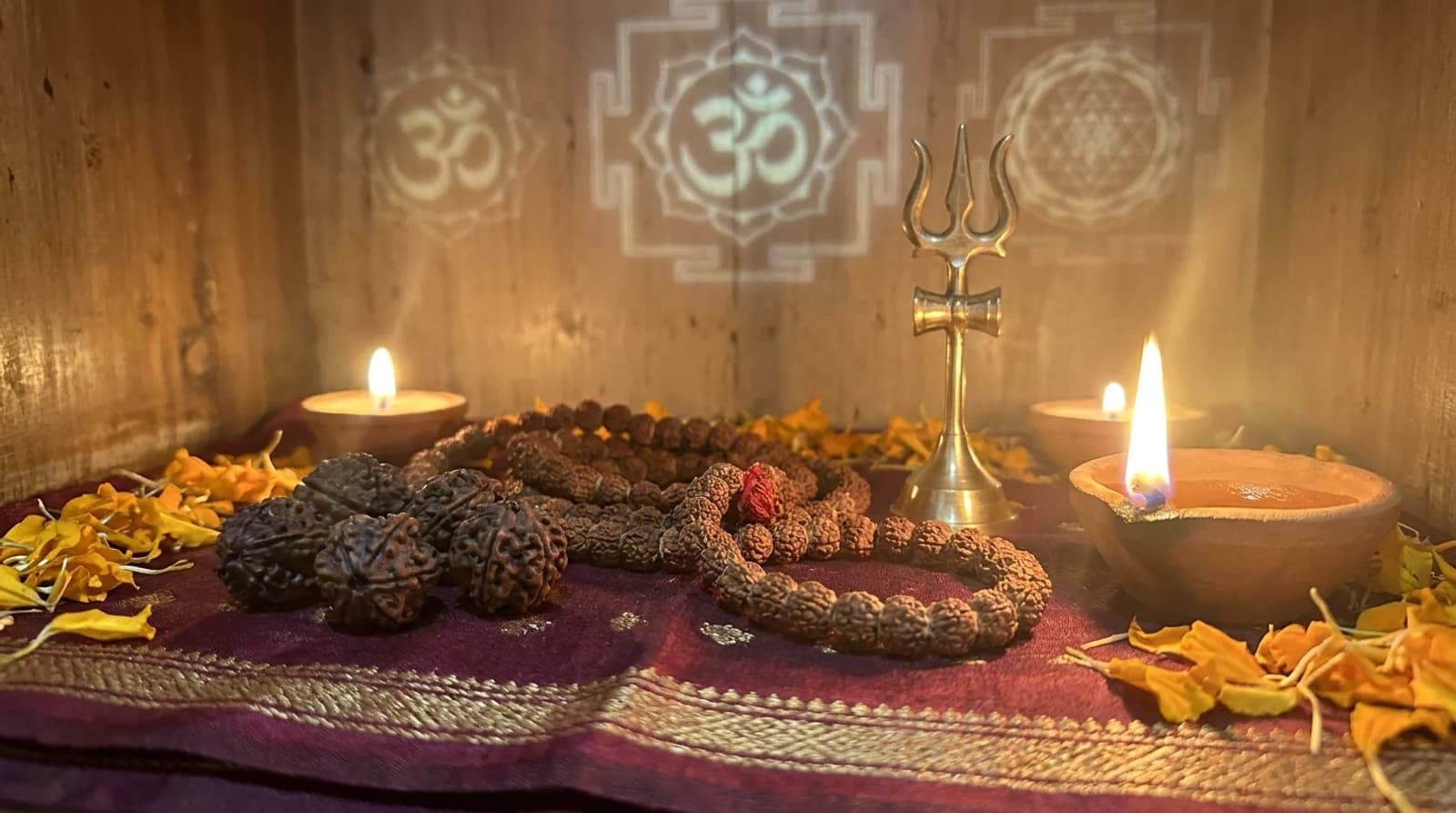
A Nepali Rudraksha is a single dried seed of the Elaeocarpus ganitrus tree from Nepal's Arun Valley, its name from "Rudra" (Shiva) plus "Aksha" (eye). The natural clefts, or mukhi, define its type — 5 Mukhi and 7 Mukhi being the most worn. This guide covers honest benefits, real-vs-fake tests and India pricing.
- What Is a Nepali Rudraksha?
- Nepali vs Indonesian Rudraksha
- 5 Mukhi (Panchmukhi) Explained
- 7 Mukhi (Saptamukhi) Explained
- Does It Actually Work?
- Who Should Wear 5M vs 7M
- Real vs Fake Identification
- Which Hand & How to Wear
- Cleanse, Charge & Energise
- Side Effects, Rules & Precautions
- Price & Sizing in India
- The DivineTatva Difference
- FAQs
What Is a Nepali Rudraksha?
A Nepali Rudraksha is a single dried seed of the Elaeocarpus ganitrus tree, grown in Nepal's high-altitude Arun Valley. The name joins "Rudra" (Lord Shiva) and "Aksha" (eye, or teardrop), and the natural vertical clefts on the seed — called mukhi, meaning faces — define its type. A 5 Mukhi has five clefts; a 7 Mukhi has seven.
Nepali beads are prized because they grow larger (roughly 18–35mm) with deeper, cleaner mukhi lines than smaller Indonesian/Java beads. In India a genuine single Nepali bead typically ranges from about Rs 350 to Rs 5,000+ depending on mukhi, size and grade. DivineTatva beads are lab/X-ray certified so the mukhi count is verified, not assumed.
Honest framing up top: the benefits below come from Vedic and metaphysical tradition plus the wearer's own belief and ritual. There is no clinical proof of supernatural effects. Many wearers report genuine calm and focus — consistent with intention, routine and the placebo response. A Rudraksha is a spiritual and devotional aid, not a substitute for medical, financial or professional advice.
| Botanical name | Elaeocarpus ganitrus |
| Origin | Arun Valley, Nepal (high altitude) |
| Meaning | Rudra (Shiva) + Aksha (eye/teardrop) |
| Mukhi | Natural clefts/faces on the seed |
| Most-worn types | 5 Mukhi (Panchmukhi), 7 Mukhi (Saptamukhi) |
| Typical Nepali size | 18–35mm |
| Price range (India) | ~Rs 350 – Rs 5,000+ per bead |
| Certification | Lab / X-ray verified mukhi count |
Nepali vs Indonesian (Java) Rudraksha
Both are the same species, Elaeocarpus ganitrus, and both are genuine Rudraksha — neither is "fake." The difference is size, line depth and finish. Nepali beads grow bigger and bolder; Indonesian/Java beads are small, smooth and far cheaper. Knowing which you want protects you from overpaying or feeling let down.
| Feature | Nepali (Arun Valley) | Indonesian / Java |
|---|---|---|
| Typical size | 18–35mm (large) | 5–15mm (small) |
| Mukhi lines | Deep, well-defined, distinct | Shallow, fine, closely set |
| Surface | Pronounced thorny ridges | Smoother, denser surface |
| Weight & density | Heavier, robust | Lighter, very dense |
| Look | Bold, traditional, photogenic | Neat, uniform, subtle |
| Price | Higher | Lower / budget |
| Best for | Single statement bead, gifting, puja | Long malas, daily japa, budget buyers |
Why Nepali costs more: fewer trees at high altitude, larger beads with collector-grade clarity, and stronger demand for the classic deep-mukhi look. If you want one certified statement bead with crisp lines, choose Nepali. If you want an affordable 108-bead mala for daily japa, Indonesian is sensible. Neither choice changes the tradition behind the bead — only its scale and price.
5 Mukhi (Panchmukhi) Explained
The 5 Mukhi or Panchmukhi is the most common and most universally worn Rudraksha. With five natural clefts, it is traditionally linked to Jupiter (Guru) and to Kalagni Rudra, a form of Lord Shiva. In tradition it represents the five elements (panch tattva) and is considered the safe, everyday bead anyone can wear regardless of rashi.
Traditionally it is associated with calm, mental clarity, steadiness and devotion — qualities many wearers chase when they feel scattered or stressed. These are belief-based and ritual associations, not medical claims. What is real and repeatable is the focusing effect of touching the bead and reciting its mantra: a small mindfulness anchor in a busy day.
| Mukhi | 5 (Panchmukhi) |
| Ruling planet | Jupiter (Guru) |
| Deity | Kalagni Rudra (Shiva) |
| Beej mantra | Om Hreem Namah |
| Traditional theme | Calm, clarity, focus, devotion |
| Best day to start | Monday (Shiva's day) |
| Who can wear | Anyone, any rashi — safe default |
Honest note: "safe for everyone" means there is no astrological rule against it — it is the bead recommended when in doubt. It does not mean it guarantees outcomes. Wear it as a daily anchor for routine and focus, energised once and worn consistently, and judge it by how grounded your own practice feels.
7 Mukhi (Saptamukhi) Explained
The 7 Mukhi or Saptamukhi carries seven natural clefts and is traditionally ruled by Saturn (Shani) and associated with Goddess Mahalakshmi. It is the bead most often sought during difficult Saturn periods — Sade Sati, Shani Dhaiya and Shani mahadasha — and is linked in tradition to financial stability, perseverance and relief from feeling stuck.
Wearers turn to the 7 Mukhi for steadiness when money, career or mood feels heavy. As with all Rudraksha, the wealth and Sade-Sati associations are devotional and belief-based, not a financial or astrological guarantee. What it can realistically offer is a calming ritual and a daily reminder to stay patient and disciplined through a hard stretch.
| Mukhi | 7 (Saptamukhi) |
| Ruling planet | Saturn (Shani) |
| Deity | Mahalakshmi |
| Beej mantra | Om Hum Namah |
| Traditional theme | Stability, perseverance, Sade Sati relief |
| Best day to start | Saturday (Shani's day) |
| Often chosen by | Those in Sade Sati / Shani periods |
If you are going through Sade Sati and want a tangible daily practice, the 7 Mukhi gives you a focal point for patience and routine. Pair it with realistic action — budgeting, work and rest — rather than expecting the bead to do the work alone. That honest pairing is how tradition and good sense fit together.
Does a Nepali Rudraksha Actually Work?
Short answer: there is no clinical proof that a Rudraksha produces supernatural, planetary or guaranteed material effects. Claims of curing disease, fixing finances or changing destiny are belief-based and should be treated as such. We label our claims as tradition-and-belief, not science, on purpose — so you buy with clear expectations.
| Claim | What tradition says | What evidence shows |
|---|---|---|
| Calm & focus | Pacifies the mind, aids meditation | Plausible — ritual, touch and mantra act as a mindfulness anchor |
| Wealth / Sade Sati relief | 7 Mukhi eases Saturn's hardship | No proof; may support patience & discipline indirectly |
| Protection (buri nazar) | Shields wearer energetically | Belief-based; comforting, not measurable |
| Health / BP cure | Balances the body | No clinical evidence; never replace medical care |
| Placebo & intention | Faith activates the bead | Real effect — belief and routine genuinely shift mood |
The honest middle ground: a Rudraksha can absolutely help you feel calmer and more focused, mostly through the structure it adds — a daily moment of intention, the tactile habit of holding the bead, and the placebo and mindfulness response, all of which are well-documented. Set realistic expectations: it is a meaningful spiritual tool, not magic, and not a substitute for medical or financial advice.
Who Should Wear 5 Mukhi vs 7 Mukhi?
Choose by your goal first, then by sign. The 5 Mukhi is the calm-and-focus default that anyone can wear safely, irrespective of rashi. The 7 Mukhi is the stability-and-Saturn choice, most relevant during Sade Sati and Shani periods or when you want a discipline-and-money focus.
| Your situation | Better fit | Why |
|---|---|---|
| Stress, scattered mind, study/work focus | 5 Mukhi | Calming, universal, safe for all |
| Going through Sade Sati / Shani Dhaiya | 7 Mukhi | Traditionally for Saturn relief & patience |
| Career or money feels stuck | 7 Mukhi | Linked to stability & perseverance |
| First Rudraksha / unsure of rashi | 5 Mukhi | No rule against it for any sign |
| Want both | 5M + 7M together | Calm plus stability; commonly combined |
| 5 Mukhi & rashi | Suits all signs; great default |
| 7 Mukhi & rashi | Often suggested for Makar, Kumbh & Saturn-influenced charts |
| Honest rule | Anyone can wear 5 Mukhi safely — no sign is barred |
| When unsure | Start with 5 Mukhi, add 7 Mukhi later |
You do not need a horoscope to begin. If astrology guides you, a 7 Mukhi during Saturn periods is a meaningful pick; if you simply want everyday calm, a 5 Mukhi is the honest, low-risk starting point. Both are belief-led choices — wear the one whose intention you connect with.
Real vs Fake: Spotting an Original Nepali Rudraksha
The most reliable test is an X-ray, not folklore. A genuine bead shows one seed compartment per mukhi — a 5 Mukhi has five internal segments, a 7 Mukhi has seven — sitting behind continuous, unbroken mukhi lines that run pole to pole. Carved fakes break this rule: glued grooves stop short, and the internal compartments do not match the lines on the surface.
- 1Check line continuity
Each mukhi line should run smoothly from top hole to bottom hole without breaks, joins or tool marks.
- 2Insist on an X-ray
Count internal seed compartments — they must equal the visible mukhi count. This is the real proof.
- 3Inspect the surface
Natural thorny ridges and irregular grain; suspiciously smooth, painted or perfectly uniform beads are red flags.
- 4Treat water & coin tests as weak hints
Sinking and copper-coin rotation are folk tests, easily faked and not conclusive — never rely on them alone.
- 5Verify the certificate is real
Lab certs can be forged; match the cert to a visible X-ray of that exact bead, not a generic image.
Myth-busting honestly: the "real Rudraksha always sinks" and "floats only if fake" tests are unreliable — density varies with size, dryness and oil, so genuine beads can float and fakes can sink. The copper-coin spin between two coins is a fun demonstration of natural magnetism but proves nothing about mukhi count. Trust the X-ray plus a per-bead certificate over any home test.
| Gold-standard test | X-ray: one compartment per mukhi |
| Reliable visual cue | Continuous, unbroken mukhi lines |
| Weak / faked tests | Water sink-float, copper-coin spin |
| Certificate caveat | Can be forged — match to the actual bead |
| DivineTatva proof | Per-bead X-ray image + lab certificate shown |
Which Hand & How to Wear a Nepali Rudraksha
For a wrist bead the left wrist is traditionally the receiving side — common for calming, intention-led wear — while the right is the active/giving side. A single bead is most often worn as a pendant near the heart or throat. There is no harm in wearing it on the right; left simply aligns with the receiving tradition many follow.
| Left wrist | Receiving side — common for calm & intention |
| Right wrist | Active/giving side — also acceptable |
| Pendant | Near heart/throat on a single bead |
| Men & women | Both can wear; no gender bar |
| Thread / cap | Red or black thread, or silver/gold cap |
| Best day — 5 Mukhi | Monday (Shiva) |
| Best day — 7 Mukhi | Saturday (Shani) |
| Combining | 5M + 7M can be worn together |
Use a natural thread (cotton/silk in red or black) or a metal cap in silver or gold; avoid letting it sit against heavy perfume or sweat all day. Start 5 Mukhi on a Monday and 7 Mukhi on a Saturday if you like aligning with tradition, but a missed day changes nothing essential — consistency matters more than the calendar. To combine, wear the 5 Mukhi for calm and the 7 Mukhi for stability on the same thread or separately.
How to Cleanse, Charge & Energise Your Rudraksha
Before first wear, many people cleanse and energise the bead (pran pratishtha) to set their intention. This is a devotional ritual, not a technical requirement — its value is the focus and meaning it gives you. Keep it simple and keep the bead dry afterwards.
- 1Gentle cleanse
Wipe with a soft dry cloth. If needed, a very brief wipe with clean water, then dry fully — never soak for hours.
- 2Set a sacred space
Place it before your deity or in a clean spot; light a diya or incense if you wish.
- 3Chant the beej mantra
5 Mukhi: Om Hreem Namah. 7 Mukhi: Om Hum Namah. Recite 11, 27 or 108 times with intention.
- 4Set your intention
Hold the bead and state your purpose — calm, focus, patience — in your own words.
- 5Wear & maintain
Wear it, then re-energise on your chosen day weekly or monthly as you like.
Product-specific care (use this verbatim): Keep your Rudraksha dry and avoid soap, detergents or harsh chemicals, which strip its natural oils. Wipe with a soft cloth and apply a light coat of mustard, sesame or olive oil every few weeks to prevent cracking.
| Mantra count | 11, 27 or 108 repetitions |
| 5 Mukhi mantra | Om Hreem Namah |
| 7 Mukhi mantra | Om Hum Namah |
| Re-energise | Weekly or monthly, your choice |
| Care rule | Keep dry; no soap/chemicals; light oil every few weeks |
Side Effects, Rules & Precautions
The honest framing: a Rudraksha causes no harm and works no magic. There are no proven side effects from wearing one. Most "rules" are traditions about respect and hygiene, not medical or safety mandates — follow the ones that feel meaningful and don't stress about the rest.
| Sleep | Many remove it for comfort; optional, not mandatory |
| Intimacy | Traditionally removed; a respect custom, your choice |
| Menstruation | Some traditions remove it — debated; personal & cultural |
| Cleanliness | Keep it clean and dry; re-oil to avoid cracks |
| Caution | If skin reacts to the thread/cap metal, switch material |
| Bottom line | No harm, no guaranteed magic — wear with intention |
Who should be a little cautious: anyone expecting a Rudraksha to replace medical treatment, financial planning or professional advice — it cannot, and shouldn't. If a bead frays a nerve because you fear breaking a rule, remember the tradition is meant to steady you, not stress you. Wear it dry, keep it clean, and let it be a calm daily anchor rather than a source of anxiety.
Price & Sizing Guide in India (INR)
Nepali Rudraksha price in India is driven by mukhi, bead size, line clarity and grade. Bigger, cleaner, collector-grade beads cost more; small regular beads are very affordable. The ranges below are indicative single-bead prices for genuine, certified Nepali beads — exact pricing is shown on each product page.
| Grade / size | 5 Mukhi (approx INR) | 7 Mukhi (approx INR) | Notes |
|---|---|---|---|
| Small (18–20mm) | Rs 350–700 | Rs 900–1,500 | Everyday wear, budget-friendly |
| Regular (20–24mm) | Rs 700–1,200 | Rs 1,500–2,800 | Most popular size |
| Medium (24–28mm) | Rs 1,200–2,200 | Rs 2,800–4,500 | Bold lines, statement bead |
| Collector (28–35mm) | Rs 2,200–4,000+ | Rs 4,500–8,000+ | Large, crisp mukhi, gifting |
| What drives price | Mukhi count, size, line clarity, grade |
| Cheapest type | 5 Mukhi, small grade |
| Premium type | 7 Mukhi, collector grade |
| Payment | Cash on Delivery available across India |
| Included | Per-bead X-ray + lab certificate |
7 Mukhi beads are scarcer than 5 Mukhi, so they sit higher on the ladder. Beware prices that look too good — a "collector" 7 Mukhi at a 5 Mukhi small price is a red flag for a carved or mislabelled bead. With DivineTatva, COD is available pan-India and every bead ships with its own X-ray and certificate so you can verify before you commit.
The DivineTatva Difference
We sell single, certified Nepali Rudraksha beads from Jaipur with one promise: prove it, don't just claim it. Every bead is lab and X-ray certified, and we show that X-ray and certificate per bead — with a plain-English note that one mukhi equals one internal seed compartment — so you can see the count, not take it on faith.
| Sourcing | Genuine Nepali Arun Valley beads |
| Certification | Per-bead lab + X-ray, shown on the page |
| Honesty | Belief-vs-evidence labelling on every claim |
| Pricing | Transparent INR, no fake urgency timers |
| Payment | Cash on Delivery across India |
| Returns | Transparent, stated returns policy |
| Reviews | Real, verified review counts — no inflated numbers |
Unlike USD-priced export sellers, we are India-native: INR pricing, COD and Jaipur dispatch. And unlike pages that assert benefits with a single buried disclaimer, we mark every spiritual claim as tradition-and-belief, never clinical fact. That honesty is the point — you get a beautiful, verified bead and a clear-eyed understanding of what it is and isn't.
Nepali Rudraksha FAQs
Short, honest answers to the questions buyers ask most — with links down to our six in-depth cluster guides and the 5 Mukhi and 7 Mukhi product pages for when you're ready to choose.
Frequently asked
Last reviewed: 17 May 2026 · Verified by the DivineTatva expert panel
What is a Nepali Rudraksha and why is it special?
A Nepali Rudraksha is a single dried seed of the Elaeocarpus ganitrus tree from Nepal's high-altitude Arun Valley. "Rudra" means Shiva and "Aksha" means eye. Nepali beads are special because they grow larger (18–35mm) with deeper, cleaner mukhi (cleft) lines than smaller Indonesian beads, which is why collectors and traditional wearers prize them.
What is the difference between 5 Mukhi and 7 Mukhi Rudraksha?
The 5 Mukhi (Panchmukhi) has five natural clefts, is linked to Jupiter and Shiva, and is the calm-and-focus bead anyone can wear safely. The 7 Mukhi (Saptamukhi) has seven clefts, is linked to Saturn and Mahalakshmi, and is traditionally chosen for stability and Sade Sati relief. Choose 5M for everyday calm, 7M for Saturn periods.
Does a Nepali Rudraksha really work?
There is no clinical proof of supernatural or guaranteed material effects — those claims are belief-based tradition. What is real and documented is the calming, focusing benefit of a daily ritual: holding the bead, reciting its mantra and setting intention act as a mindfulness anchor. Wear it for that genuine grounding, not as a substitute for medical or financial advice.
How do I identify an original Nepali Rudraksha?
The gold-standard test is an X-ray showing one internal seed compartment per mukhi — five for a 5 Mukhi, seven for a 7 Mukhi — behind continuous, unbroken mukhi lines. Water sink-float and copper-coin spin tests are unreliable and easily faked. Match a real per-bead certificate to a visible X-ray of that exact bead, since generic certs can be forged.
Who should wear a 5 Mukhi Rudraksha?
Anyone can wear a 5 Mukhi safely, regardless of rashi — it's the universal default for calm, focus and devotion. It's the honest first choice if you're unsure of your sign, new to Rudraksha, or simply want everyday steadiness for study, work or stress. There is no astrological rule barring any sign from wearing it.
Is the 7 Mukhi Rudraksha good for Sade Sati and Shani?
In tradition, yes — the 7 Mukhi is ruled by Saturn (Shani) and is the bead most often chosen during Sade Sati, Shani Dhaiya and Shani periods for stability and patience. Honestly, it offers a calming daily ritual and a reminder to stay disciplined; it is not a guaranteed fix for finances or fate. Pair it with practical action.
Which hand should I wear a Rudraksha on?
Traditionally the left wrist is the receiving side, favoured for calming, intention-led wear, while the right is the active/giving side. A single bead is often worn as a pendant near the heart. Both men and women can wear it; there's no gender restriction and no harm in choosing the right hand if you prefer.
How do I cleanse and energise my Rudraksha?
Wipe it with a soft dry cloth, place it in a clean or sacred spot, and chant the beej mantra (Om Hreem Namah for 5 Mukhi, Om Hum Namah for 7 Mukhi) 11, 27 or 108 times while setting your intention. This pran-pratishtha ritual is devotional, not technical. Afterwards keep the bead dry and avoid soaking it.
How should I care for a Nepali Rudraksha?
Keep your Rudraksha dry and avoid soap, detergents or harsh chemicals, which strip its natural oils. Wipe with a soft cloth and apply a light coat of mustard, sesame or olive oil every few weeks to prevent cracking. Remove it before heavy sweating, swimming or strong perfume to keep the surface healthy.
Are there side effects or strict rules for wearing a Rudraksha?
There are no proven side effects — a Rudraksha causes no harm and works no magic. Most "rules," like removing it during sleep, intimacy or menstruation, are traditions about respect and hygiene, not safety mandates; follow the ones meaningful to you. If your skin reacts to the thread or metal cap, simply switch material.
How much does a Nepali Rudraksha cost in India?
A genuine certified Nepali bead typically ranges from about Rs 350 for a small 5 Mukhi to Rs 8,000+ for a collector-grade 7 Mukhi. Price is driven by mukhi count, size, line clarity and grade; 7 Mukhi is scarcer and costs more. DivineTatva prices in INR with Cash on Delivery across India and a per-bead X-ray and certificate.
Can I wear 5 Mukhi and 7 Mukhi Rudraksha together?
Yes. The two are commonly combined — the 5 Mukhi for everyday calm and focus, the 7 Mukhi for stability and Saturn-period support. You can wear them on the same thread or separately. Start the 5 Mukhi on a Monday and the 7 Mukhi on a Saturday if you like aligning with tradition, but consistency matters more than the exact day.
Reviewed by the DivineTatva expert panel
Written and reviewed by DivineTatva's consulting Vedic astrologer. Every piece is lab-certified and energised in our Jaipur atelier. Last updated 18 May 2026.