Rudraksha Wrist Mala — 5 Mukhi 18-Bead Nepali, Silver Capped
✦ New — be the first to reviewEnergised & verified by DivineTatva's Vedic astrologers in our Jaipur atelier.


 RuPay
RuPay- Jupiter (Brihaspati) strengthening — traditionally prescribed for weak/afflicted Jupiter in the natal chart, supporting wisdom, dharma, and guru-energy.
- Mental clarity and concentration — sharpens memory and reduces wandering thoughts; classical study-aid for students.
- Stress and BP support — Vedic texts and traditional Ayurvedic use cite calming influence on blood pressure and nervous system (not a clinical claim).
- Meditation deepening — the most-recommended rudraksha for meditation practice across all spiritual lineages.
- Universal safety — 5 Mukhi has no astrological contraindications; safe for all ascendants, all genders, all ages.
About this piece
Rudraksha Wrist Mala — 5 Mukhi 18-Bead is the classical Vedic devotional bracelet, strung from authentic Panchmukhi (five-faced) seeds of the Elaeocarpus ganitrus tree, harvested from Nepal's Bhadrapur and Dhankuta regions. Each bead displays five clearly defined natural ridges (mukhi) — the most common and most widely-prescribed rudraksha face count, considered universally safe and beneficial. The seed is biologically dense, lignified plant material with characteristic specific gravity around 1.10–1.20 (sinks in water with bubble release — the classical authentication test). The 5 Mukhi rudraksha is sacred to Kalagni Rudra — a fierce form of Lord Shiva — and is governed in Vedic astrology by Jupiter (Brihaspati), the planet of wisdom, dharma, guru-energy, and good fortune. The 18-bead count is the traditional wrist-mala number for Brihaspati practice. Each bead is silver-capped (sterling 92.5) to prevent micro-cracking and to enhance Jupiter's metallic resonance.
Specifications
How to wear
Wear on the right wrist (the action/projection hand for spiritual practice). Activated by recitation of "Om Namah Shivaya" 108 times on the first wear (ideally on Monday — Shiva-day — or Thursday — Jupiter-day) at sunrise. Daily japa: chant "Om Hreem Namah" (5 mukhi bija) 108 times, one chant per bead-rotation. Rudraksha should be oiled monthly with a drop of mustard or sandalwood oil to prevent drying/cracking. Avoid prolonged water exposure — rudraksha can be briefly water-rinsed but extended soaking weakens the seed; never wear during swimming or oil baths.
Frequently asked
How do I verify authentic Nepali rudraksha?
(a) Water test: real rudraksha sinks and releases small bubbles; fakes (resin-cast) float or sink without bubbles. (b) Mukhi clarity: five clear, deep, naturally-formed ridges from top to bottom — fake beads have shallow, evenly-cut grooves. (c) X-ray test (our lab certificate): internal compartments matching the external face count. (d) Nepali beads are denser and smaller than Java beads of the same face count.
Can women wear 5 Mukhi rudraksha?
Yes — definitively. The classical-text restriction against women wearing rudraksha is widely disputed by modern scholars and is not observed in most traditional lineages. Spiritual teachers including Sadhguru, Sri Sri Ravi Shankar, and many Shaiva and Tantric lineages confirm rudraksha is safe and beneficial for all women.
Can children wear it?
Yes — 5 Mukhi is the safest rudraksha for children, traditionally given for academic focus, calmer temperament, and protection. Use a smaller bead size (6–7mm).
Is rudraksha water-safe?
Brief water-rinses are acceptable (and were traditionally part of the daily snan purification). Avoid prolonged soaking, swimming, and shampoo/soap chemicals which dry the seed and cause micro-cracking. Oil with mustard or sandalwood oil monthly.
Can I wear rudraksha with other crystal bracelets?
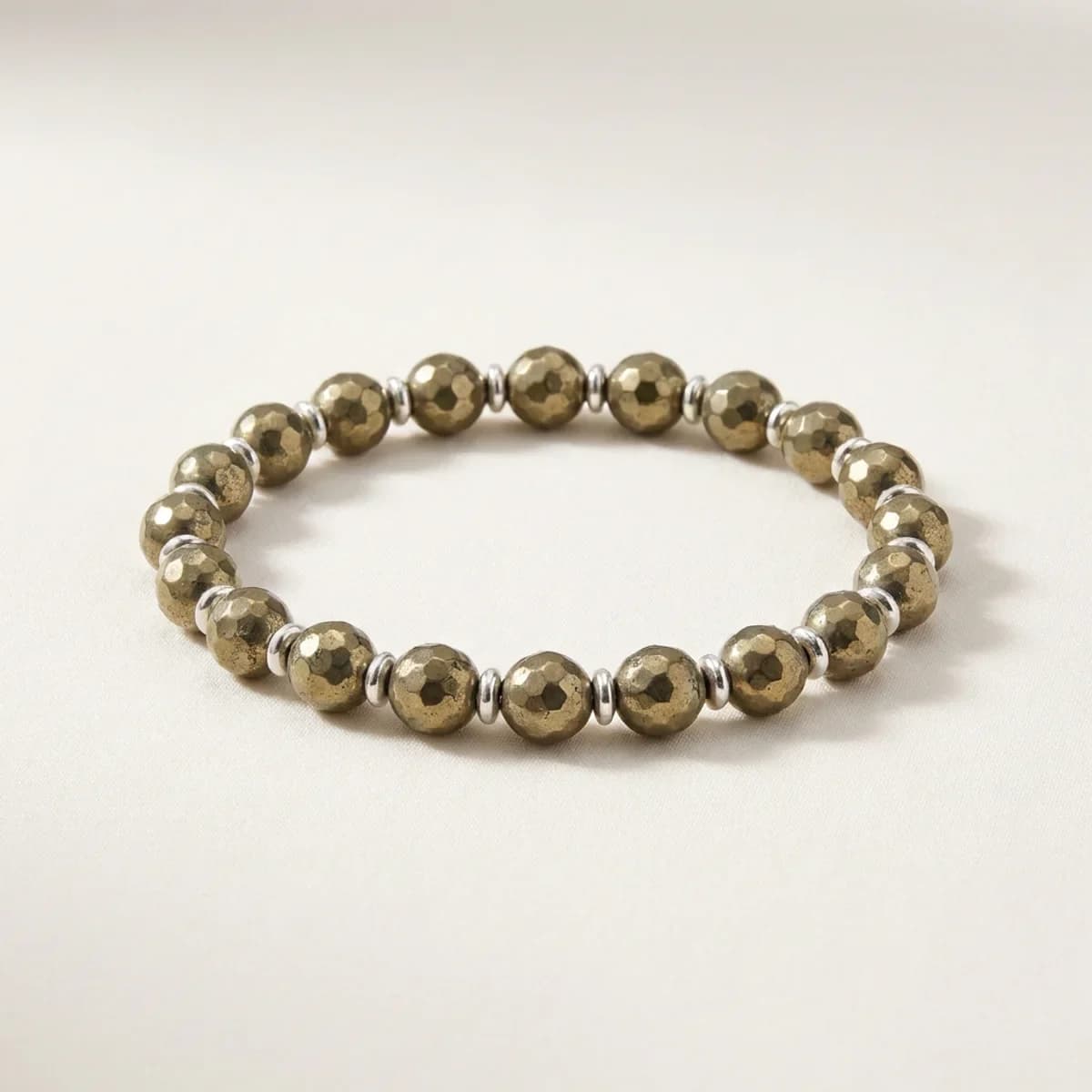
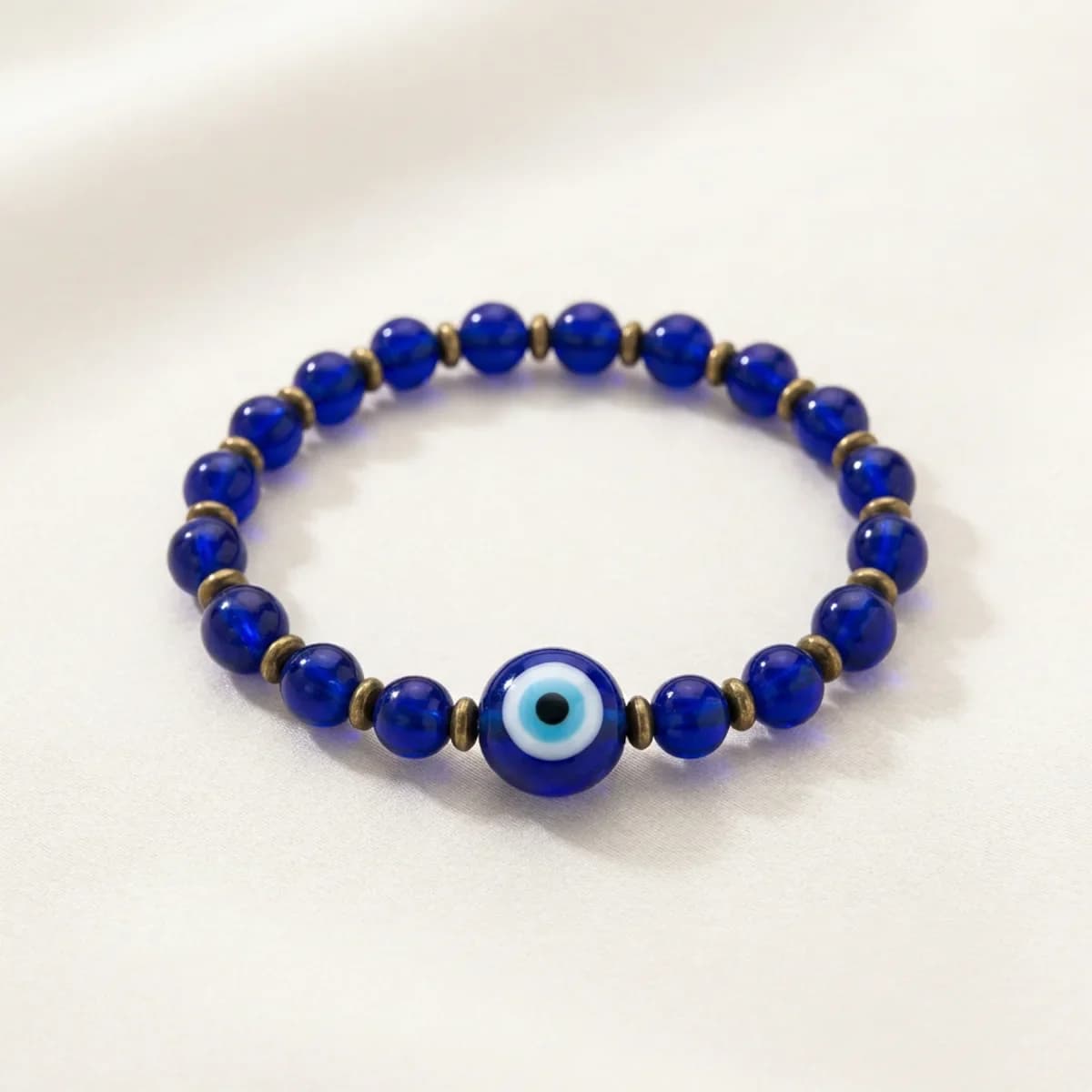
Yes — rudraksha pairs harmoniously with all crystals. Classical stacks include rudraksha + lapis lazuli (Brihaspati + Brihaspati double-stack) or rudraksha + pyrite (Jupiter wisdom + Mars-Sun wealth).
Should I remove it during sleep, toilet, or non-veg consumption?
Traditional advice varies by lineage. Most modern teachers say 24/7 wear is acceptable. Strict orthodox tradition recommends removing during toilet use and consumption of meat/alcohol; we recommend following your own teacher's instruction or your family practice. ---
How to verify this is genuine
A rudraksha's mukhi count is not a surface pattern — it is the number of internal seed chambers. That fact is the entire basis of authentication, and it is why we X-ray.
- 01Reject carved symbols
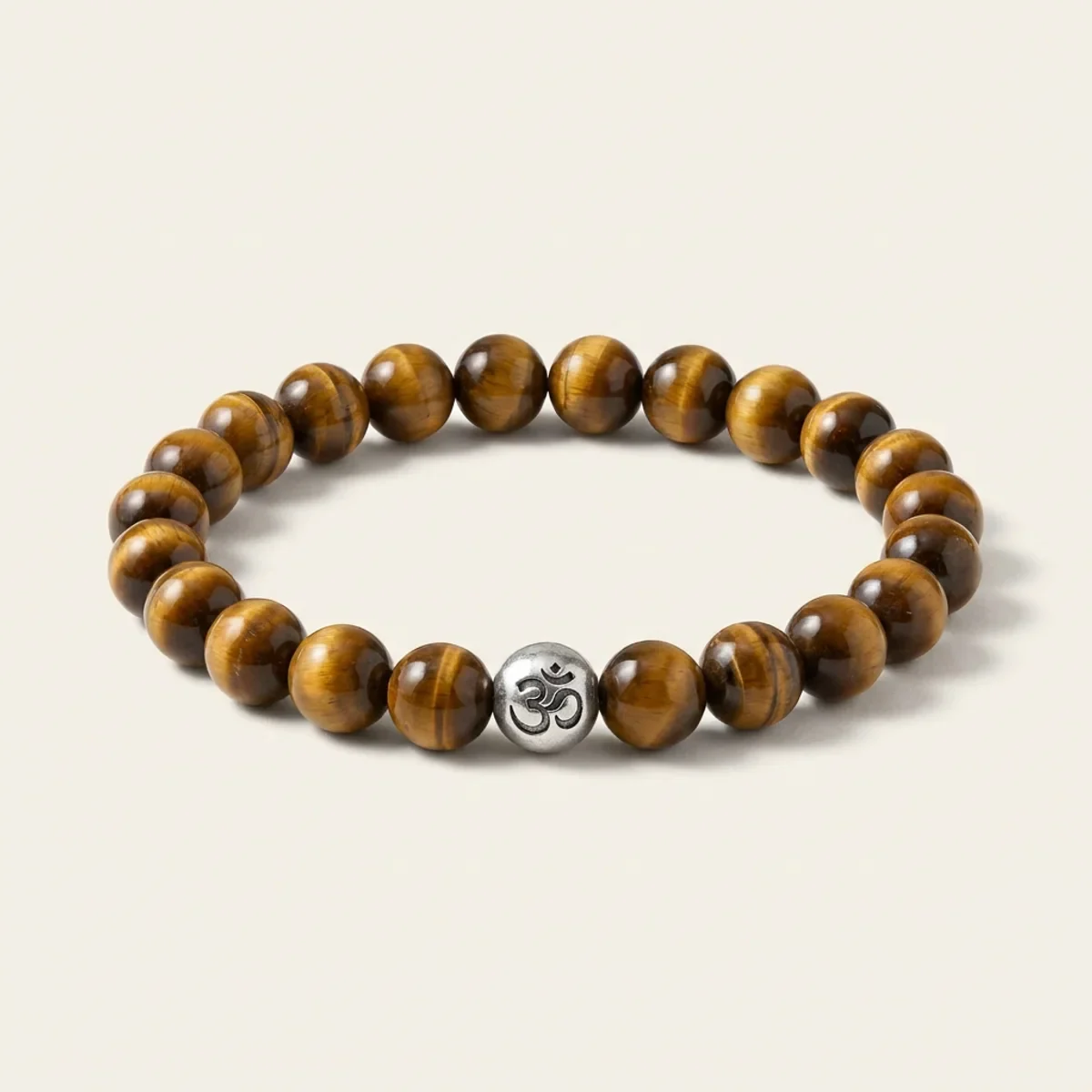
Rudraksha never grows an Om, trishul, snake or lingam. Any bead bearing a symbol has been carved. This single rule eliminates most fakes in the Indian market.
- 02X-ray chamber count
The definitive test: chambers must equal mukhis. A carved 3-mukhi sold as 1-mukhi shows three chambers. Every DivineTatva rudraksha ships with its X-ray plate.
- 03Cleft inspection
Under a 10× loupe, a natural mukhi line is an irregular cleft running crown to base with grain flowing around it. A carved line is uniform in depth, often V-shaped from a rotary tool, and cuts across the grain.
- 04Water test — limited
The popular sink test only rules out light plastic. Carved genuine rudraksha and bhadraksh both sink. Do not rely on it alone.
Care note — Rudraksha is a seed and dries out. Oil it lightly with coconut or mustard oil once a month to prevent cracking, and remove before bathing.
Read the honest guides
We publish what most sellers leave out — how to spot fakes, which hand to wear it on, the real side effects, and what a genuine piece should cost. Read first, buy after.
What buyers are saying
No reviews yet — be the first to share your experience.