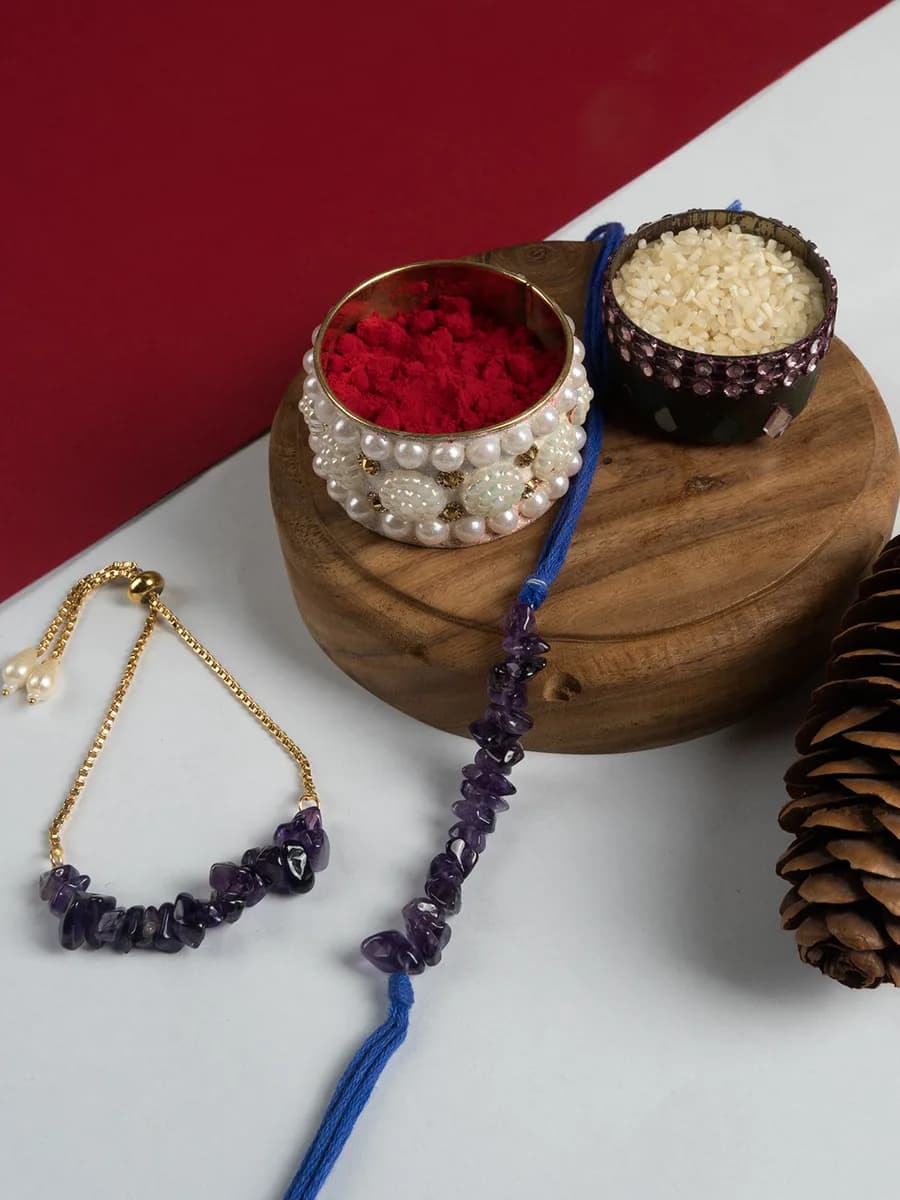
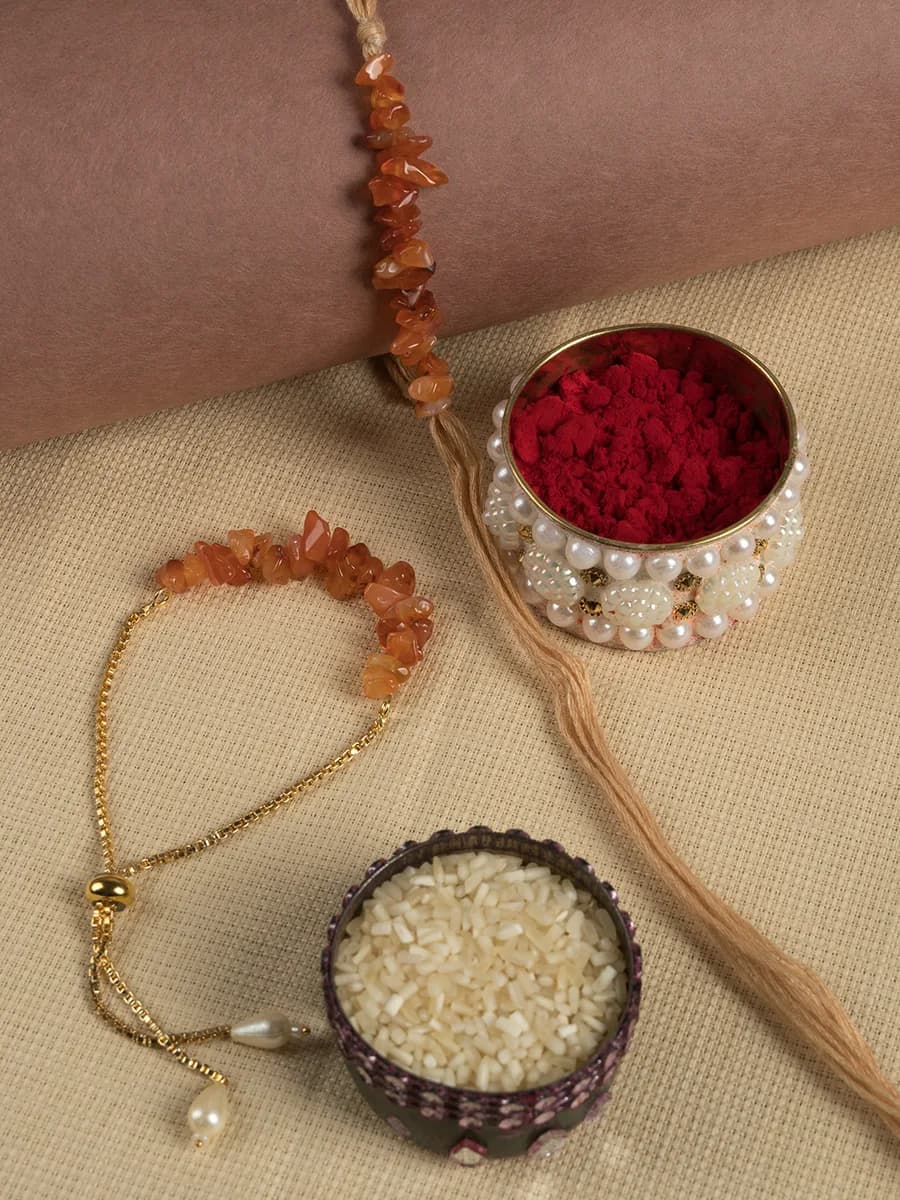
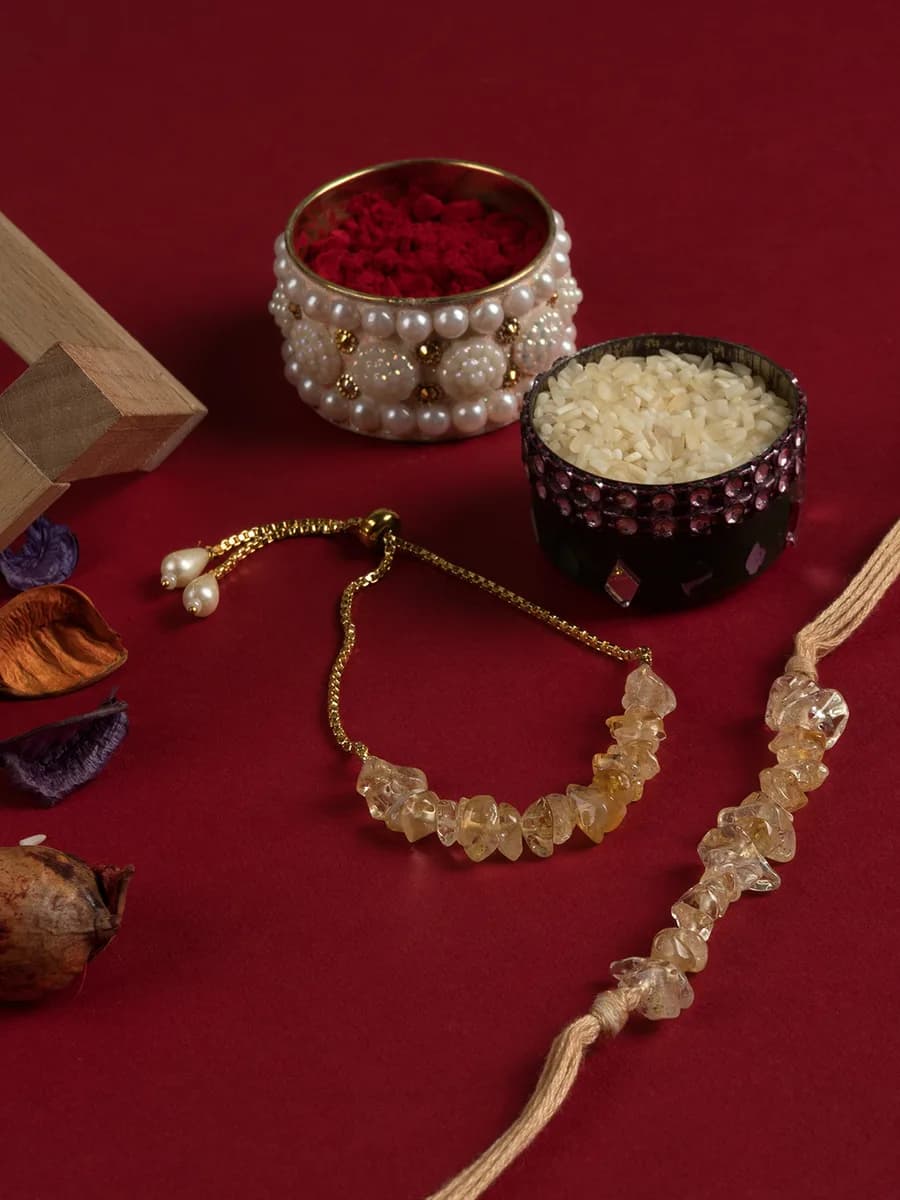
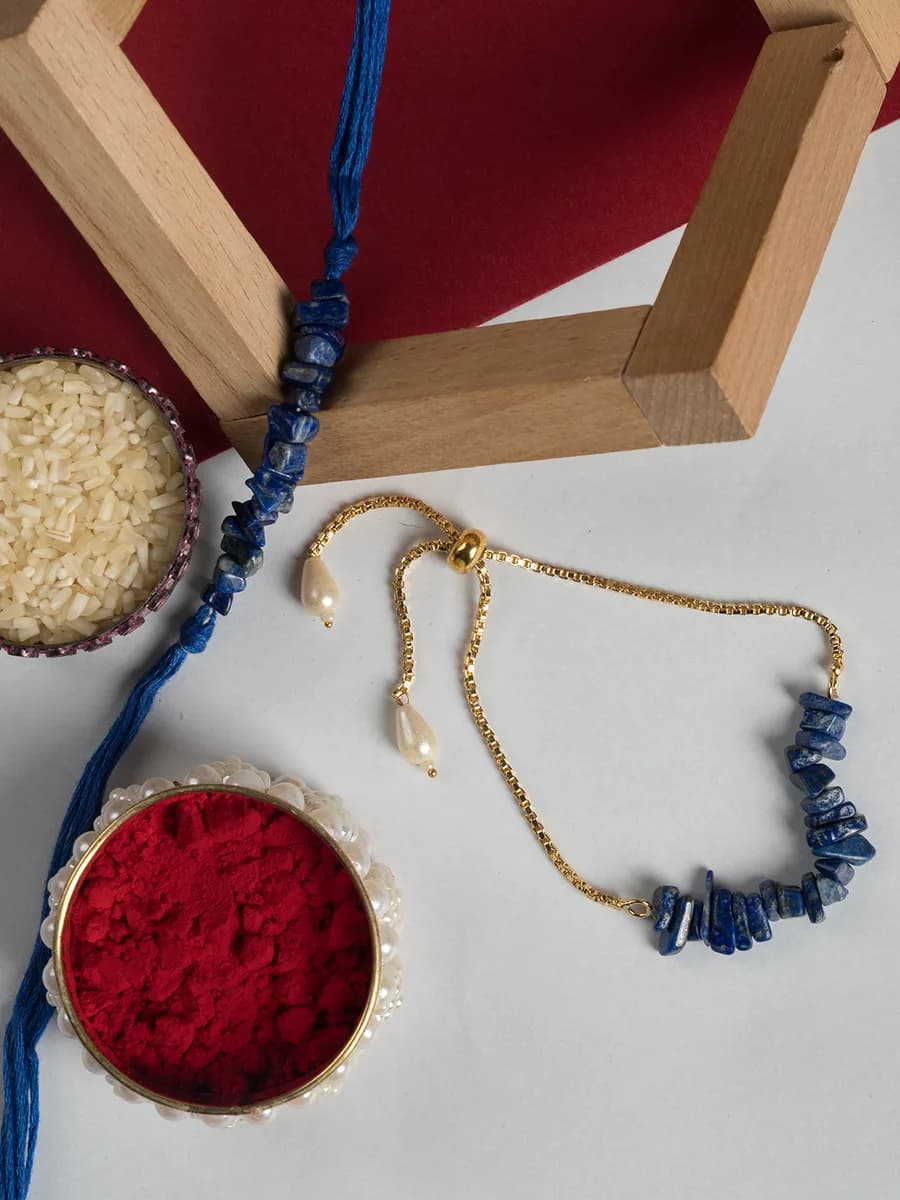
Citrine Chip Rakhi — Brother & Bhabhi Set (Rakhi + Bracelet)
✦ New — be the first to reviewEnergised & verified by DivineTatva's Vedic astrologers in our Jaipur atelier.


 RuPay
RuPay- Citrine — natural stone, not dyed glass or plastic
- Traditionally linked to Manipura (solar plexus) and confidence and enterprise
- Two pieces: rakhi for bhai + adjustable bracelet for bhabhi
- Cotton thread, hand-strung in our Jaipur atelier
- Ships with a stone card: what it is, what tradition says, and what we can't claim
- Roli-chawal kit included with every rakhi order
- Free shipping across India · dispatch within 24 hours
About this piece
The Citrine Chip Rakhi is strung with natural stone chips of natural citrine on a traditional cotton thread. Golden quartz, Mohs 7. Long associated with self-belief and trade; a common gift to someone building a business. This is the two-piece set: the rakhi for your brother and a matching adjustable citrine chip bracelet for your bhabhi, in the same stone. The bracelet slides to fit and is worn long after Raksha Bandhan — which is the point of the lumba tradition. In the Vedic tradition citrine is linked to the Manipura (solar plexus) chakra and to confidence and enterprise. Every piece ships with our stone card listing what the stone is and what tradition says about it — no claims we cannot stand behind. An honest note: there is no clinical evidence that any stone changes fortune or health. What is real is the thread, the intention behind it, and the fact that these are genuine natural stones rather than dyed glass — which is more than most rakhis at this price can say.
Specifications
How to wear
Tie the rakhi on your brother's right wrist after the tilak, on Raksha Bandhan morning during the auspicious muhurat. The bracelet is worn by your bhabhi on either wrist — it slides to fit and is meant to be worn well past the festival. Natural stone on a cotton thread. Keep it dry — remove before bathing and swimming. If the thread frays after the festival, the stones can be restrung or kept in a pouch; many families keep the previous year's rakhi rather than discard it.
Frequently asked
Is this real citrine or dyed glass?
Real natural citrine. Three checks you can run when it arrives: it stays cool in your hand for several seconds (glass warms in about one), each bead differs slightly in tone and pattern (machine-dyed beads look identical), and the colour will not lift onto an acetone-dampened cotton pad. Dyed beads are also what causes the wrist rashes people blame on "energy" — the dye leaches with sweat.
What exactly comes in the set?
Two pieces: the citrine chip rakhi for your brother, and a matching citrine bracelet on an adjustable gold-tone chain for your bhabhi. Both use the same stone. Also included: a stone card and a roli-chawal kit.
Which rakhi should I choose — chip or beads?
Chip rakhis use natural irregular stone chips: lighter, more delicate, and the lower price. Beads rakhis use 8mm round polished beads: heavier and more substantial, and the better choice if your brother is likely to keep wearing it after the festival. The stone and its tradition are identical in both.
When will it be dispatched?
Within 24 hours of ordering, with free shipping across India. During the two weeks before Raksha Bandhan we dispatch same-day for orders placed before 2 PM. Order early — courier networks slow down in the final week regardless of who you buy from.
Can anyone wear citrine?
Yes. Unlike the navratna planetary gemstones — pukhraj, neelam, manik — which need a birth chart before wearing, citrine carries no lagna or rashi restriction. Anyone can wear it, at any age.
Does it actually work?
There is no clinical evidence that a stone changes fortune, health or relationships, and we will not claim otherwise. What a rakhi genuinely is: a thread, an intention, and a promise between siblings. We make sure the stone is real and tell you honestly what it is — the meaning is yours to bring.
How to verify this is genuine
Amethyst, citrine, rose quartz, aventurine, tiger eye, jasper and carnelian are all quartz-family stones at Mohs 7 — hard, inert and cool to the touch. Their common fake is dyed glass or dyed howlite, and every test below separates the two without equipment.
- 01Temperature
Real stone stays cool in your closed hand for several seconds. Glass warms in about a second; plastic almost instantly.
- 02Bead-to-bead variation
Natural beads differ slightly in tone, banding and inclusions. Identically bright, perfectly matched beads mean machine dye.
- 03Air bubbles
Hold a bead to light under a 10× loupe. Round internal bubbles appear in glass and never in natural quartz.
- 04Acetone swab
Rub a bead with nail-polish remover on cotton. Dyed beads transfer colour; natural stone does not. This is also the test for the wrist rashes people blame on 'energy' — it is the dye.
- 05Scratch
Quartz at Mohs 7 will scratch glass (5.5) and steel. If a bead scuffs against a steel key, it is not quartz.
Read the honest guides
We publish what most sellers leave out — how to spot fakes, which hand to wear it on, the real side effects, and what a genuine piece should cost. Read first, buy after.
What buyers are saying
No reviews yet — be the first to share your experience.