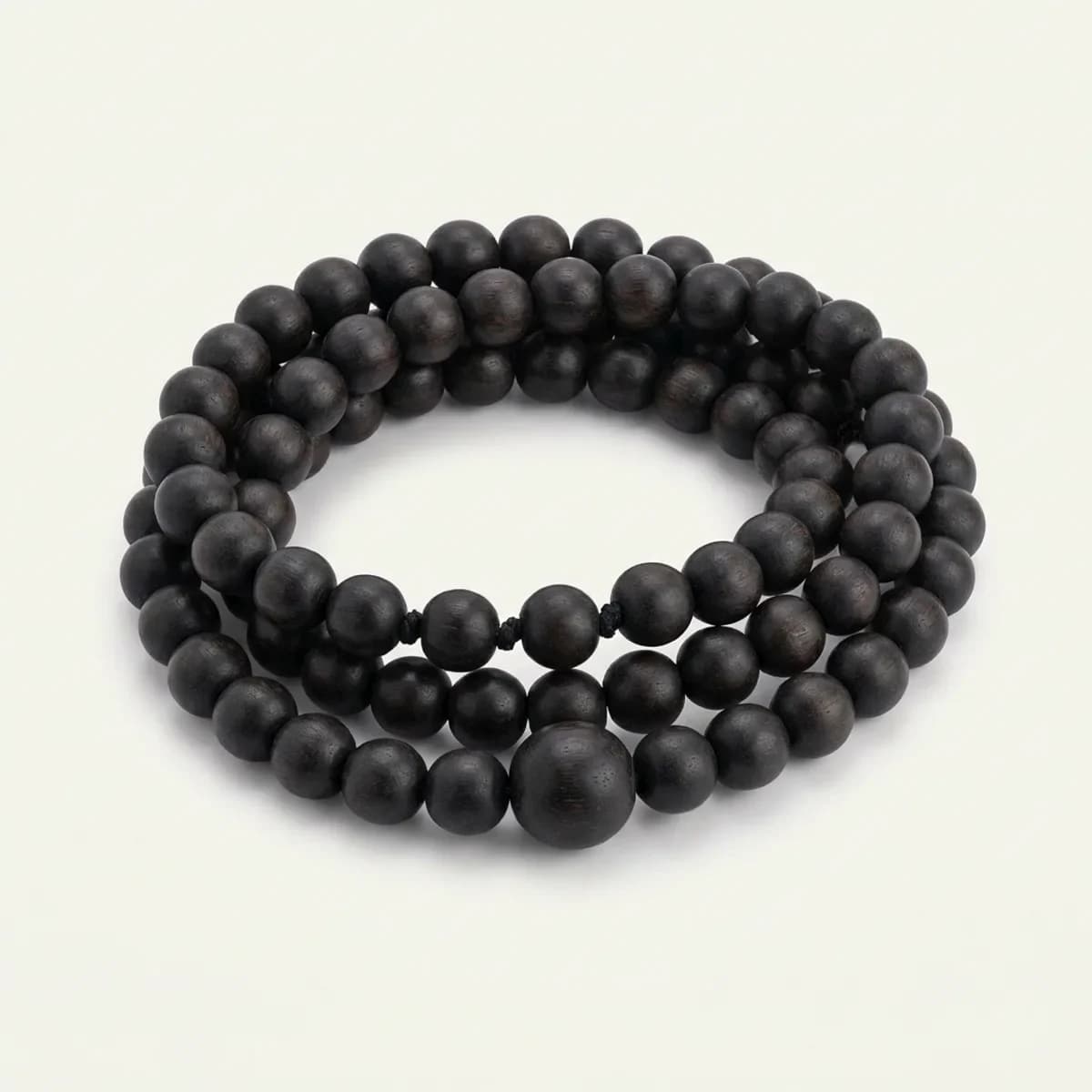
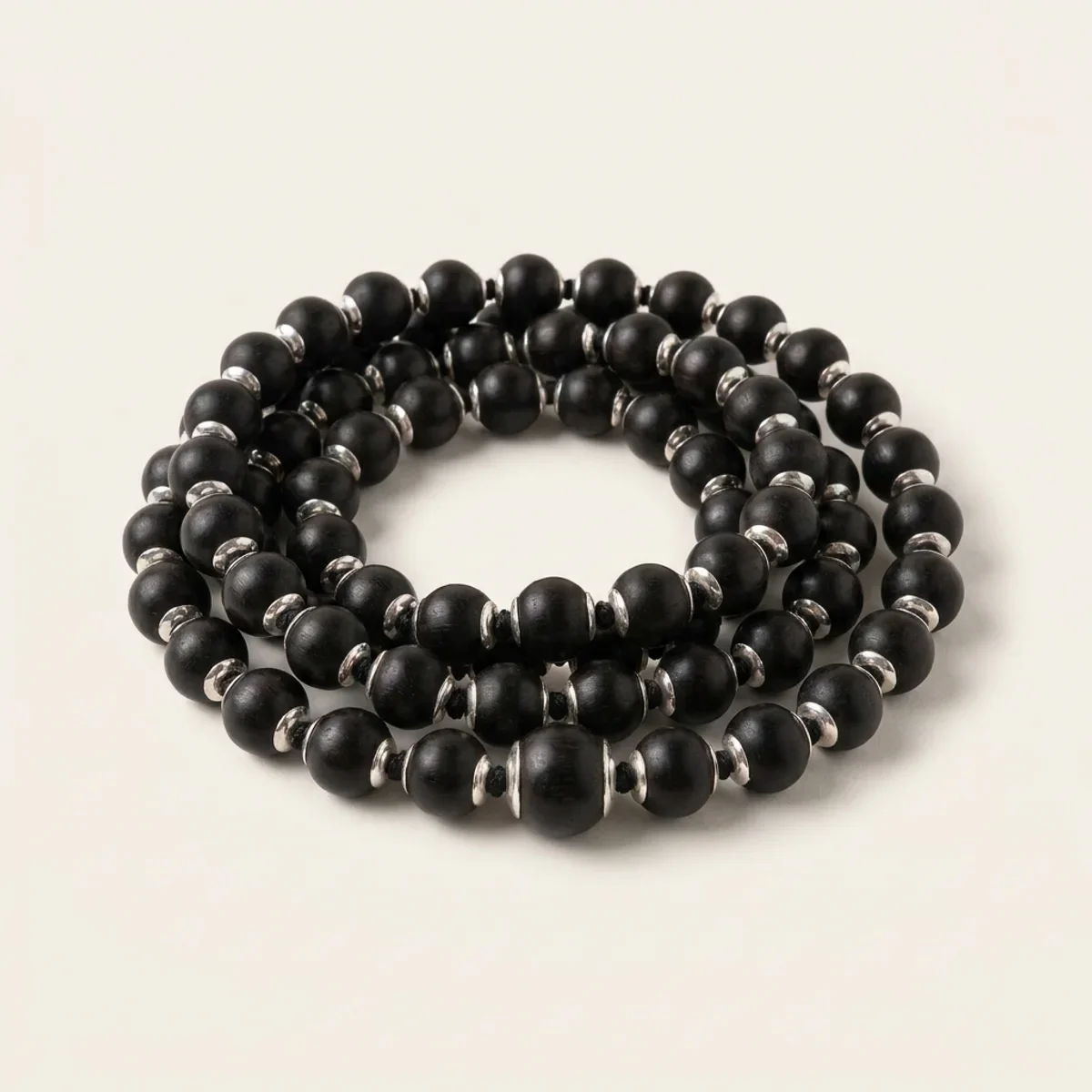
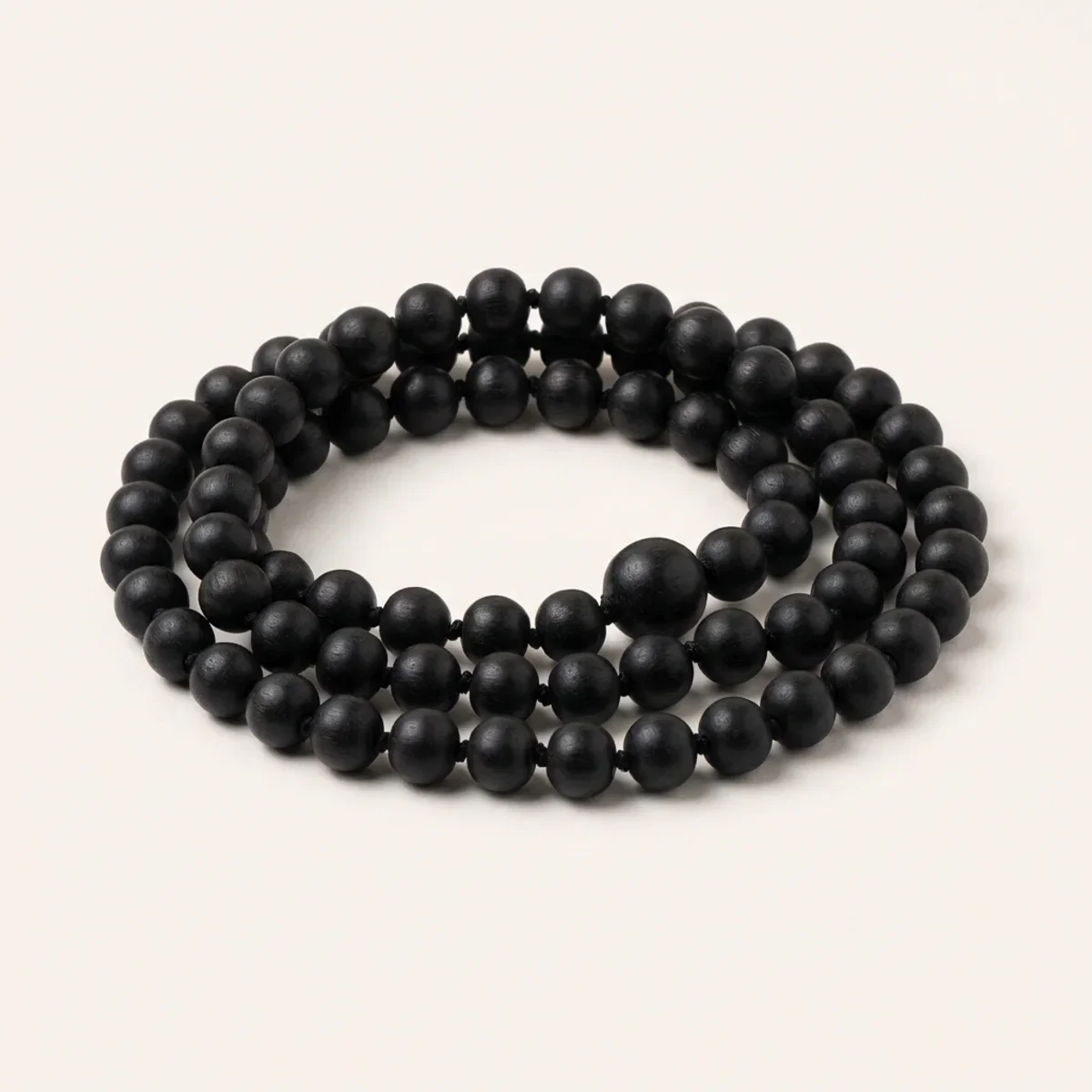
Karungali Mala — 8mm 108-Bead Standard Japa
✦ New — be the first to reviewEnergised & verified by DivineTatva's Vedic astrologers in our Jaipur atelier.


 RuPay
RuPay- Standard 8mm grip ideal for daily 108-round Shani mantra japa
- Sade Sati / Ashtama Shani remedial wood per Tamil tradition
- Hanuman bhakti — paired with Tuesday/Saturday Sundar Kand parayan
- Drishti / nazar protection for adults and children
- Grounds Vata imbalance — heavy heartwood has a settling, cooling pranic signature
About this piece
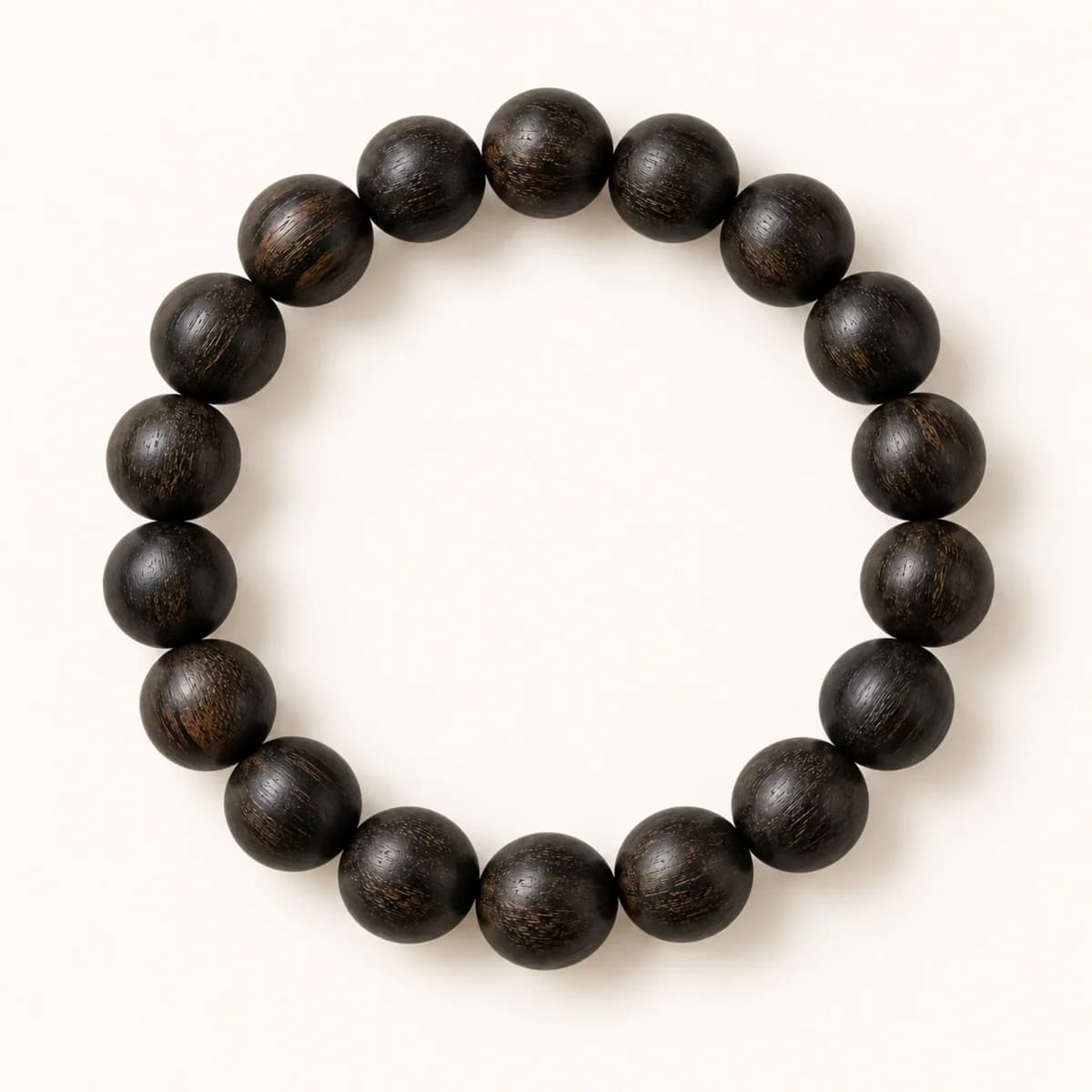
The 8mm 108-bead Karungali Mala is DivineTatva's standard japa mala in authentic Diospyros ebenum (Indian Ebony, family Ebenaceae) — the Tamil "black wood" sacred to Lord Shani and Hanuman. Heartwood from 60–80-year-old trees in Salem and Madurai districts carries a specific gravity of approximately 1.2, meaning every bead sinks in plain water (the classical authentication test). The 8mm size is the preferred bead diameter across Tamil temple traditions: large enough to grip firmly during Hanuman Chalisa or Shani mantra recitation, yet light enough for daily neck wear. Each bead is hand-finished, knotted on durable cotton, density-verified at GTL Jaipur, and Saturday Purnima energised with "Om Sham Shanaicharaya Namaha" — the principal remedy for Sade Sati, Shani Dhaiya and drishti dosha.
Specifications
How to wear
Begin on a Saturday before sunrise. Bathe, face east, hold the mala in the right hand, and recite "Om Sham Shanaicharaya Namaha" 108 times to energise. Wear around the neck or right wrist. Cross the sumeru — do not skip over it — when reversing direction during japa. Avoid contact with perfume, soap and chemical sprays.
Frequently asked
Is 8mm better than 6mm for japa?
8mm gives a firmer thumb-grip and helps maintain count rhythm; 6mm is lighter for long mantra sessions. Most traditional Tamil practitioners use 8mm as their primary japa mala.
How do I confirm it isn't dyed rosewood?
Two tests: (1) drop a bead in water — Diospyros ebenum sinks (SG ~1.2), rosewood floats or sinks slowly; (2) gently scratch with a pin — karungali is black through-and-through, dyed wood reveals pale wood beneath.
Can I wear it while sleeping?
Many practitioners wear it 24/7 during a 40-day mandala. Remove before bathing with soap or applying oil. If knotted thread loosens, we offer free re-stringing for one year.
Does menstruation affect japa?
Traditional Tamil etiquette is to rest the mala for the four-day cycle and resume after a head-bath on day 5. The bead itself is not depleted.
Can I combine with rudraksha?
Yes — karungali (Shani) + 5-mukhi rudraksha (Shiva) is a recommended combination for Sade Sati. Wear separately on the same side or layer them. ---
How to verify this is genuine
Karungali's authentication is unusually clean because the heartwood's density is exceptional: SG around 1.2, which makes it one of the few woods that sinks.
- 01Sink test
Genuine karungali heartwood sinks in water. Dyed lighter woods — the standard substitute — float. This is the primary field test and it is decisive.
- 02Dye check
Rub a bead with a damp white cloth. Dyed wood transfers black colour; genuine karungali does not, because the black is the wood itself.
- 03Grain
Under a 10× loupe, real ebony shows a fine natural grain. Painted or dyed substitutes show colour sitting on top of a visibly different underlying wood.
- 04Weight and feel
Karungali is noticeably heavy and hard for wood, with a smooth almost-stone feel when polished.
Care note — Dry care only. Wipe with a dry cloth; oil sparingly with sesame oil a few times a year. Prolonged water exposure damages it.
Read the honest guides
We publish what most sellers leave out — how to spot fakes, which hand to wear it on, the real side effects, and what a genuine piece should cost. Read first, buy after.
What buyers are saying
No reviews yet — be the first to share your experience.