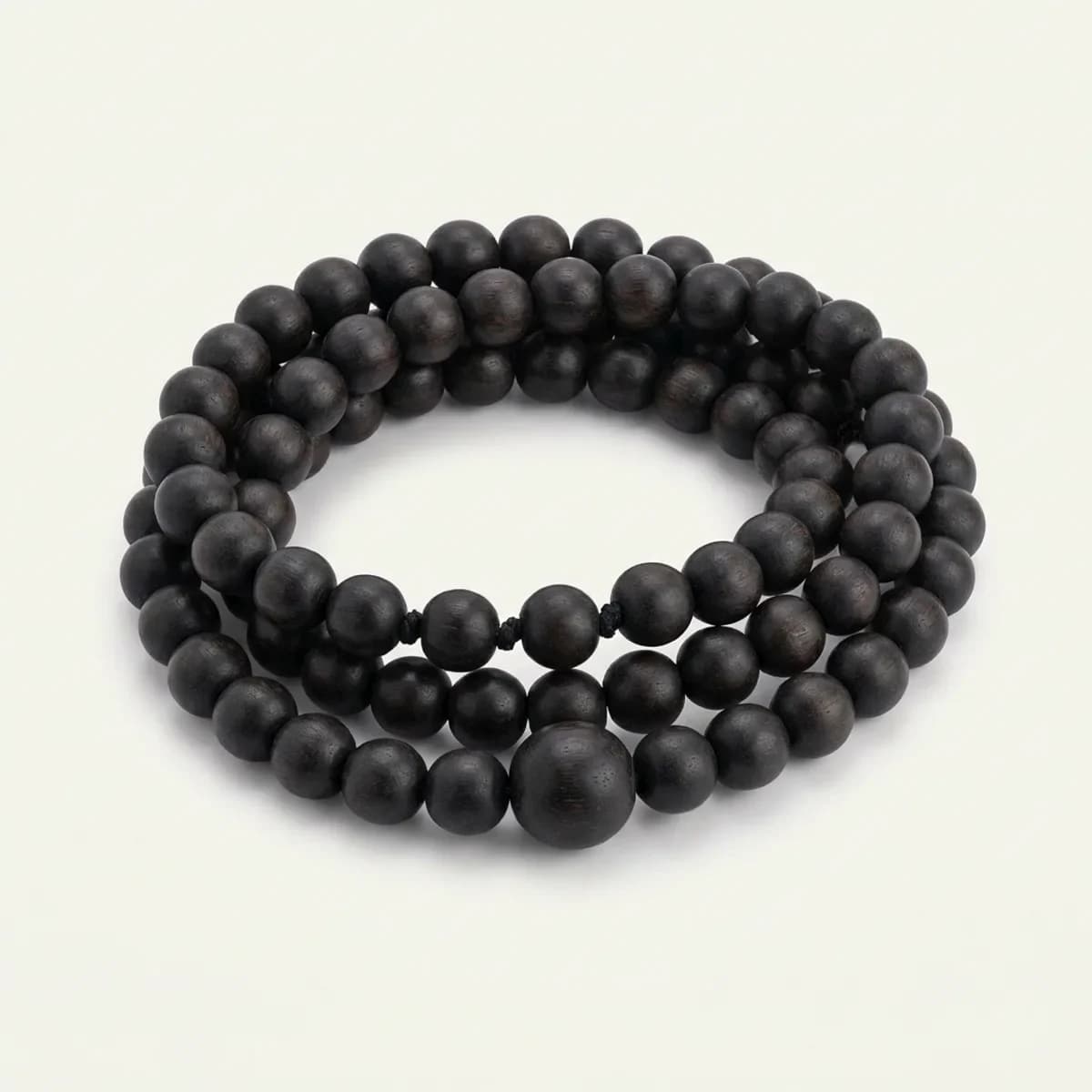
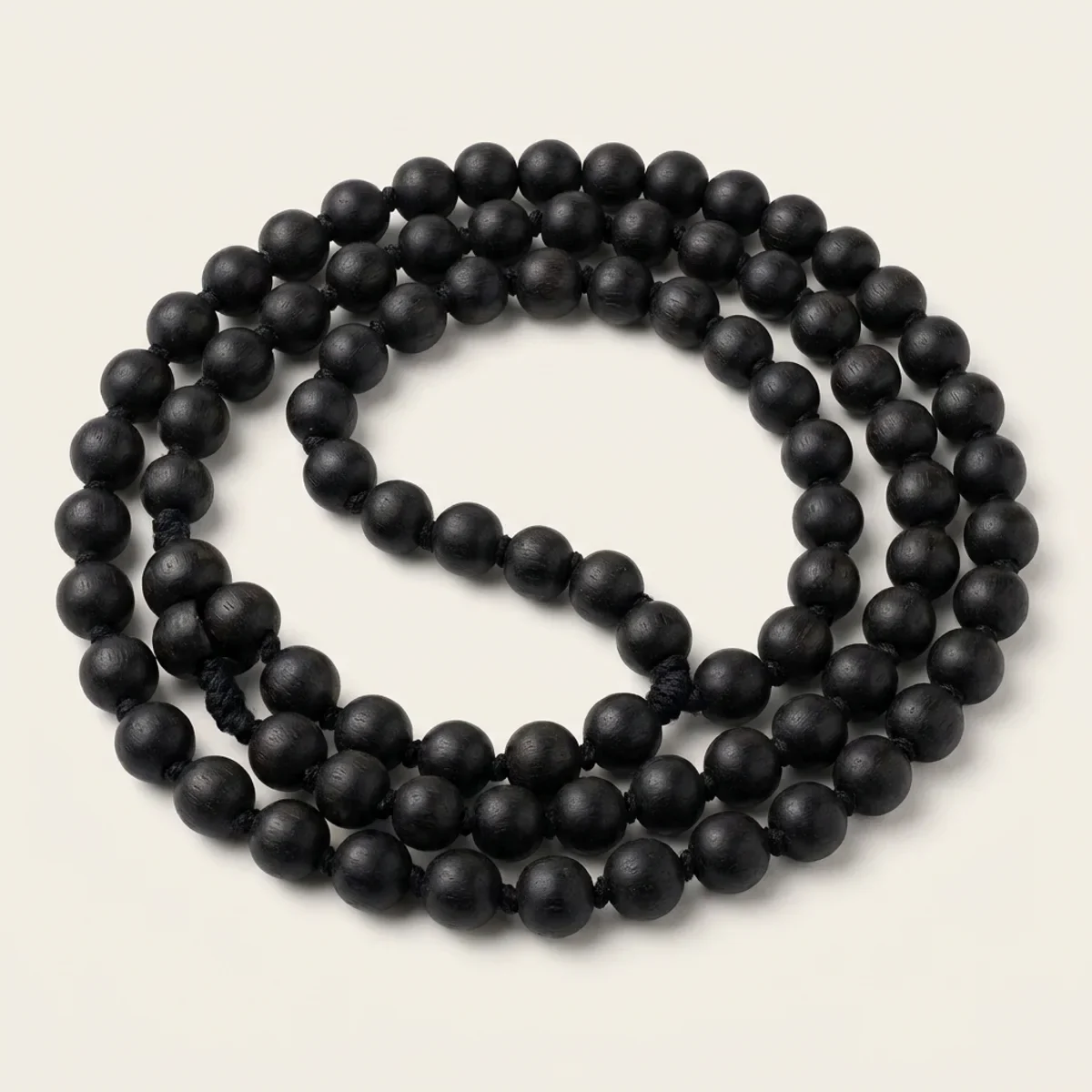
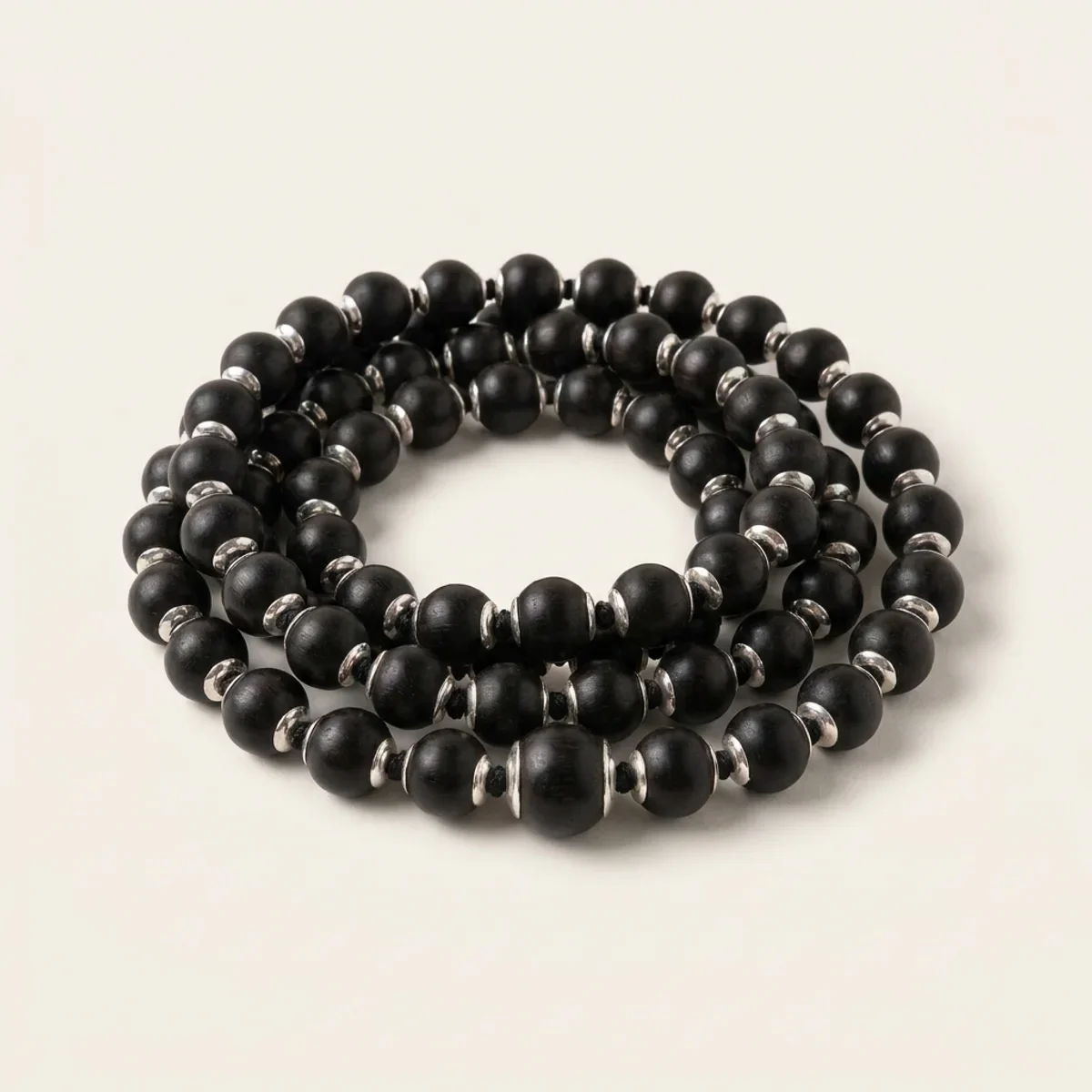
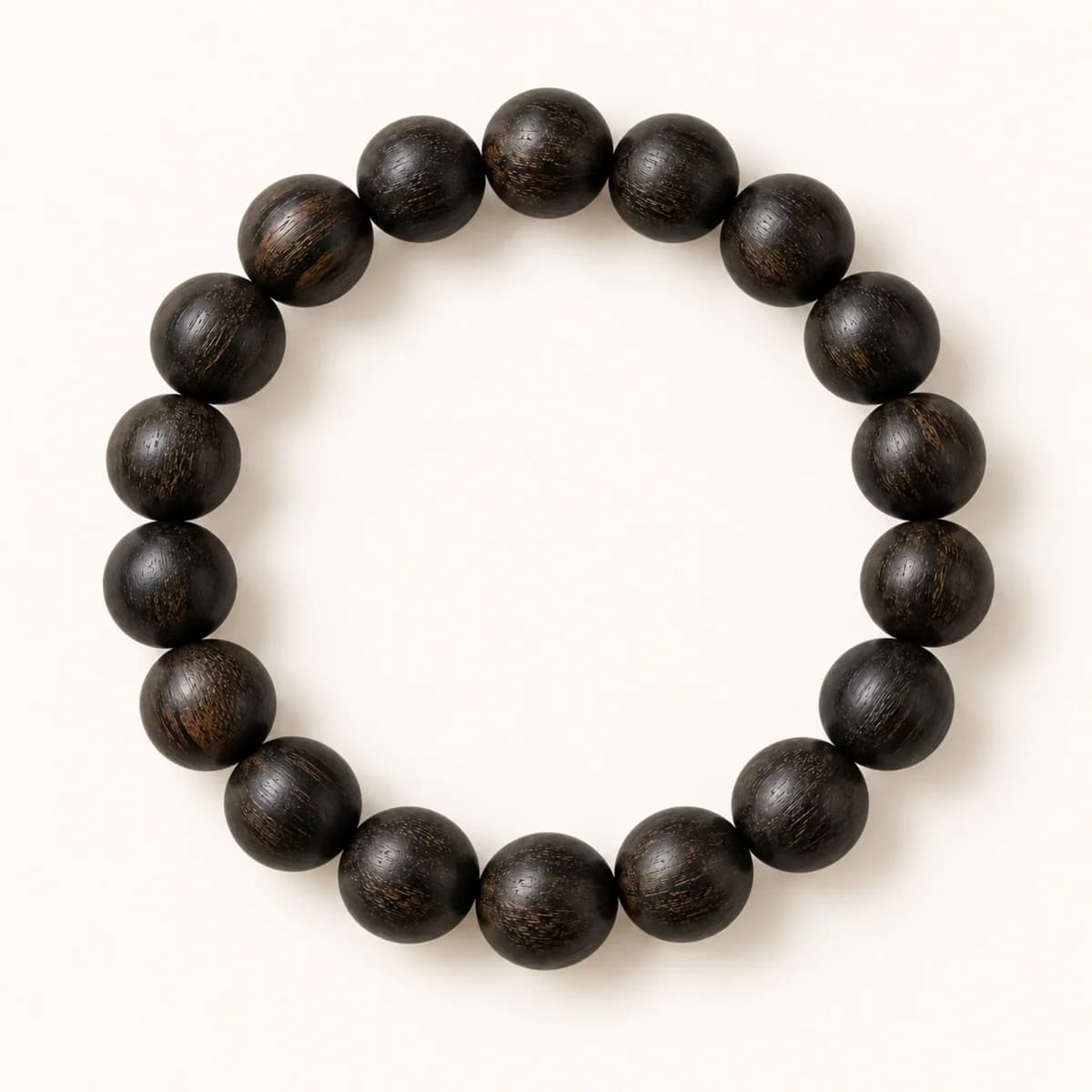
Karungali + Rudraksha Combo Mala — Shani Shiva Sangam
✦ New — be the first to reviewEnergised & verified by DivineTatva's Vedic astrologers in our Jaipur atelier.


 RuPay
RuPay- Dual remedy — Shani's friction + Shiva's grace in one mala
- Recommended for Sade Sati, Shani Dhaiya and Saturn–Moon transits
- Rudraksha steadies heart-rate; karungali grounds anxiety — complementary signatures
- Two-mantra japa builds deeper sadhana rhythm
- Suitable for both Vaishnava and Shaiva practitioners
About this piece
The Karungali + Rudraksha Combo Mala unites two classical remedial materials: authentic Diospyros ebenum (Tamil karungali) ruled by Lord Shani, and 5-mukhi rudraksha (Elaeocarpus ganitrus) ruled by Lord Shiva. The 108-bead mala alternates 54 karungali beads (Tamil Nadu sourced, 60–80-year heartwood) with 54 Nepali 5-mukhi rudraksha — both lab-certified, with karungali GTL Jaipur density-verified at specific gravity ~1.2 (sinks in water, the definitive ebenum test). This Shani–Shiva sangam is the most-recommended Tamil remedy for Sade Sati and Shani Dhaiya, simultaneously calming Saturn's friction and invoking Shiva's grace. Saturday Purnima energised with "Om Sham Shanaicharaya Namaha" and "Om Namah Shivaya". Knotted on cotton silk.
Specifications
How to wear
Energise on a Saturday Purnima with 108 rounds — alternate "Om Sham Shanaicharaya Namaha" on karungali beads and "Om Namah Shivaya" on rudraksha beads. Wear around the neck or right wrist. Keep rudraksha dry — re-oil with sandalwood oil monthly. Keep karungali away from chemical contact.
Frequently asked
Why combine the two?
Shani (karungali) and Shiva (rudraksha) are guru-shishya: Saturn took diksha from Shiva. Wearing both invokes Shiva's grace to soften Shani's karmic friction — the canonical Sade Sati remedy.
How do I authenticate karungali in this mala?
Half the beads are karungali — pick any one, water-test in plain water: sinks = genuine ebenum (SG ~1.2). The GTL Jaipur certificate confirms density.
How do I authenticate the rudraksha?
Each bead has 5 visible natural mukhi (face) lines. We include a lab mukhi-count certificate.
Care for rudraksha + karungali together?
Avoid water (rudraksha cracks if soaked) and chemicals (both). Re-oil rudraksha beads with a drop of sandalwood/almond oil monthly; wipe karungali dry.
Best day to start?
Saturday before sunrise during Krishna Paksha — especially Shani Pradosh or Saturday Purnima. ---
How to verify this is genuine
A rudraksha's mukhi count is not a surface pattern — it is the number of internal seed chambers. That fact is the entire basis of authentication, and it is why we X-ray.
- 01Reject carved symbols
Rudraksha never grows an Om, trishul, snake or lingam. Any bead bearing a symbol has been carved. This single rule eliminates most fakes in the Indian market.
- 02X-ray chamber count
The definitive test: chambers must equal mukhis. A carved 3-mukhi sold as 1-mukhi shows three chambers. Every DivineTatva rudraksha ships with its X-ray plate.
- 03Cleft inspection
Under a 10× loupe, a natural mukhi line is an irregular cleft running crown to base with grain flowing around it. A carved line is uniform in depth, often V-shaped from a rotary tool, and cuts across the grain.
- 04Water test — limited
The popular sink test only rules out light plastic. Carved genuine rudraksha and bhadraksh both sink. Do not rely on it alone.
Care note — Rudraksha is a seed and dries out. Oil it lightly with coconut or mustard oil once a month to prevent cracking, and remove before bathing.
Read the honest guides
We publish what most sellers leave out — how to spot fakes, which hand to wear it on, the real side effects, and what a genuine piece should cost. Read first, buy after.
What buyers are saying
No reviews yet — be the first to share your experience.